Wisp Resort
McHenry, north end of the lake
Full-service resort 0.6 miles from the lake (11-minute walk per the listing); the Wisp concession runs the State Park pontoon tours.
Check ratesDeep Creek Lake is 13 miles long, 69 miles of shoreline around a single winding channel, and every stretch of it boats differently. Here is how the lake is laid out, zone by zone, cove by cove, bridge by bridge.
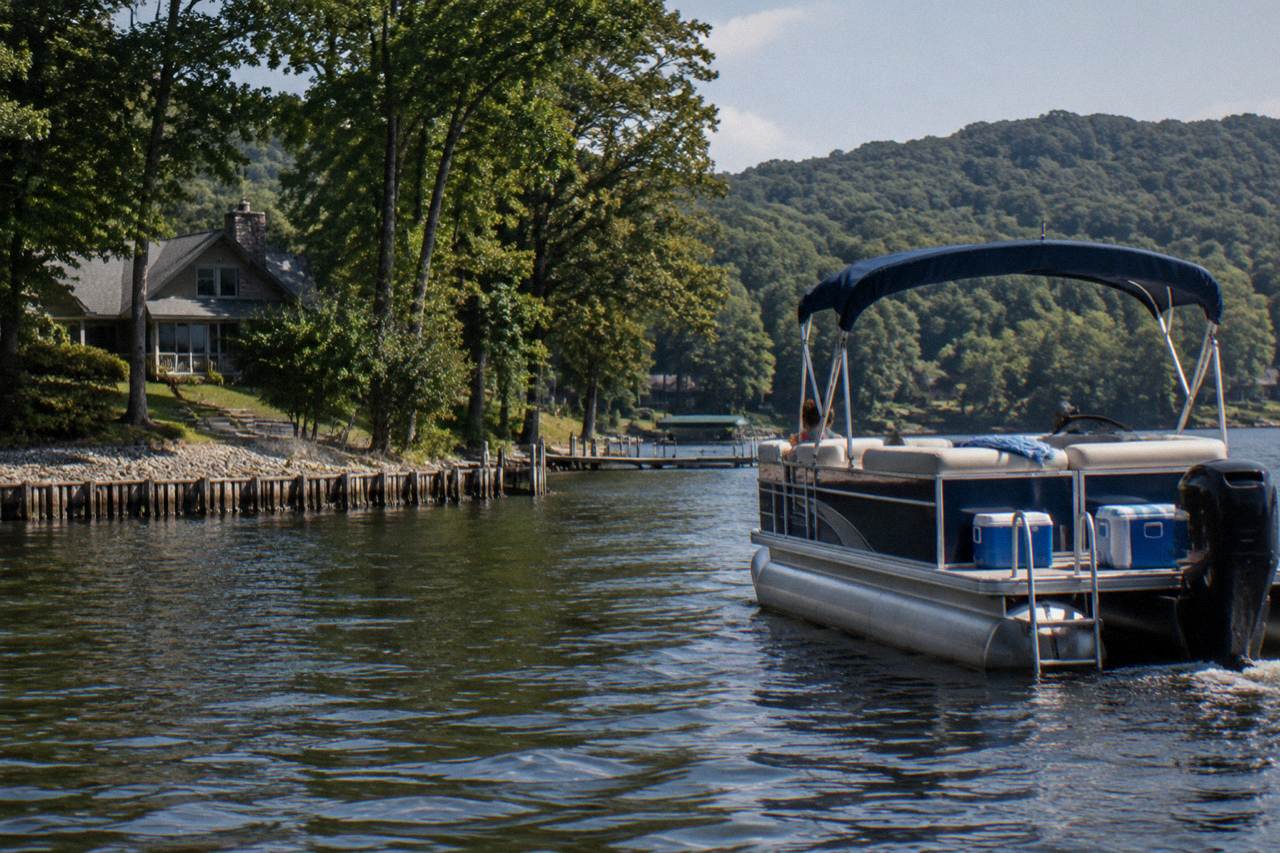
Short answer
Deep Creek Lake runs roughly north to south for 13 miles with 69 miles of shoreline. Boaters divide it into the north end at McHenry Cove, the main basin south of the Deep Creek Lake Bridge near the State Park, and the quieter coves below the Glendale Bridge. A 100-foot no-wake rule and a 26-foot boat length limit apply everywhere.
Deep Creek Lake is Maryland's largest impoundment: 3,900 acres at a full pool elevation of 2,462 feet, 13 miles long, with 69 miles of shoreline wrapped around a watershed of 140,000 acres. The maximum depth, about 75 feet near the dam breast, sits at the southern end, while the average depth across the whole lake is closer to 25 feet. Those numbers matter to a boater more than they first appear, because the lake is not one open sheet of water. It is a drowned river valley, narrow in the coves, wider in the main basin, and bent through enough bridges and points that first-time visitors routinely underestimate how long a full run takes. If those dimensions raise questions about what they mean for your time on the water, the official size and depth figures explained for boaters and anglers cover the details.
The Garrett County Chamber describes the lake in exactly the way locals use it: the northern tip is McHenry Cove with boat rentals, restaurants, Garrett College and Wisp Resort; south of the Deep Creek Lake Bridge is the main basin with the State Park; below the Glendale Bridge are quiet coves and sailboats. This guide walks that same line down the lake, zone by zone, and covers the rules that follow you across every one of them.
Deep Creek Lake is a single 13-mile channel running roughly north to south, and boaters treat it as three zones: the developed north end around McHenry Cove, the broad main basin between the Deep Creek Lake Bridge and the Glendale Bridge, and the quieter southern coves below Glendale. Shoreline character, boat traffic and wind exposure all change as you move south, so most boaters plan a day around one or two zones rather than the whole lake.
Think of the lake as a river that was impounded in the 1920s and filled by 1929 for a small hydroelectric plant, which still generates electricity today. The dam sits at the southern end near the deepest water, and the lake narrows, bends and widens above it. Because the valley was narrow, no section of the lake is a vast open plain like a natural reservoir in flat country. Instead you get long straight runs, sudden points, and coves that fold back into the hills.
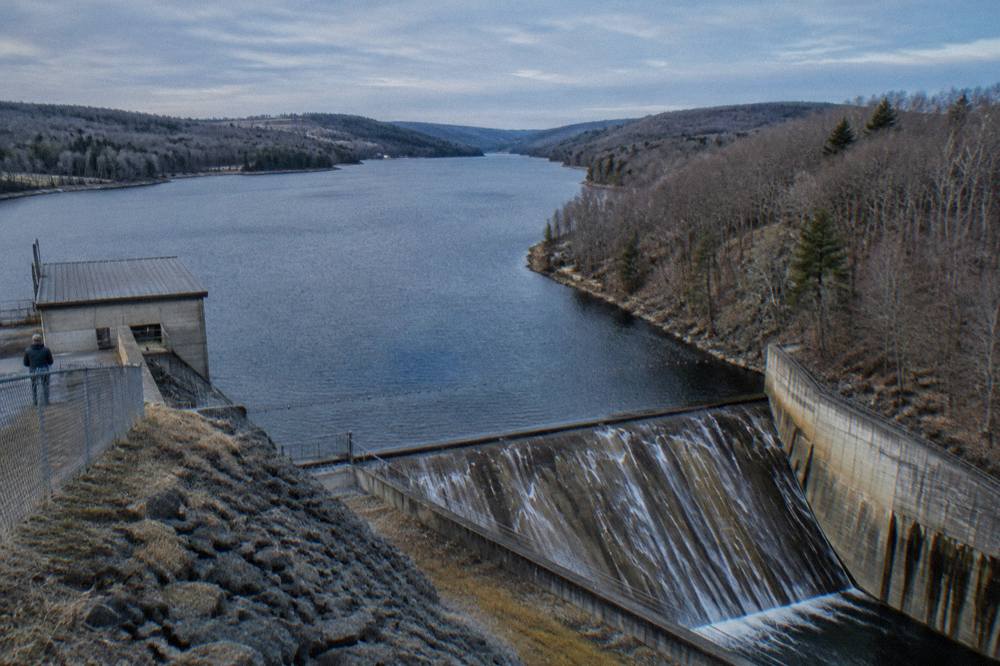
That shape has practical consequences. Wind funnels down the long axis, so an afternoon breeze that feels gentle in a protected cove can raise a real chop on the open main basin. Points and bridge abutments concentrate current and boat traffic. And because Maryland owns the lake, the lake bed and the strip of land around it as part of the State park system, the shoreline itself stays largely forested rather than wall-to-wall cottages, which is a large part of why the views hold up the whole length of the run.
The zones at a glance:
| Zone | Where it sits | Character on the water |
|---|---|---|
| North end, McHenry Cove | Northern tip of the lake, around McHenry | Rentals, restaurants, Wisp Resort and Garrett College; busiest concentration of services |
| Main basin | South of the Deep Creek Lake Bridge, around the State Park | Widest open water, the State Park ramp and beaches, the most mixed traffic |
| Glendale Bridge area | Mid-lake, where the highway crosses again | Transition zone, sailboats begin to appear |
| Southern coves | Below the Glendale Bridge toward the dam | Quietest water, sailboats, cove tips favored by kayakers |
McHenry Cove is the service hub of the lake: the northern tip holds boat rental fleets, waterfront restaurants, Garrett College and Wisp Resort, all within a small radius. Boaters who rent a pontoon or launch near McHenry spend their day close to where the rentals, fuel and food are, and the cove's protected water is the easiest place on the lake to get comfortable behind the wheel before running south.
The Chamber's fast-facts page is direct about this stretch: the northern tip is where the boat rentals cluster. Two of the lake's rental operations sit on Deep Creek Drive in McHenry, a short distance apart. Lake Life Boat Rentals lists pontoons from about $524 per day for a 90-horsepower model, ski boats from about $681 per day, and watersports boats at about $1,296 per day, taxes extra, with full-day rentals running 9 AM to 5 PM in a season of roughly mid-May to mid-October. Deep Creek Lake Boats lists one-day pontoon rentals at about $450 for a 70-horsepower boat, about $575 for 115 horsepower and about $650 for 150 horsepower, taxes extra, in a late-May to early-September season. Both operators ask that you confirm prices and availability on their own pages before booking, since rates change.
The north end also carries the lake's guided-boat presence. The Wisp Resort concession runs the State Park pontoon tours and rents kayaks, paddleboards and tubes from the lake side of the park. High Mountain Sports and Funtime Watersports, both south of McHenry on Garrett Highway toward Thayerville, run their own guided pontoon tours, and Deep Creek Paddle Co delivers kayaks and paddleboards to the water. Full details on those operations sit in our Deep Creek Lake boat rental guide and the pontoon rental guide.
Restaurants reachable by boat cluster around this northern stretch, which makes McHenry Cove the natural lunch anchor for a rental day. The cove itself is sheltered, so the typical pattern for a first morning on the lake is to idle out of the cove, get the feel of the throttle in calm water, then decide whether to commit to the longer run south toward the main basin.
Most boaters base themselves at the north end, in McHenry, because that is where the rental fleets, the State Park tours and the lake's restaurant row sit. Wisp Resort sits about 0.6 miles from the lake, an 11-minute walk per its listing, and The Lodge at Wisp Resort shares that same distance. Lake Pointe Inn sits near the State Park, close to the ramp most boaters use, with a free full breakfast before a day on the water.
The stay decision on this lake is really a zone decision. If you are renting a boat or joining a guided pontoon tour, staying in McHenry puts you minutes from the rental dock and the tour meeting points. If you are trailering your own boat and launching at the State Park ramp, the south side of McHenry and the roads toward Swanton shorten the tow. And if your plan is kayaks and paddleboards off a beach rather than a motorboat, the State Park beach and its canoe and kayak launch argue for lodging near the park itself.
For a stay closer to the boat ramps, McHenry has lodging at the north end of the lake: LakeFront Lodge is a lodging option in the McHenry area at the north end of the lake, handy for the launch and rental scene there, whether the plan is a dawn paddle or a late return from a restaurant run by boat.
McHenry, north end of the lake
Full-service resort 0.6 miles from the lake (11-minute walk per the listing); the Wisp concession runs the State Park pontoon tours.
Check ratesStaying lakeside also changes the rhythm of a boating day. A morning launch before the traffic builds, a midday restaurant stop by water, and an evening return all get easier when the drive back to the room is ten minutes instead of forty. The boating-costs picture, from launch fees to rental day rates, is laid out in our guide to what boating on the lake costs.
Wisp Resort deserves a specific note for one reason beyond the walk: the Wisp concession is the operator that runs the guided pontoon tours out of the State Park. The operator lists adult tickets at $34 and child tickets at $19 for a one-hour tour, with a private option for up to 12 people at $349, and kayak, paddleboard and tube rental rates from $19, $24 and $9 respectively. Reservations are required, and the operator's own page carries the current season schedule.
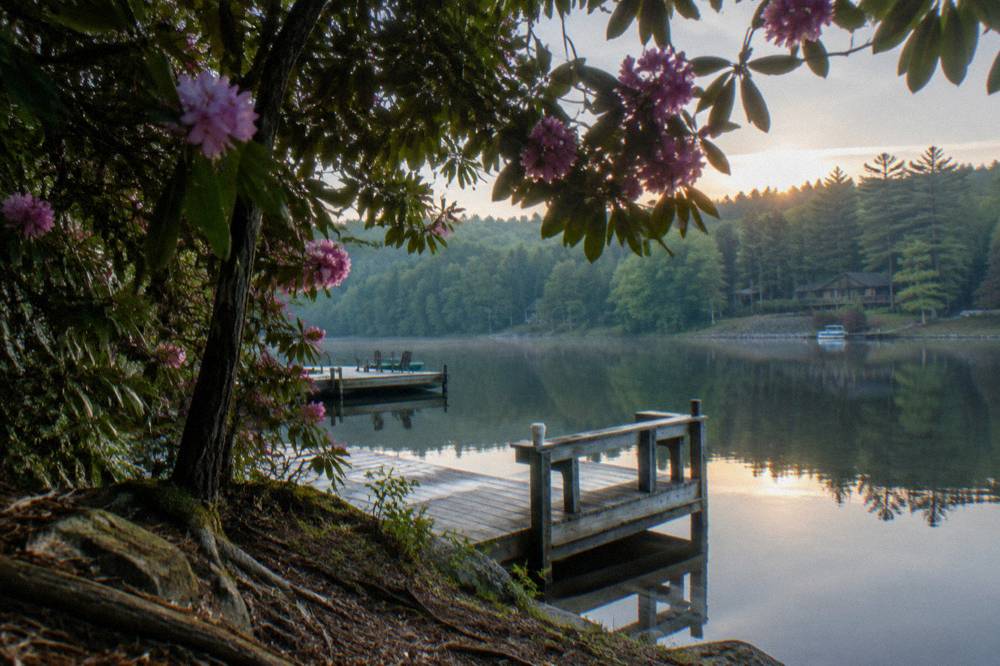
The Deep Creek Lake Bridge is the dividing line between the lake's busy north end and its main basin: south of the bridge the water opens up, the State Park shoreline appears, and the traffic shifts from rental pontoons idling out of McHenry to a broader blend of ski boats, fishing boats and tour boats. The bridge is also a marked no-wake reference point, since vessels must slow within 100 feet of bridges and their piers.
Every zone change on this lake is legible from the water, and the bridge is the clearest one. North of it you are never far from a dock, a restaurant or a rental slip. South of it the shoreline opens into the wide basin where the State Park sits, and distances start to mean something: a run from the bridge to the far southern coves is a genuine trip, not a hop.
The 100-foot no-wake rule applies to the shoreline, bridges, piers, docks and other vessels across the entire lake, per the Maryland DNR's lake rules page. Around a bridge, that matters doubly, because the channel narrows and traffic converges from both directions. The practical habit is to come off plane well before the span, hold no-wake through it, and accelerate again once the water ahead is clear.
The main basin below the bridge is also where the lake shows its weather. The wide water has the longest fetch on the lake, and an afternoon southwest wind can build a chop that surprises boaters who spent a calm morning in a cove. Pontoon captains especially should watch the water texture ahead rather than the sky behind: if the surface ahead is standing up in short whitecaps, the smart move is to shorten the run and work the lee shore.
The main basin is the lake's widest everyday water, holding the State Park, its boat ramp, its two sandy beaches and its campground. The DNR's fisheries page describes a lake known for abundant walleye and smallmouth bass and large panfish, with northern pike over 40 inches caught regularly. For boaters it is the zone with the most launch traffic, the most families, and the most shoreline to explore.
The State Park is the operational center of this zone. The boat launch is open 24 hours a day, weather permitting, with a four-vehicle launch area; boaters pay a launch fee each use or display a valid lake use permit or State Park pass. A launch fee applies, and the current figure is on the DNR fees page, so check it there rather than relying on secondhand numbers. Overnight slips at the park are only for State Park campers. Winter callers should use the park number, 301-387-5563, or the duty ranger line. Our Deep Creek Lake State Park guide covers the beaches, the campground and the Discovery Center in full.
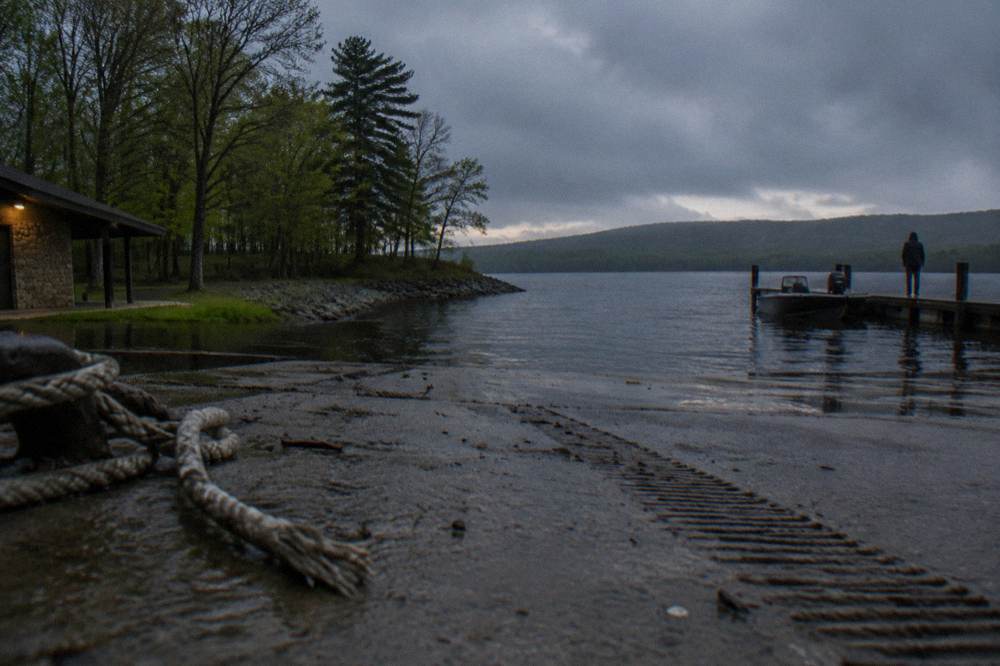
One rule specific to this zone, and to the whole lake: beaching a boat is not permitted except in emergencies. The DNR fisheries page states the primary access for boaters is the State Park ramp, and that except for a small buoyed area at the outlet, boats can reach the entire lake. That reach is the main basin's real selling point: from this central zone you can run north to the restaurants or south to the quiet water without overcommitting either way.
| Main basin feature | What boaters need to know |
|---|---|
| State Park boat launch | Open 24 hours weather permitting; four-vehicle area; launch fee per use or valid permit/pass |
| Beaches | Two sandy beaches; swimming permitted when swim lines are installed |
| Fishing | Known for walleye, smallmouth bass and large panfish; pike over 40 inches caught regularly |
| Ranger docks and swim area | Closed to fishing |
| Reach | Entire lake accessible by boat except a small buoyed area at the outlet |
Below the Glendale Bridge the lake quiets down: the Chamber describes this southern stretch as quiet coves and sailboat water, with the deepest part of the lake, about 75 feet near the dam breast, at its end. Traffic thins, the shoreline feels more wooded, and the coves fold back into the hills far enough that you can lose the main channel from sight. It is the zone for slow cruising, fishing or swimming off the boat.
Sailboats concentrate down here for the same reason kayakers like the cove tips: the water is calmer and the traffic is lighter. For a pontoon party, the south end is the escape valve on busy summer weekends, when the main basin carries the bulk of the rental fleet. The run itself is worth doing at least once; the shoreline folds in on itself, and the forest comes right down to the buffer strip the State owns around the whole lake.
Anglers work this end hard, and the DNR fisheries page explains why: the deep water near the dam, the points and the cove mouths all hold fish through the seasons. The lake is managed for largemouth and smallmouth bass, walleye, northern pike, chain pickerel, yellow perch, bluegill, pumpkinseed and crappie, and it is Maryland's premier ice-fishing destination when the weather allows. Walleye harvest is closed March 1 through April 15, with the open season running April 16 to the end of February, five fish daily and a 15-inch minimum. The full species and season breakdown is in our fishing on Deep Creek Lake guide.
The one thing the south end asks of a boater is planning. It is the farthest zone from the McHenry services, so fuel, food and restrooms are a run away, and the afternoon wind that builds on the main basin has to be crossed again on the way home. Boaters who start their day early get the south end at its calmest and beat the return chop.
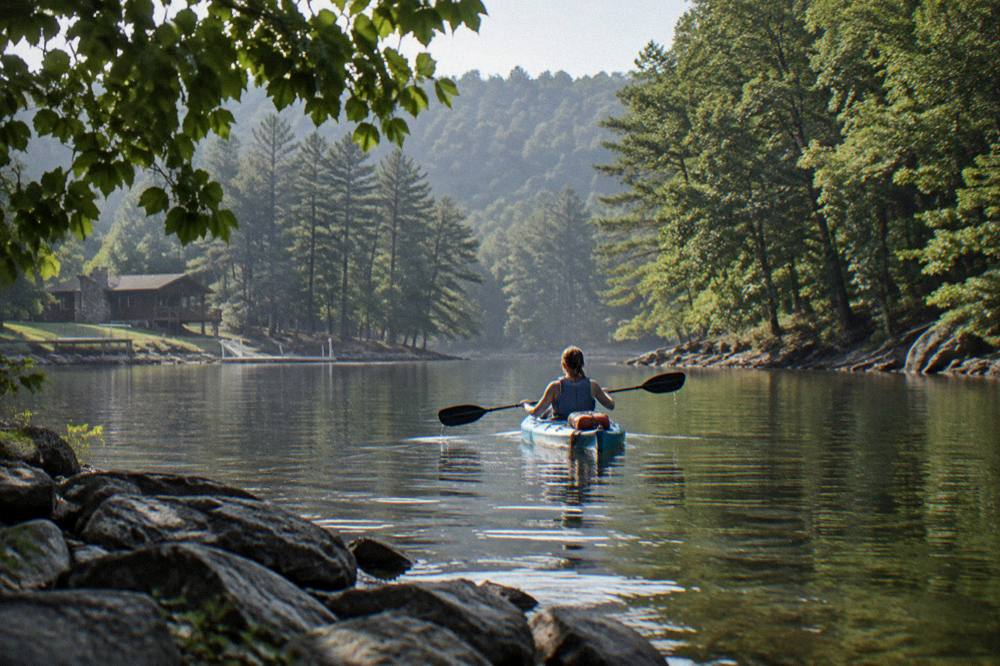
Kayakers favor the cove tips, per the Garrett County Chamber's description of the lake, because the coves hold flat water through the afternoon wind and put paddlers close to shoreline wildlife without sharing lanes with motorboats. Paddleboarders want the same shelter plus an easy put-in, which the State Park's canoe and kayak launch at the main beach lot provides. The southern coves below the Glendale Bridge are the lake's natural paddle territory.
The paddle side of this lake has its own geography. Motorboats own the long open runs; paddlers own the margins. A cove tip that looks like a dead end from a pontoon is the whole destination from a kayak: herons, turtles, overhanging hardwoods and water too shallow for anything with a lower unit. The Chamber's fast-facts page is the source for the cove-tip habit, and it matches how the rental outfits operate: Deep Creek Paddle Co delivers kayaks, paddleboards, tandem kayaks and fishing kayaks to the water, listing single kayaks from $35, paddleboards from $40, tandems from $55 and fishing kayaks from $40, with online reservations.
| Paddle option | Where it fits | What the operator lists |
|---|---|---|
| Delivered kayak or SUP | Any cove or lodging around the lake | Single kayak from $35, SUP from $40, tandem from $55 |
| State Park beach rental | Main basin, at the sandy beach | Kayaks, paddleboards, tubes and chairs available |
| Wisp Lake Adventures | State Park lake activities | Kayak $19 for one hour or $34 for two; SUP $24 or $39 |
| Canoe and kayak launch | State Park main beach lot | Free put-in for your own boat |
Paddlers should still read the same rulebook as everyone else: the 100-foot no-wake distance protects you from motorboats, and it binds your own behavior near docks and shore. A life jacket is required equipment, and the DNR's boating safety guidance is the reference for what to carry. The full paddle picture, including routes and rentals, is in our kayak and paddleboard guide.
The core lake-wide rules are a 26-foot overall boat length limit, 30 feet for pontoon boats, a 100-foot no-wake distance from shoreline, bridges, piers, docks and other vessels, an 88-decibel noise limit tested at idle, and hour restrictions on personal watercraft, which may not run from 11 AM to 4 PM on peak summer weekend days. Engines may not exceed the manufacturer's recommended maximum horsepower.
These come from the Maryland regulations governing the lake, and DNR's pages carry the authoritative wording. DNR-linked summaries state the length and horsepower limits and the personal watercraft hours; the no-wake rule is on the DNR's lake rules page directly. The practical version for a visitor: rent or trailer a boat within the length limit, slow down within 100 feet of anything, and if your day includes jet skis, plan them for the morning or late afternoon on summer weekends. The details behind each rule are unpacked in our Deep Creek Lake boating rules guide.
| Rule | The limit | Where it bites hardest |
|---|---|---|
| Boat length | 26 feet overall, 30 feet for pontoons | Trailer choice, rental fleet |
| No-wake distance | Within 100 feet of shore, bridges, piers, docks, vessels | Bridge passes, cove mouths, restaurant docks |
| Noise | 88 dB tested at idle, no cutouts | Older performance boats |
| Personal watercraft hours | None 11 AM to 4 PM on Memorial Day weekend and July 1 to Labor Day weekends and holidays | Summer weekend afternoons |
| Clean Drain Dry | No launching with attached plants or prohibited species | Every launch, every boat |
The invasive species rule deserves a plain sentence, because it carries the steepest penalty on the lake: placing a vessel or equipment with attached aquatic plants, zebra mussels or other prohibited nonnative organisms into State waters can mean up to 30 days and $2,500 per offense. DNR advises CLEAN, DRAIN, DRY with at least 48 hours of drying; hydrilla was first found in the lake in 2013 and is under continuing herbicide treatment, and Launch Stewards at the State Park ramp offer free voluntary inspections. The DNR's boats at Deep Creek Lake page covers it in full.
Anyone born on or after July 1, 1972 must carry a boating safety education certificate to operate a numbered or documented vessel on Maryland waters. Renters get a simpler path: for a rented motorized vessel other than a personal watercraft, the rental company has you read a safety sheet and issues a 10-day temporary certificate. The certificate requirements are explained in our boating license question post.

Brookfield Renewable keeps the lake inside a permitted operating rule band, controlled under a Maryland Department of the Environment water permit, with allowances for high runoff or drought, so the water sits near full pool through the boating season and eases lower in late fall. No month-by-month band table is published in primary sources. The rental season runs roughly mid-May to mid-October, and docks come out across late fall in stages.
What that means on the water is simple: in summer, the lake behaves like the postcard, and boaters rarely think about level at all. In late fall, the level eases down and the docks come out, first the public docks at the State Park in stages, then private and commercial docks, which must be out of the water from November 30 to April 1. Boaters planning a late-season trip should check conditions with the State Park at 301-387-5563, and the Brookfield Safe Waters page carries lake level readings. The full picture, including the winter drawdown, is in our lake levels and winter drawdown guide.
Timing the season matters as much as picking a zone. Early summer gives high water and long evenings; midsummer weekends put the most boats on the main basin; late September and October trade warm water for empty coves and foliage color, with Garrett County typically peaking in the second or third week of October. Wind and rain can strip color in a day, so autumn boaters should watch the forecast and go on the calm morning rather than saving the run for the afternoon. Our best time for boating guide works through the whole calendar.
| Season stretch | What it means for boating |
|---|---|
| Mid-May through June | Rental fleets open; high water; light weekday traffic |
| July through Labor Day | Peak season; personal watercraft hour limits on summer weekends; busiest main basin |
| September | Quieter water, warm days, empty coves |
| October | Foliage color, typically peaking second or third week; docks begin coming out |
| Late fall through winter | Levels ease within the band; docks out; boating gives way to ice fishing when the lake freezes |
Staying near the south end of this arc pays off in October in particular. Lake Pointe Inn sits near the State Park, close to the ramp and the water, with a free full breakfast and an adjacent golf course per its listing, which suits a foliage morning that starts at the launch before the wind rises. Later in the season, when the docks come out and the rentals close, the lake's quiet side takes over entirely; the ice-fishing stretch is covered in our ice fishing guide.
McHenry, near Deep Creek Lake State Park
Close to the lake and the State Park, with free full breakfast and an adjacent golf course per the listing.
Check ratesOne closing habit ties every zone together: confirm before you commit. Rental prices change, tour schedules shift with the season, and lake conditions move with the weather. The operators' own pages, the State Park number, and the DNR's lake pages are the sources worth trusting, and Deep Creek Boat Tours keeps this guide's zone map in mind when planning any day on the water.
The lake runs about 13 miles north to south with 69 miles of shoreline. Boaters treat it as three zones: the north end at McHenry Cove with rentals and restaurants, the main basin south of the Deep Creek Lake Bridge around the State Park, and the quiet southern coves below the Glendale Bridge.
The north end around McHenry Cove. It holds the rental fleets, the restaurants and the sheltered water of the cove itself, which is the easiest place to get comfortable handling a boat before running into the wider main basin.
Yes. Except for a small buoyed area at the outlet, boats can reach the entire lake from the State Park ramp, per the DNR fisheries page. The full north-to-south run is long enough that most boaters plan around one or two zones in a day rather than the whole lake.
Below the Glendale Bridge. The Garrett County Chamber describes this southern stretch as quiet coves and sailboat water, and kayakers favor the cove tips through this end of the lake.
No. The 26-foot length limit, the 100-foot no-wake distance, the 88-decibel noise limit and the personal watercraft hour restrictions apply lake-wide. What changes between zones is traffic density and water conditions, not the rulebook.
Rental seasons run roughly mid-May to mid-October, with exact dates varying by operator, and docks come out of the water across late fall. Check the operator's page for this year's dates and call the State Park at 301-387-5563 for conditions.
Before you go, the pick for this guide:
LakeFront Lodge
Lodging in McHenry, at the north end of the lake near the rental docks and the Wisp concession.
Check rates →