The Garrett Inn
Oakland
About 2.4 miles (3 minutes by car) from the lake per the listing.
Check ratesDeep Creek Lake is Maryland's premier ice-fishing destination when a cold winter locks in, with yellow perch, walleye and bluegill under the ice and no certified-safe ice anywhere.
Short answer
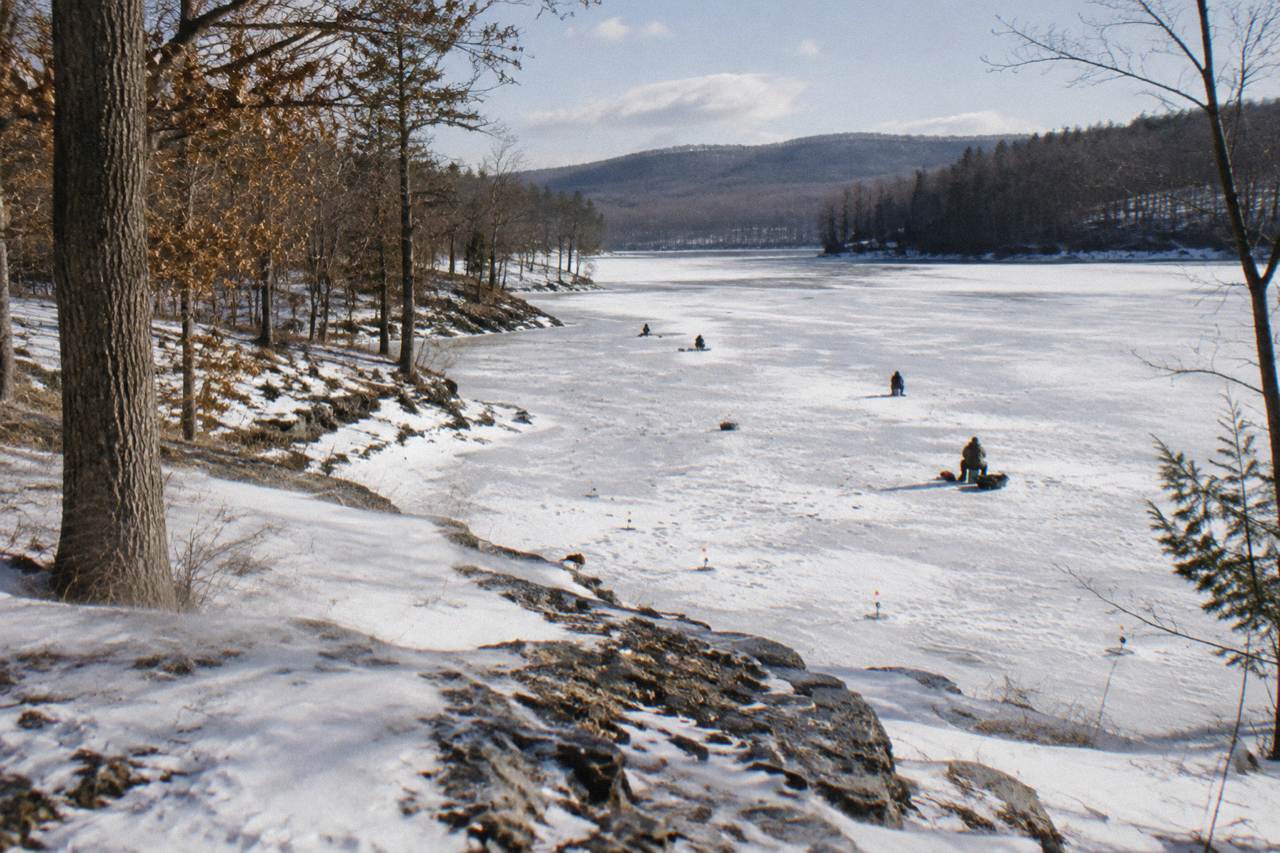
Deep Creek Lake is Maryland's premier ice-fishing lake. Ice typically forms in late December or early January in a normal cold winter and can support fishing through February, roughly a two-month season in good years. Maryland DNR does not measure or certify ice thickness, so anglers test the ice themselves and follow state safety guidance.
Deep Creek Lake is the one Maryland waterbody where ice fishing sits at the center of the winter calendar. At 3,900 acres and up to about 75 feet deep near the dam, the lake cools late but freezes hard in a normal cold winter, and once the ice thickens, augers appear at the coves. The Maryland DNR fisheries page calls it Maryland's premier ice-fishing destination when the weather allows, a status no other lake in the state holds.
The season is short and conditional. Ice typically forms in late December or early January in a normal cold winter and supports fishing through February, a window of roughly two months in the best years. In mild winters the window shrinks or never opens. That conditional nature is the whole planning problem: anglers watch the weather, call ahead, and treat every trip as a fresh judgment about the ice rather than a repeat of the last one.
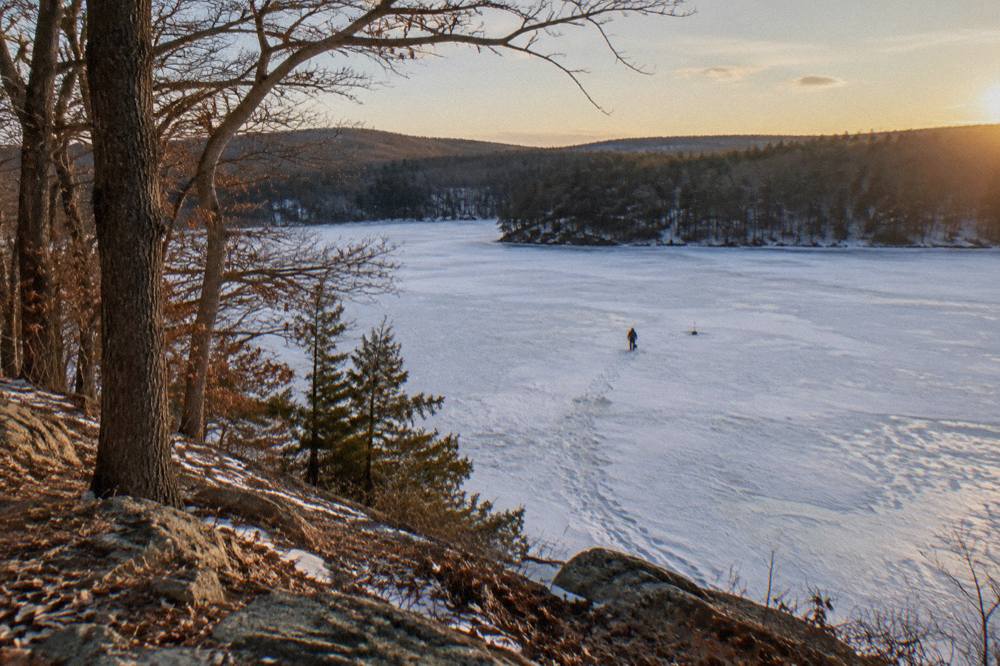
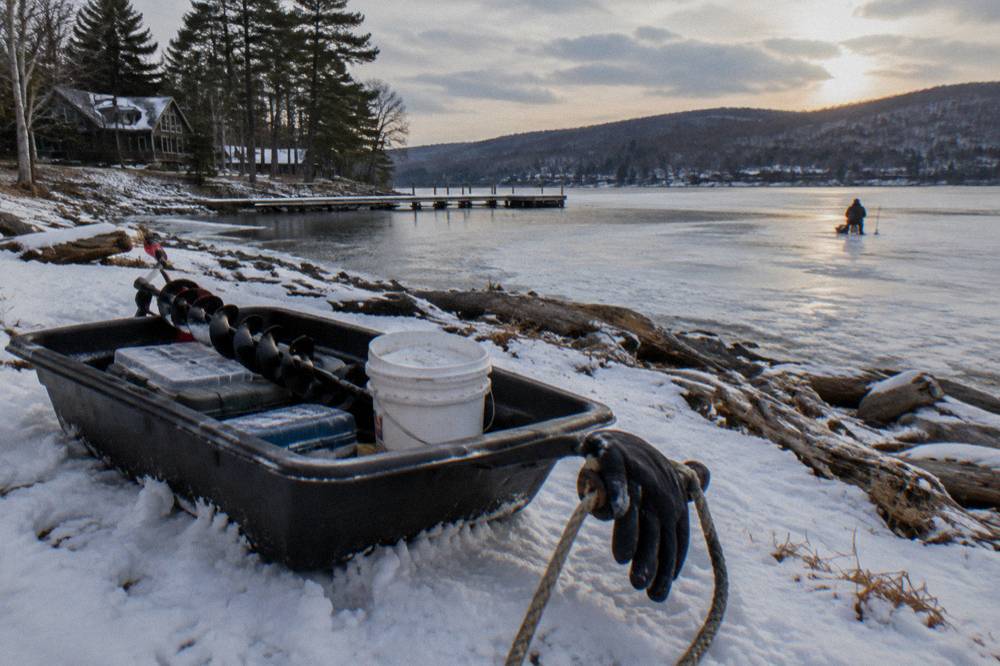
Ice fishing on Deep Creek Lake means short walks from shore, crowds clustered over the best perch and walleye water, and a season that rewards flexibility over planning. Anglers target yellow perch, walleye and bluegills through the ice, with bass, crappie and northern pike also caught when conditions allow. The lake's many coves give sheltered spots where ice thickens first and most reliably.
The experience is compact by big-lake standards. Anglers commonly set up within a few hundred yards of a shoreline access point, drill through clear black ice, and work jigs or live bait for perch schools that move through the coves. The crowd pattern follows the fish: on good weekends in a strong ice year, clusters of shanties and buckets mark the community spots, while quieter fishing waits a short walk further along the shoreline.
The lake's geography shapes the fishing. The main basin holds deeper water, while the coves off the long, branching shoreline freeze earlier and hold panfish. The Garrett County Chamber notes that the lake does not shut down in winter; ice fishing after freeze-over is one of the main reasons, alongside snowmobiling and the ski slopes at Wisp. Anyone wanting the broader winter picture can read Deep Creek Boat Tours year-round coverage of the lake, from summer pontoon boating to hardwater season.
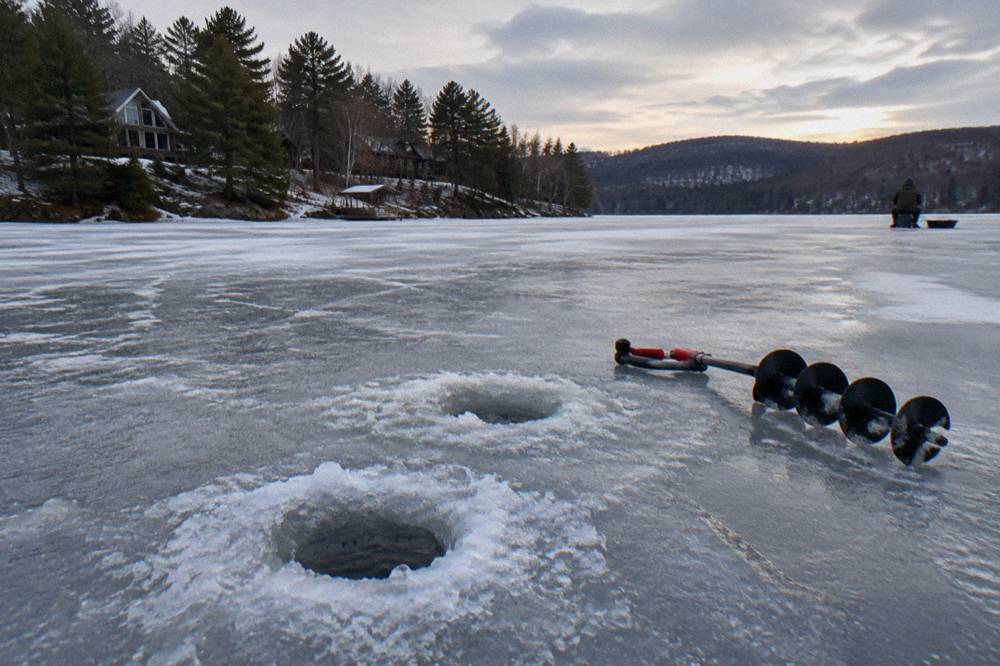
Ice on Deep Creek Lake typically forms in late December or early January in a normal cold winter, and the fishing usually runs through February. That gives roughly a two-month season in good years. Shallow coves lock in first, the main basin follows, and mild winters can leave the lake partly open or unsafe throughout. Whenever you do find safe ice, a smart prep step is checking the packing checklist for a day at Deep Creek Lake so you arrive with the right gear.
The order of freezing matters for planning. Cove tips and shallow bays develop fishable ice before the deep water near the dam breast, which at about 75 feet is the last to give up its heat. Early-season anglers work the coves; midwinter, when a hard freeze holds, more of the lake opens up to foot traffic. Wind and snowfall work against the ice: snow insulates and slows thickening, and wind can keep patches open well into January.
Two lake-specific factors are worth knowing. First, Deep Creek is a hydroelectric reservoir managed within an operating rule band, and winter levels can be drawn down from the summer full pool of 2,462 feet; the ice you fish on formed at one level, and a falling water level can leave a gap between ice and water. Second, springs and currents under the ice create weak spots, a hazard the DNR guidance flags specifically for this lake. Neither factor stops the fishing, but both argue for testing as you go rather than assuming a whole bay is uniform. If you're still weighing whether this lake fits your trip at all, the guide to ice fishing on Deep Creek Lake covers the season, the catch, and how to plan it.
| Phase of winter | Typical ice condition | What anglers do |
|---|---|---|
| Early December | Open water or thin shore ice | Boat season winding down; no ice fishing |
| Late December to early January | Cove ice forms in cold winters | First trips to sheltered coves, careful testing |
| Mid-January to February | Main lake ice in a hard winter | Peak season for perch, walleye and bluegill |
| Late February into March | Deteriorating, variable ice | Season ends as ice thaws and softens |
The timing above is a pattern, not a schedule. The Garrett County Chamber's advice is the practical one: call Deep Creek Lake State Park at 301-387-5563 for conditions before driving up, and treat local tackle-shop reports as the freshest source on ice thickness.
No. Maryland DNR does not measure or certify ice thickness anywhere in the state, including Deep Creek Lake. No sign, report or map declares the ice safe. Every angler makes their own call, tests the ice in multiple spots with an auger or spud bar, and follows the state's published guidance: no ice is one hundred percent safe, and new ice is often stronger than old ice.
The DNR guidance is specific and worth reading in full before a first trip. The core points: never go alone, always tell someone your plans, and test thickness in multiple places rather than one hole at the truck. For foot travel and ice fishing, a minimum of four inches of clear, solid ice is the recommended floor. Cloudy or white ice, ice formed over snow, is weaker than clear ice of the same thickness.
The equipment guidance is equally plain. Wear a life jacket, carry ice picks and rope, and be aware of weak spots created by springs, bubbles or currents, hazards Deep Creek Lake specifically has. Conditions change daily, which is why the guidance frames ice safety as a repeated habit rather than a one-time clearance.
| DNR ice safety guidance | What it means on the ice |
|---|---|
| No ice is 100% safe | Treat every trip as a new judgment |
| Test with an auger or spud bar | Check multiple spots, not just near shore |
| Four inches of clear, solid ice | Minimum recommended for foot travel and ice fishing |
| Wear a life jacket, carry picks and rope | Rescue gear works only if it is on you |
| Watch for springs, bubbles and currents | Deep Creek has known weak-spot hazards |
| New ice is often stronger than old ice | Old, refrozen ice is not a bonus |
Anglers who also boat the lake in summer will recognize the same self-reliance theme. Maryland's boating rules put the safety certificate and the life jacket on the operator, and the hardwater season simply continues that pattern with a spud bar instead of a kill switch.
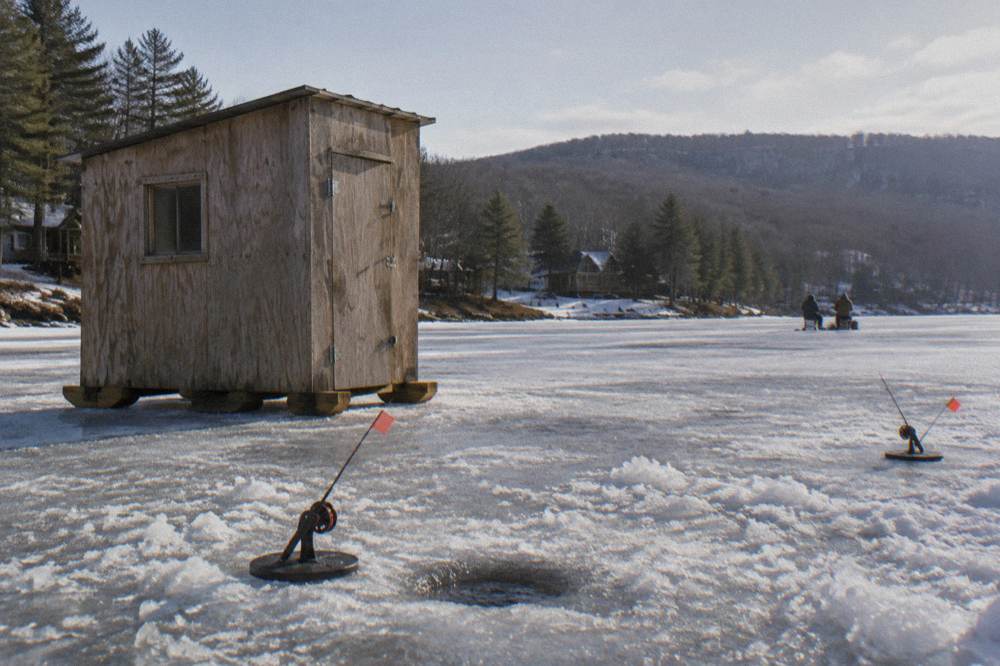
Yellow perch, walleye and bluegills are the mainstay of the Deep Creek Lake hardwater catch, with bass, crappie and northern pike taken when conditions allow. The lake's panfish run large, its walleye and smallmouth bass are abundant, and northern pike over 40 inches are caught regularly, according to the Maryland DNR fisheries page for the lake.
Perch fishing drives most of the traffic. Schools of yellow perch move through the coves, and limits are realistic on good days when the fish are located. Walleye are the second draw, typically targeted at first and last light near points and drop-offs, and the winter season conveniently sits inside the open harvest window for the species. Bluegills and pumpkinseed fill in the midday bite in the same coves as the perch.
The surprise fish is the northern pike. DNR notes that pike over 40 inches are caught regularly in the lake, and ice anglers fishing larger baits for walleye occasionally tie into one. Crappie and both bass species also feed under the ice, though cold water slows them, and catch rates drop compared with the open-water season covered in the fishing on Deep Creek Lake guide.

| Species | Hardwater availability | Typical approach |
|---|---|---|
| Yellow perch | Core of the fishery, schools in coves | Small jigs, spikes or minnows, hole-hopping |
| Walleye | Prime winter target | Jigging spoons and live bait near drop-offs |
| Bluegill and pumpkinseed | Reliable midday bite | Tiny jigs close to the bottom in coves |
| Crappie | Taken when conditions allow | Small minnows near structure |
| Northern pike | Occasional, some over 40 inches | Larger baits meant for walleye |
| Largemouth and smallmouth bass | Slow but present | Same presentations, lower expectations |
The year-round regulations carry straight through the ice. Walleye are closed to harvest from March 1 through April 15, so the ice season lands entirely inside the open season, which runs April 16 to the end of February with a five-fish daily limit, a 15-inch minimum and a protected slot between 18 and 21 inches. A Maryland fishing license with a trout stamp where required is standard, and DNR rules apply equally to hardwater anglers.
The walleye calendar is the one that matters most to ice anglers, and it lines up well. A February ice trip falls in the open harvest window; an early-March trip does not, and the ice is usually gone by then anyway. The slot limit means measuring fish matters: a walleye between 18 and 21 inches goes back in the hole.
Two local access rules from the State Park carry into winter fishing trips. The ranger docks and the swim area at Deep Creek Lake State Park are closed to fishing, and beaching a boat is not permitted except in emergencies, a rule from the boating season that simply stops applying once there is no open water to beach on. Anglers should also note that the State Park main gate closes during snowmobile season, from December 15 to March 15, with parking moving to the Discovery Center lot, per the State Park's official page.
| Rule | Detail | Winter relevance |
|---|---|---|
| Walleye season | Closed to harvest March 1 to April 15 | Entire ice season sits in the open window |
| Walleye limits | 5 daily, 10 in possession, 15-inch minimum | Protected slot 18 to 21 inches, release those |
| State Park fishing closures | Ranger docks and swim area closed | Applies to hardwater access near the park |
| Winter gate closure | Main gate shut December 15 to March 15 | Park at the Discovery Center lot |
| License | Maryland fishing license required | Buy before the trip; check DNR for current fees |
Shoreline access through public points is the route onto the ice, and the State Park on the lake's eastern side is the anchor. Its day-use area, beach lot and surrounding trails sit close to coves that freeze early, parking moves to the Discovery Center lot once the main gate closes for snowmobile season, and much of the public hardwater activity clusters within a short walk of that corridor.
The geography from the Chamber's fast-facts page maps the winter fishery the same way it maps the summer one. McHenry Cove at the northern tip holds the rentals and restaurants in boating months and becomes a walk-on point in hardwater months. South of the Deep Creek Lake Bridge, the State Park side gives the most developed public access. Below the Glendale Bridge, the quiet coves that kayakers favor in summer are the same sheltered water that locks in first each winter.
Anglers should confirm conditions and access by phone before driving up. The State Park number, 301-387-5563, is the one the Chamber itself recommends for winter conditions, and it doubles as the way to check on gate status after snow. For the full public-access picture across the seasons, including the boat launch that serves the open-water months, see the Deep Creek Lake State Park guide.
The short list is an auger or spud bar for testing and drilling, a life jacket worn rather than packed, ice picks and rope for rescue, short ice rods with small jigs and live bait, a sled to haul it, and layers built for sitting still in wind. The DNR guidance adds the discipline items: go with a partner, tell someone your plan, and re-test thickness as you move because conditions change daily.
The testing tools deserve the first line on the checklist. The guidance recommends four inches of clear, solid ice as the minimum for foot travel and ice fishing, measured with an auger or spud bar in multiple spots. Cloudy ice, formed over snow or refrozen slush, is weaker at the same thickness, so the reading matters less than the quality of the ice behind it.
Bait and tackle are simple compared with open-water bass fishing. Perch and bluegills want small jigs tipped with spikes or minnows, worked aggressively to call schools in and then slowed down once fish appear under the hole. Walleye anglers jig spoons or dead-stick a minnow near bottom at the edges of first and last light. A flasher helps, but plenty of limits come to anglers working two holes and reading the rod tip.
| Gear category | Items | Why it earns its spot |
|---|---|---|
| Ice testing | Auger or spud bar | Measure thickness in multiple spots, four-inch minimum |
| Rescue | Life jacket, ice picks, rope | The DNR lists these as standard, not optional |
| Fishing | Short rods, small jigs, live bait | Perch, bluegills and walleye all take jigged presentations |
| Comfort | Insulated layers, windproof shell, sled | Sitting still in wind is the real weather problem |
| Planning | Phone with the park number saved | 301-387-5563 for conditions before and during the trip |
Oakland and McHenry are the two bases that work. Oakland sits at the lake's southern end, about 2.4 miles from the water by car, close to the Glendale Bridge coves that freeze first. McHenry, at the northern tip, is minutes from the State Park access corridor and the Discovery Center lot where winter parking lands. Both keep you within a short drive of the ice.
Oakland is the value play. The Garrett Inn sits about 2.4 miles, roughly a three-minute drive, from the lake per its listing, which puts the southern coves effectively at the end of the street, and it makes a sensible base for anglers who want to fish the early-ice water below the Glendale Bridge. Budget travelers can look at the Baja Motel in Oakland, a short drive from the Thayerville end of the lake, which covers the mid-lake access points from the inexpensive end of the market.
Oakland
About 2.4 miles (3 minutes by car) from the lake per the listing.
Check ratesMcHenry covers the north. Lake Pointe Inn sits near the lake and the State Park, with a free full breakfast and an adjacent golf course per its listing; for a dawn-to-dusk ice schedule, a hot breakfast before walking out the door is not a small thing. Early ice and the best of it often sit within a short drive of both towns, so the choice usually comes down to which end of the lake you plan to fish. More area-by-area detail, including the summer boating perspective on each base, is in the where to stay for boating guide.
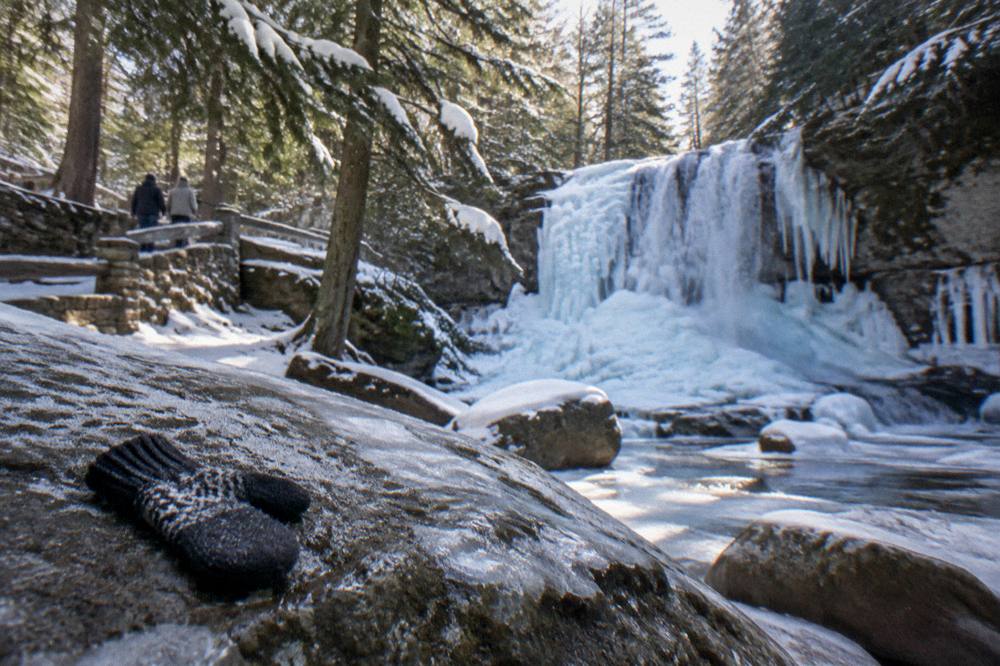
When the ice is thin or absent, Garrett County still delivers. The Wisp ski season typically runs early December to mid-March on the mountain above McHenry, Swallow Falls State Park holds Muddy Creek Falls, a 53-foot waterfall that photographs dramatically in freezing weather, and the lake area's restaurants and shops stay open year-round. A flexible weekend beats a cancelled one.
The waterfall is the standout non-fishing stop. Swallow Falls State Park, nine miles north of Oakland, holds Muddy Creek Falls, Maryland's tallest waterfall, and winter ice transforms the gorge into something the summer crowds never see. Day-use hours run 8 a.m. to sunset, and day-use fees apply, so check the park's page before heading out.
The same flexibility logic applies to the whole winter calendar. If a cold snap has not yet locked in the coves, the fall and winter around the lake still carry their own draws, and the things to do at Deep Creek Lake guide rounds them up across the seasons. Anglers who plan the trip around the weather report, rather than the calendar, fish more and drive home grumpy less.
For a trip built around first ice at the southern coves, the Baja Motel in Oakland keeps the budget low enough that a skunked morning does not ruin the weekend, and Lake Pointe Inn near the State Park puts the northern access corridor within a few minutes of the door.
McHenry, near Deep Creek Lake State Park
Close to the lake and the State Park, with free full breakfast and an adjacent golf course per the listing.
Check ratesIce typically forms in late December or early January in a normal cold winter, with sheltered coves locking in first and the main basin following. The fishing usually runs through February, a season of roughly two months in good years.
No. Maryland DNR does not measure or certify ice thickness. Anglers test the ice themselves with an auger or spud bar in multiple spots and follow the state guidance: no ice is one hundred percent safe, never go alone, and treat four inches of clear, solid ice as the minimum for foot travel and ice fishing.
Yellow perch, walleye and bluegills are the mainstay catch, with crappie, both bass species and occasionally northern pike over 40 inches taken when conditions allow.
Usually yes. Walleye harvest is closed March 1 through April 15, so the ice season falls inside the open window of April 16 to the end of February. The limit is five fish daily with a 15-inch minimum and a protected slot between 18 and 21 inches.
The State Park main gate closes during snowmobile season, December 15 to March 15, and parking moves to the Discovery Center lot. Call the park at 301-387-5563 to confirm gate status and conditions before your trip.
Four inches of clear, solid ice is the recommended minimum for foot travel and ice fishing. Cloudy or refrozen ice is weaker at the same thickness, and springs, bubbles and currents in Deep Creek Lake can create weak spots even where surrounding ice is thick.
Before you go, the pick for this guide:
Wisp Resort
Full-service resort 0.6 miles from the lake (11-minute walk per the listing); the Wisp concession runs the State Park pontoon tours.
Check rates →