Lake Pointe Inn
McHenry, near Deep Creek Lake State Park
Close to the lake and the State Park, with free full breakfast and an adjacent golf course per the listing.
Check ratesDeep Creek Lake is Maryland's premier inland fishery: 3,900 acres holding walleye, smallmouth bass, northern pike and trophy panfish, plus a put-and-take trout program. Here is what bites, when, where and under which rules.
Short answer
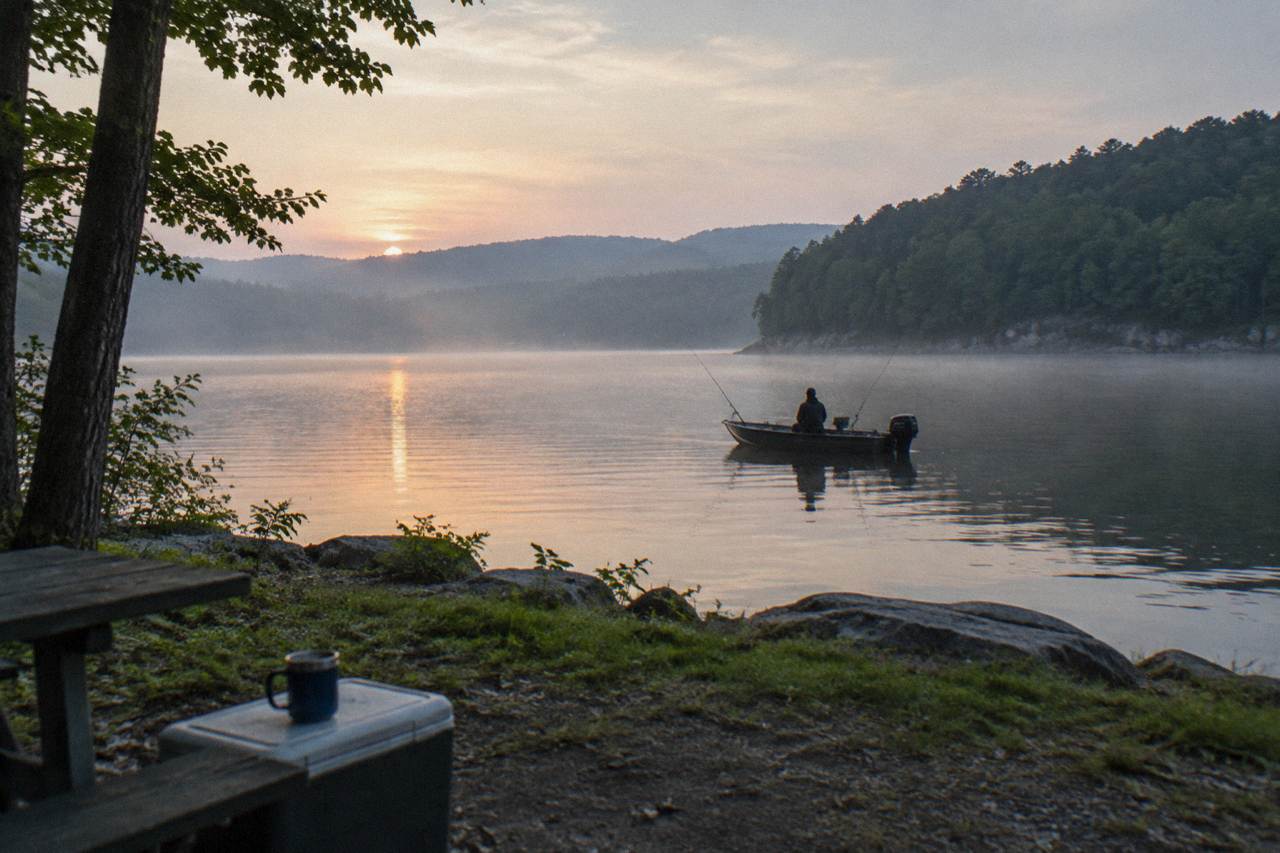
Deep Creek Lake fishing centers on walleye, smallmouth bass, northern pike and large panfish in a 3,900-acre lake with 69 miles of shoreline. Walleye harvest closes March 1 through April 15 and carries a protected 18 to 21 inch slot. A Maryland license is required, and access runs through the State Park ramp and public shoreline points.
Deep Creek Lake covers 3,900 acres at a full pool elevation of 2,462 feet, making it the largest impoundment in Maryland, and the Maryland DNR manages it as one of the state's most productive warmwater fisheries. The lake holds largemouth and smallmouth bass, walleye, northern pike, chain pickerel, yellow perch, bluegill, pumpkinseed and crappie, and it doubles as Maryland's premier ice-fishing destination in cold winters. A put-and-take trout program adds rainbows, browns and golden rainbows in spring and fall. This guide covers what the DNR actually regulates, where anglers reach the water, and how a fishing trip fits around the lake's boating rules.
The fishery rewards two kinds of planning. First, timing: the walleye harvest season, the trout stocking windows and the ice season each open and close on fixed state schedules. Second, access: boaters launch mainly at the State Park ramp, while shore anglers work a limited set of public access points, and the rules differ slightly between the two. The sections below answer the questions anglers actually ask before driving to Garrett County.
The DNR manages largemouth and smallmouth bass, walleye, northern pike, chain pickerel, yellow perch, bluegill, pumpkinseed and crappie in Deep Creek Lake, and the lake is known for large panfish and abundant walleye and smallmouth. Northern pike over 40 inches are caught regularly. A put-and-take trout program stocks rainbow, brown and golden rainbow trout, making the lake a genuine mixed-species fishery.
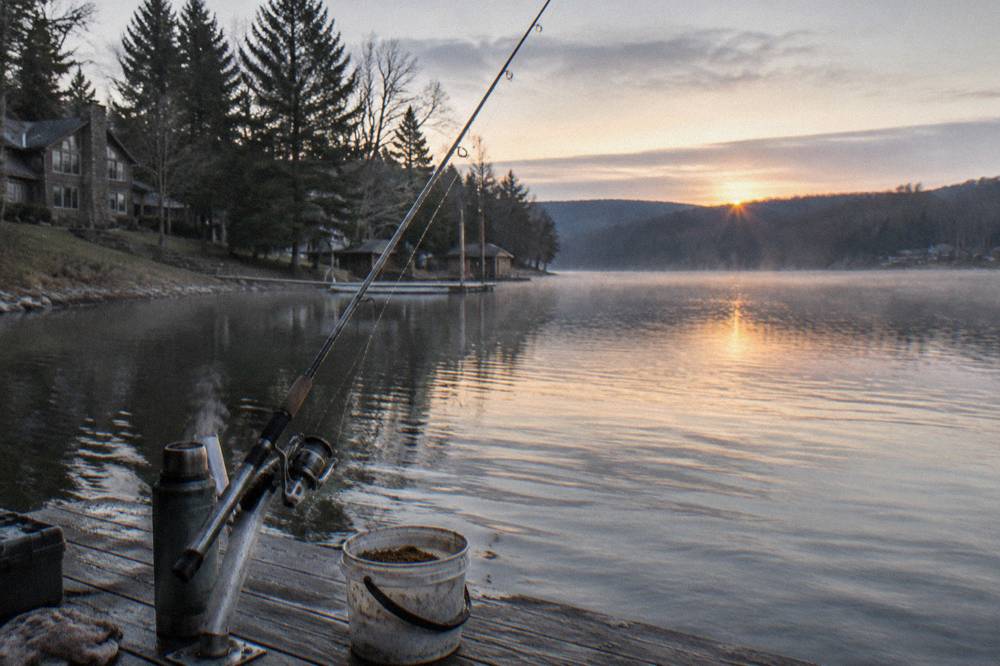
Smallmouth bass and walleye form the backbone of the open-water fishery. The smallmouth hold along rocky banks and points through summer, and both species feed hardest in the low light of morning and evening, which is one reason serious anglers plan trips around dawn. The yellow perch and bluegill fishery matters more than visiting anglers expect: the DNR describes the panfish as large, and ice anglers target yellow perch through the hard-water season in good years. Northern pike sit at the top of the food chain, and fish over 40 inches appear often enough that the DNR calls it out on the lake's official page.
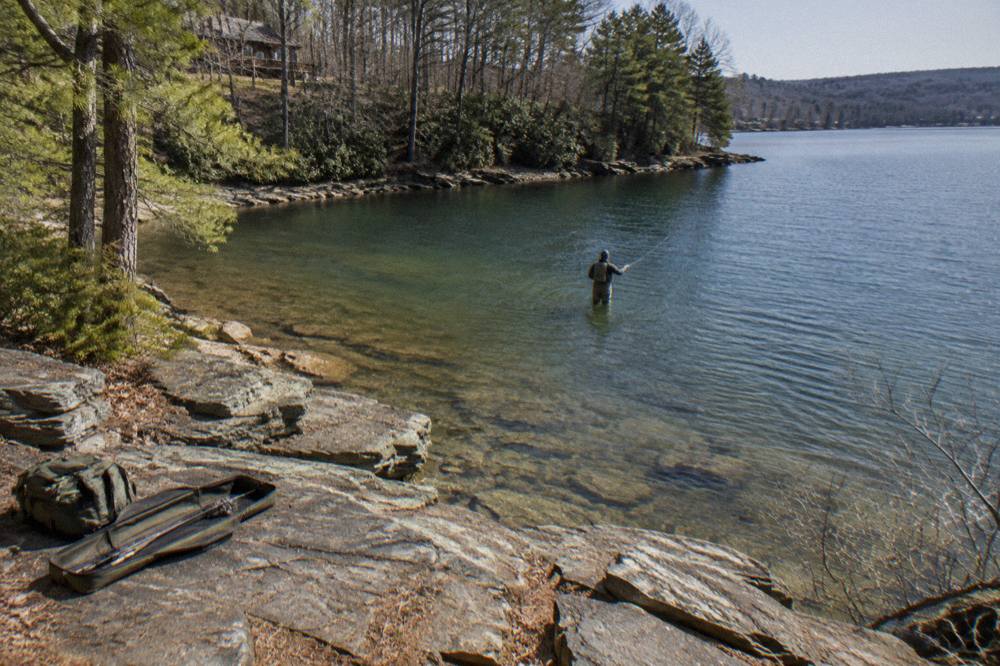
Trout are the seasonal overlay. Deep Creek Lake is managed as a put-and-take area with no special spring closure, so stocked rainbows, browns and golden rainbows are fair game as soon as they arrive. Fall stocking begins in early October, spring stocking resumes in late winter, and the statewide program spreads roughly 240,000 trout across Maryland waters each year. The DNR posts stocking updates on its trout page and runs a stocking hotline during active periods, so check those rather than guessing before a trip.
| Species | Where it shows up | What the DNR says |
|---|---|---|
| Smallmouth bass | Rocky banks, points, open-water structure | Abundant; a signature species |
| Walleye | Deeper basins, bars, evening shallows | Abundant; slot and closure apply |
| Northern pike | Weedy coves and flats | Fish over 40 inches caught regularly |
| Yellow perch | Coves, weed edges, ice season | Part of the noted large-panfish fishery |
| Bluegill and pumpkinseed | Shoreline cover, docks, coves | Noted for large panfish |
| Crappie | Wood cover and bridge areas | Managed species |
| Trout | Near stocking points, spring and fall | Put-and-take stocking program |
Walleye harvest is closed March 1 through April 15 and open April 16 through the end of February. In the open season the daily limit is 5 fish, 10 in possession, with a 15 inch minimum and a protected slot between 18 and 21 inches: walleye in the slot go back, and only fish under 18 or over 21 inches may be kept.
The March closure protects spawning fish, and it lands exactly when lake access is hardest anyway: the State Park main gate closes during snowmobile season from December 15 to March 15, with parking moving to the Discovery Center. The open season that begins April 16 is when the walleye fishery rebuilds angler effort, and evening trolling and jigging produce through summer. Anglers planning a keep-and-eat trip should measure carefully, because the protected slot removes the most common mid-size fish from the cooler.

The slot and creel numbers come straight from the DNR's Deep Creek Lake page, and they are worth re-checking each season because regulations can change. Our ice-fishing guide covers the hard-water side of the walleye and perch fishery in detail, since ice anglers fish the same species under the same rules.
Shoreline access for anglers runs through public access points, primarily inside Deep Creek Lake State Park, while the primary access for boaters is the State Park ramp. Two areas are explicitly closed to fishing: the ranger docks and the swim area at the State Park. Beaching a boat is not permitted except in emergencies, so shore anglers cannot simply pull up anywhere. Once you know where you can legally fish, our guide to the best fishing spots on Deep Creek Lake shows you which coves and bridges are worth the trip.
The public shoreline is limited because Maryland owns the lake bed and a buffer strip around the water, but most private-frontage shoreline sits behind docks and posted signs. Practically, that concentrates shore fishing in the State Park, at public access points the DNR identifies, and at the tailwater and cove areas reached by foot. Kayak anglers blur the line: a paddle craft launched from the canoe and kayak launch at the State Park main beach lot reaches shoreline and cove water that bank anglers cannot. Our guide to kayak and paddleboard options on the lake covers that launch and the rental shops that deliver fishing kayaks to access points.
For anglers bringing their own boat, the launch logistics matter as much as the fishing spots: the ramp is open 24 hours a day weather permitting, a launch fee or a valid lake use permit applies, and winter access runs through the park's duty ranger line. The boat ramps and launching guide walks through the full checklist. If you are still deciding whether a boat is worth it at all, the blog post can you boat on Deep Creek Lake answers the basic access question, and yes, except for a small buoyed area at the outlet, boats can reach the entire lake.
| Access type | Where | Notes |
|---|---|---|
| Boat ramp | Deep Creek Lake State Park | Open 24 hours, weather permitting; fee or lake use permit |
| Carry-in launch | State Park main beach lot | Canoe and kayak launch |
| Shoreline | Public access points | Limited; much frontage is private buffer strip |
| Closed water | Ranger docks and swim area at the State Park | Fishing prohibited |
| Beach access | From a boat | Not permitted except emergencies |
Anglers need a Maryland fishing license with a trout stamp to fish Deep Creek Lake and to take stocked trout, following standard state license rules. Separately, anyone born on or after July 1, 1972 must carry a boating safety education certificate to operate a numbered vessel, though renters of motorized boats read a safety sheet and receive a 10-day temporary certificate from the rental company.
The two documents trip up different groups. Visiting anglers who fish from shore or from a rented pontoon only need the fishing side sorted. Anglers who bring their own boat, or who operate a rental without the rental-company paperwork, fall under the certificate rule, and the DNR's boating safety pages explain the course and the temporary rental certificate in full. Paddle craft sit outside the motorized-vessel rule, which is one reason kayak fishing has grown here.
Licenses and stamps are sold online and at local outlets, and the DNR's Deep Creek Lake fishing page carries the current seasons and limits in one place. Budget a few minutes before the trip rather than at the ramp, because the certificate and the license are checked on the water.
Boats on Deep Creek Lake must run at no-wake speed within 100 feet of shoreline, bridges, piers, docks or other vessels, and vessel length is capped at 26 feet overall, 30 feet for pontoons. Night skiing is illegal, posted 6-knot zones ban skiing, and the lake noise limit is 88 decibels tested at idle. These rules shape where and how anglers can fish.
For fishing specifically, the 100-foot no-wake rule is the one felt daily: it slows traffic along the banks where smallmouth and perch hold, and it means a boat working shoreline structure rarely gets rolled by wake. The coves below the Glendale Bridge are the quiet water, favored by sailboats and kayakers, and kayakers favor cove tips, which makes those same coves prime for quiet panfish and pike work. Anglers towing between spots should also know that the DNR lists coves with limited space for towing and wake surfing as an official topic, so read the posted signs rather than assuming.
The invasive-species rule touches every launch. Maryland prohibits placing a vessel or equipment with attached aquatic plants, zebra mussels or other prohibited nonnative organisms into state waters, with penalties that reach $2,500 per offense, and DNR advises clean, drain, dry with at least 48 hours of drying before relaunching. Hydrilla was first found in the lake and remains under a multi-year herbicide treatment program, and Launch Stewards at the State Park ramp offer free voluntary inspections. Wipe the boat, pull the plug and pull any weeds off the trailer: it is the rule and it protects the fishery.
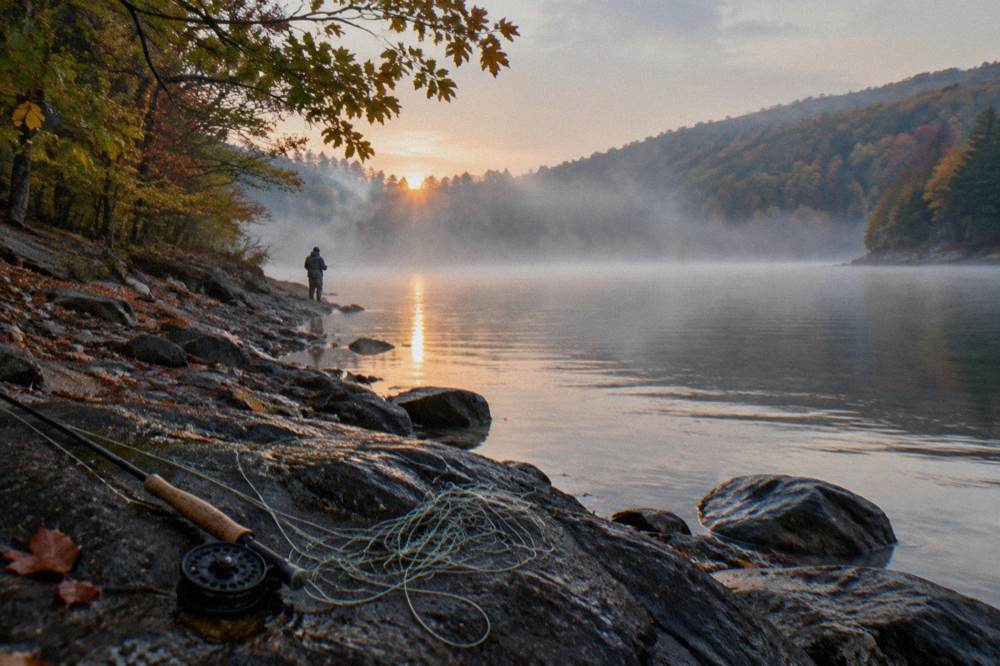
The fishing year splits into four windows: spring, when the walleye season reopens April 16 and trout stocking resumes; summer, when bass, panfish and boat traffic peak together; fall, when stocking returns and foliage crowds the shore; and winter, when hard ice turns the lake into Maryland's premier ice-fishing destination for yellow perch and walleye. Each window changes access, not just catch rates.
Spring is the quiet-value window. The walleye closure ends April 16, water is cold, traffic is thin, and the main gate situation has passed. Summer brings the full rental and pontoon fleet onto the water, which means the best fishing hours shift to early morning and evening; anglers who book lodging near the lake can fish dawn, rest midday and return for the evening bite. Fall overlaps the stocking trucks with peak color, typically in the second or third week of October in Garrett County, and the combination of feeding fish and quieting water makes September through October a strong choice. Winter is its own discipline: ice forms late December or early January in a normal cold winter and can hold through February, and the ice fishing guide covers safety and technique in depth.
| Season | What is happening | Best trip style |
|---|---|---|
| Spring | Walleye reopens April 16, trout stocking resumes | Boat or shore, light crowds |
| Summer | Bass and panfish peak, boat traffic high | Dawn and evening trips |
| Fall | Trout stocked, foliage peak, water quieting | Full-day mixed trips |
| Winter | Ice season on yellow perch and walleye | Walk-on ice fishing, check conditions |
Most fishing-focused visitors stay in McHenry near the State Park ramp or in Oakland near the southern access points. McHenry puts anglers minutes from the launch; Oakland sits a few miles south with simpler rates. Booking near the water matters most in summer and fall, when lake-area rooms fill on weekends around the same dawn and dusk windows anglers want.
In McHenry, the Lake Pointe Inn sits close to the lake and the State Park, with a free full breakfast and an adjacent golf course, which suits anglers who want to be on the water before the launch line builds and eat before driving. On the Oakland side, the Garrett Inn is about 2.4 miles from the lake, a few minutes by car, and works well for anglers fishing the southern coves or driving to Swallow Falls country between bites. Budget travelers find the Baja Motel in Oakland a short drive from the Thayerville end of the lake, close to the rental and tour shops along Garrett Highway.
McHenry, near Deep Creek Lake State Park
Close to the lake and the State Park, with free full breakfast and an adjacent golf course per the listing.
Check ratesThe stay decision mostly comes down to which end of the lake you fish. The lake runs 13 miles north to south, and a McHenry base shortens the morning run to the State Park ramp, while an Oakland base shortens the drive to the quiet coves below the Glendale Bridge. Either way, reserve weekends early: this is a small lodging market around a very popular lake.
Yes. Pontoon rentals, fishing-kayak deliveries and paddleboard rentals all serve anglers, and renters of motorized vessels born on or after July 1, 1972 receive a 10-day temporary boating certificate from the rental company after reading a safety sheet. Deep Creek Paddle Co lists delivered fishing kayaks from $40, and pontoon rental fleets operate from McHenry through the summer season.
The pontoon route suits families and groups who want to fish and swim in one trip: pontoons are stable, the 30-foot length allowance favors them, and the rental shops along Deep Creek Drive run full-day windows from 9 AM to 5 PM in season. Lake Life Boat Rentals lists pontoons from about $524 per day, taxes extra, and Deep Creek Lake Boats lists one-day 70 HP pontoons at about $450, also with taxes extra; both prices come from the operators' own pages and should be confirmed before booking. Deep Creek Paddle Co delivers single kayaks from $35, tandem kayaks from $55 and fishing kayaks from $40 to access points around the lake, which quietly solves the limited-shoreline problem for bank-averse anglers.
Kayak anglers get the cove tips and quiet water almost to themselves. The pontoon rental guide compares the rental fleets in detail, and the general boat rental guide covers ski boats and the reservation policies each operator requires.
| Craft | Where it comes from | Angler fit |
|---|---|---|
| Fishing kayak, delivered | Deep Creek Paddle Co, from $40 | Cove tips, quiet water, no certificate |
| Pontoon, full day | Lake Life Boat Rentals, from about $524 plus tax | Family fishing plus swimming |
| Pontoon, one day | Deep Creek Lake Boats, from about $450 plus tax | Steady platform, groups |
| Beach kayak and SUP | State Park beach rentals in summer | Short sessions near the launch |
Prices above are as each operator lists them on its own page and change season to season, so confirm current rates when reserving. Every operator named here is booked directly, not through this site.
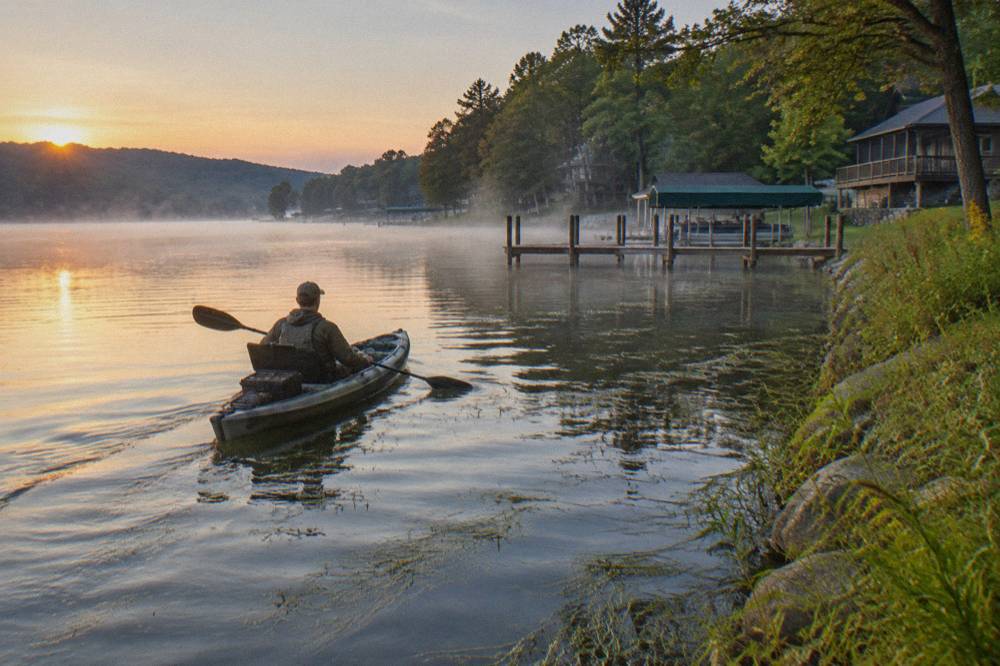
Deep Creek Lake is Maryland's premier ice-fishing destination, primarily for yellow perch and walleye, with bluegills plus bass, crappie and northern pike when conditions allow. Ice typically forms late December or early January in a normal cold winter and supports fishing through February, a short season of roughly two months in good years.
The state's guidance is blunt: no ice is 100 percent safe, and the DNR does not measure or certify ice thickness. Anglers go in pairs, tell someone their plans, test thickness in multiple spots with an auger or spud bar, and treat 4 inches of clear solid ice as the minimum for foot travel. A life jacket, ice picks and rope are standard kit, and Deep Creek's springs and currents create weak spots that do not look different from strong ice. New ice is often stronger than old ice, and conditions change daily, so the rule is to check, not assume.
Access in winter shifts too. The State Park main gate closes December 15 to March 15 for snowmobile season with parking at the Discovery Center, and docks come out of the water across the lake in stages through late fall. The Garrett County Chamber points out the lake does not shut down in winter, and the State Park's phone line carries current conditions. Anglers who want the full hard-water picture should read the dedicated ice fishing on Deep Creek Lake guide before committing to a trip.
Bring a Maryland license and trout stamp, a boating certificate if operating a motorized vessel and born after July 1, 1972, layered clothing for elevation changes, and a plan for the 100-foot no-wake rule and posted zones. Check the DNR's lake page for current seasons and limits, and the operator's page for rental dates, since lake businesses run summer-only schedules.
The practical checklist is short. Measure fish carefully against the walleye slot. Keep the boat clean, drained and dry at the ramp, and accept the free Launch Steward inspection when offered. Fish the edges of the day in summer, and fish the coves when wind pushes the main basin up. For a deeper packing list covering sun, food and safety gear for a full lake day, the blog post on what to bring for a day on Deep Creek Lake is the companion read.
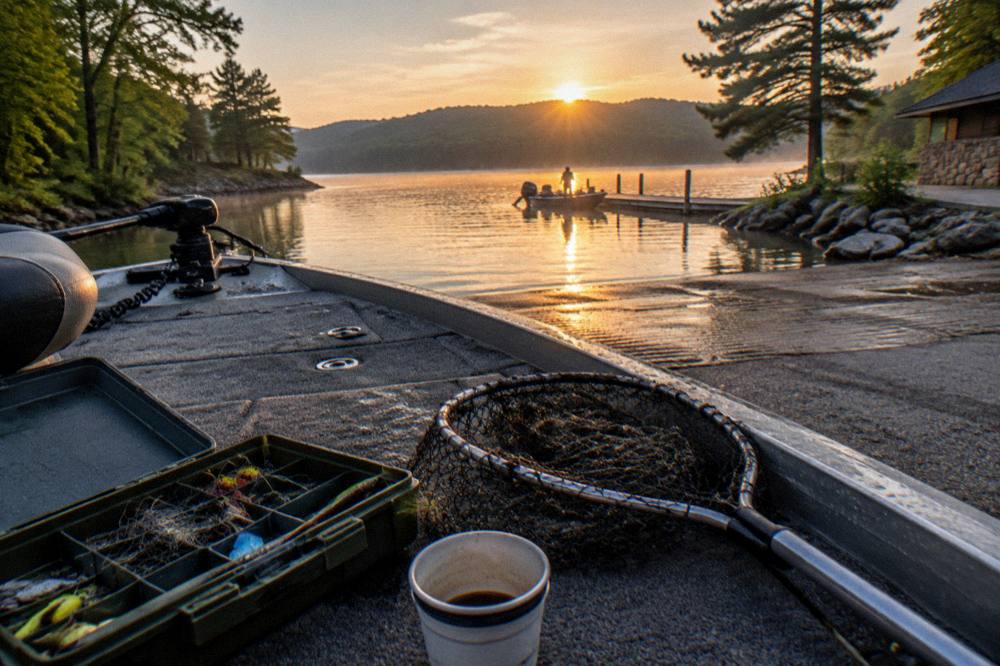
One last planning note: this site, Deep Creek Boat Tours, exists to make lake research like this faster, and the fishing pages here link only to official DNR sources and the operators' own pages. Nothing on the lake is booked through us; the hotels above are the one exception, and even those are simply places we would point a friend toward for an early start.
Oakland
Oakland inn listed under the Deep Creek Lake name.
Check ratesThe daily limit is 5 walleye, 10 in possession, with a 15 inch minimum and a protected slot between 18 and 21 inches. Harvest is closed March 1 through April 15 and open the rest of the year.
A Maryland fishing license applies, and a trout stamp is required to take stocked trout under the state's put-and-take program. The lake itself has no special spring closure, so stocked trout are open as soon as the season and license allow.
Yes, through public access points, but the ranger docks and the swim area are closed to fishing. Shoreline access is limited because much of the buffer strip is private, so many anglers use the kayak launch at the main beach lot instead.
It is Maryland's premier ice-fishing destination, mainly for yellow perch and walleye, with bluegills and other species when conditions allow. Ice typically holds from late December or early January through February in a normal cold winter.
The DNR reports that pike over 40 inches are caught regularly, which is exceptional for Maryland. They hold in weedy coves and flats and respond to live bait and large presentations.
Yes. Pontoon fleets rent from McHenry through the summer season, and Deep Creek Paddle Co delivers fishing kayaks from $40 to access points around the lake. Book directly with the operator and confirm prices and dates on their own pages.
Before you go, the pick for this guide:
The Garrett Inn
About 2.4 miles (3 minutes by car) from the lake per the listing.
Check rates →