LakeFront Lodge
McHenry
Lodging in McHenry, at the north end of the lake near the rental docks and the Wisp concession.
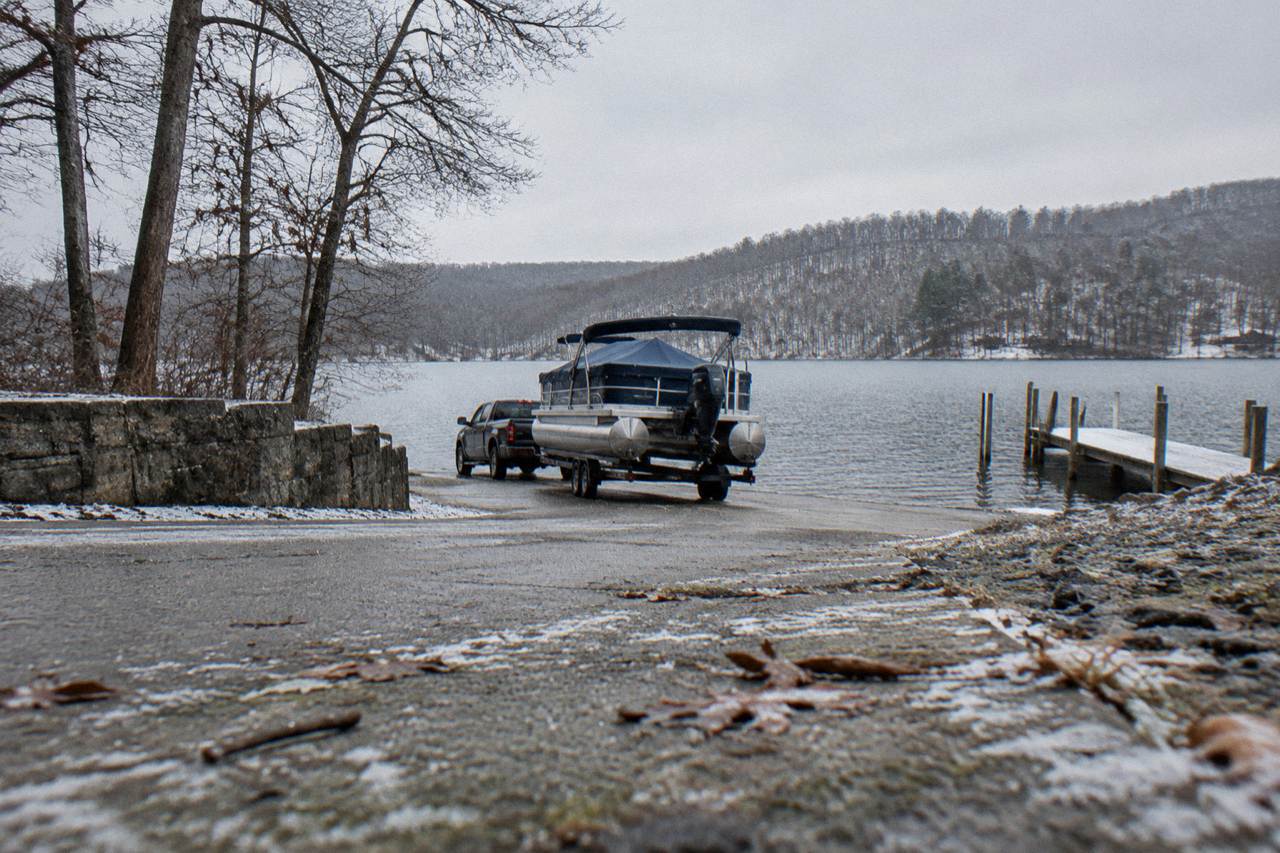
Check ratesThe State Park ramp is the primary public launch on Deep Creek Lake, open around the clock when weather allows, and everything from fees to hydrilla inspections happens right at that concrete.
Short answer
The main public launch is the Deep Creek Lake State Park boat ramp at 898 State Park Road, Swanton, open 24 hours a day weather permitting. Each use requires a launch fee or a valid lake use permit or State Park pass. Clean Drain Dry rules and voluntary launch steward inspections apply to every trailer boat.
Deep Creek Lake covers 3,900 acres with 69 miles of shoreline, and nearly every trailer boat that gets onto that water enters through a single public ramp at Deep Creek Lake State Park. The Maryland Department of Natural Resources, which owns the lake, the lake bed and the buffer strip around it, runs that launch as a 24-hour, weather-permitting facility with a four-vehicle launch area, a per-use fee and a small army of seasonal launch stewards checking hulls for hydrilla. This guide walks through where the ramp is, what it costs to use, what the invasive species rules demand before your boat goes in, and how the dock removal calendar shapes the shoulder seasons. If you are still choosing what kind of boating day you want, the pontoon rental and the guided pontoon tour options each have their own pages worth a read. If you'd rather skip rentals altogether, the guide to bringing your own boat onto Deep Creek Lake covers size limits, safety certificates and the invasive species check you'll face at the ramp.
The primary public launch is the boat ramp inside Deep Creek Lake State Park, at 898 State Park Road in Swanton, on the eastern shore of the main basin south of the Deep Creek Lake Bridge. DNR describes it as the primary access for boaters on the entire lake, open 24 hours a day weather permitting, with a four-vehicle launch area. Day-use hours at the park gate run 8 a.m. to sunset. Once your boat is in the water, the seasonal bait guide for Deep Creek Lake anglers covers what to throw for walleye, smallmouth, pike, perch and panfish.
The ramp sits beside the park's campground, beach and Discovery Center, so a launch day can double as a full park day. Swanton is a plain place name here, not a detour: from the northern tip of the lake at McHenry Cove you drive south past Wisp Resort, cross the bridge, and the State Park entrance appears on the lake side within minutes. Boaters towing from Oakland approach from the south through Glendale Road country.
A few practical points from the DNR page shape the visit. The launch area fits four vehicles at a time, so on summer weekends the queue builds early and midweek mornings are noticeably calmer. Overnight slips at the ramp are reserved for State Park campers only, so anyone hoping to leave a boat in the water overnight needs a campground reservation to go with it. In winter the main gate closes for snowmobile season, from mid-December to mid-March, and parking moves to the Discovery Center.
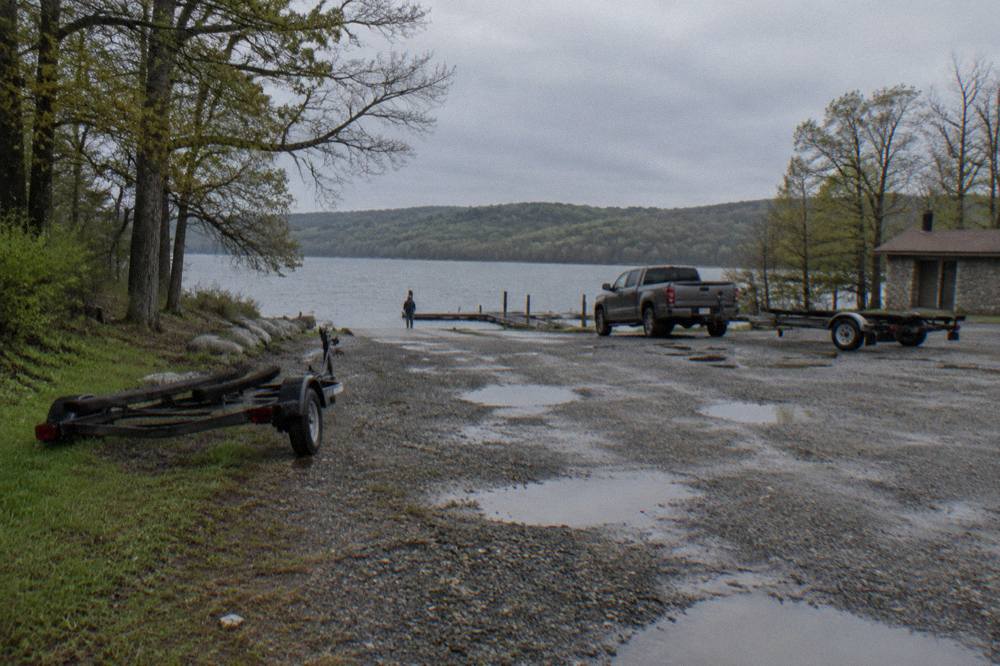
Except for a small buoyed area at the outlet near the dam, a boat launched at the ramp can reach the entire lake, from the restaurants and rental docks of McHenry Cove at the north end to the quiet sailboat coves below the Glendale Bridge. Shoreline anglers without boats use separate public access points, but for anyone arriving with a trailer, this ramp is the door.
Every use of the State Park launch requires either a per-launch fee or a valid lake use permit or Maryland State Park pass displayed on the vehicle, and the dollar figures live on the DNR fees page rather than being printed here because they change. Separately, entering the park itself carries day-use charges, listed as per-person rates in summer and per-vehicle rates the rest of the year. Confirm both on the official page before you go.
The fee structure has two layers and boaters sometimes conflate them. The launch fee applies each time you put a boat in the water, and the DNR allows it to be replaced by a valid lake use permit or a State Park pass. The park entry fee is charged at the gate for everyone, boater or not, and switches from a per-person to a per-vehicle basis outside the summer season. The DNR fees page carries the current numbers for all of these, including the annual Passport, and is the only source worth trusting since rates get adjusted.
| Fee type | What it covers | Where the number lives |
|---|---|---|
| Launch fee | Each use of the State Park boat ramp | DNR fees page, linked below |
| Lake use permit | Alternative to per-launch payment | DNR fees page |
| State Park pass / Passport | Annual alternative covering entry | DNR fees page |
| Day-use entry, summer | Per person, Memorial Day weekend to Labor Day | State Park page |
| Day-use entry, off-season | Per vehicle | State Park page |
Call ahead when conditions look marginal: the park number is 301-387-5563, and the duty ranger line 240-405-9827 covers winter questions. The launch is weather permitting, which in practice means ice, flood-stage high water or ramp maintenance can close it on short notice. Anyone weighing whether renting beats trailering should look at the full boat rental cost comparison, since rental outfits launch their own fleet and the fee math disappears from your day.
For the fee itself, the authoritative source is the DNR fees and passes page, which lists launch, permit and Passport pricing in one place.
Maryland law prohibits placing any vessel or equipment with attached aquatic plants, zebra mussels or other prohibited nonnative organisms into state waters, and Deep Creek Lake is enforced under that rule with penalties that can reach 30 days and $2,500 per offense. DNR advises boaters to clean, drain and dry all equipment, with at least 48 hours of drying time before launching.
This is not a courtesy request. The regulation exists because hydrilla was first found in Deep Creek Lake and has been under a multi-year herbicide treatment program since, with a new infestation at Arrowhead Cove folded into the effort. Zebra and quagga mussels are not currently believed to be in the lake, and the entire inspection regime at the ramp exists to keep it that way. DNR's invasive species page frames the stakes plainly: an attached plant fragment on a trailer is a violation, not an oversight.
In practice the routine at the State Park ramp looks like this.
| Step | What you do | Why it matters at Deep Creek Lake |
|---|---|---|
| Clean | Remove all plants, mud and organisms from hull, trailer and gear | Hydrilla fragments can start new infestations |
| Drain | Empty bilge, live wells and any standing water | Removes mussel larvae and organisms |
| Dry | 48 hours or more of drying before launch | Kills what cleaning misses |
| Inspection | Voluntary check by a launch steward at the ramp | Free, offered at the State Park launch |
Launch stewards at the State Park ramp offer free voluntary inspections during the season, and DNR encourages using them even when the line at the ramp is long. The steward looks at the hull, trailer bunks, anchor line and live wells, and can spot plant material a rushed owner misses. Boats arriving from other waters, especially the Potomac or Susquehanna systems, get the closest looks because those waters carry species this lake does not have yet. The full rule and penalty detail is on the DNR boats at Deep Creek Lake page.
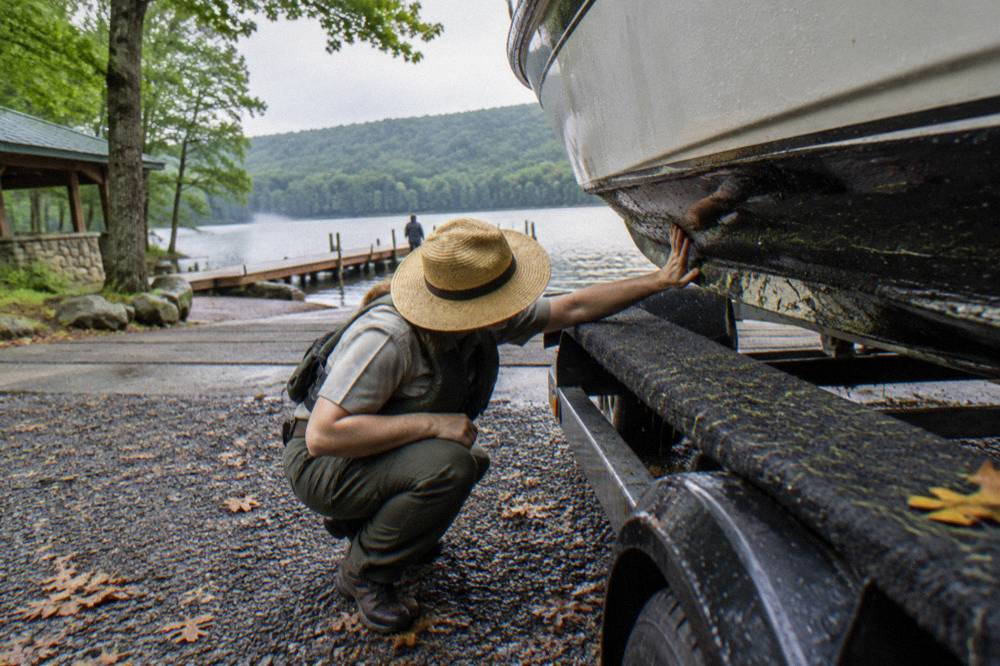
Kayaks and paddleboards fall under the same law even though they look harmless. A SUP that spent last weekend on a river with attached plants is treated the same as a pontoon with grass on the prop. If you are paddling rather than trailering, the kayak and paddleboard guide covers the carry-in options at the State Park beach lot, which skip the ramp queue entirely.
No license is checked at the ramp itself, but anyone born on or after July 1, 1972 must carry a NASBLA-approved boating safety education certificate to operate a numbered or documented motorized vessel on Maryland waters, including rentals. Renters of motorized vessels who were born after that date instead read a safety sheet and receive a 10-day temporary certificate from the rental company.
The distinction trips people up: the ramp fee gets you onto the water, but the certificate rule governs who can drive once you are there. Maryland's requirement is age-based, not experience-based, and it applies statewide, so an out-of-state visitor born after the cutoff needs a certificate from a NASBLA-approved course in any state. The temporary certificate for renters is the reason rental customers do not need to complete a course on vacation: the rental company walks the operator through a safety sheet and issues the short-term credential on the spot.
Personal watercraft are stricter. A PWC operator must be at least 16, wear a U.S. Coast Guard approved life jacket, hold the certificate if born after the cutoff, run 6 knots or slower within 100 feet of anything, use a kill switch or self-circling device, stay off the water between sunset and sunrise, and display the Maryland PWC regulation sticker. PWC also face the Deep Creek daytime blackout, which the boating rules page covers in detail: no operation from 11 a.m. to 4 p.m. on Memorial Day weekend and on Saturdays, Sundays and holidays from July 1 through Labor Day.
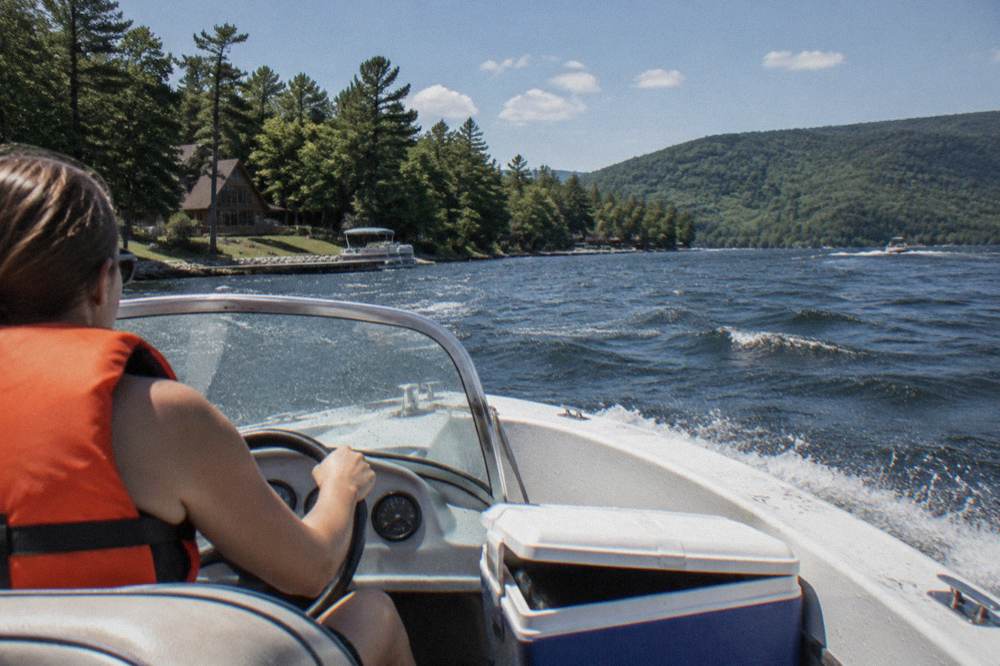
The official requirements sit on the DNR boating safety certificate page and the state requirements page for rented vessels. Read both before towing up if anyone in your group was born after the cutoff and plans to take the wheel.
Deep Creek Lake caps vessel length at 26 feet overall, with an exception allowing pontoons up to 30 feet, and engines may not exceed the manufacturer's recommended maximum horsepower. DNR-linked summaries of the lake regulations also state a displacement limit and an 88 dB noise standard tested at idle, with no operation of boats with open cutouts. These limits shape what you can legally launch here.
The length rules matter most to visitors arriving with larger craft, since a 28-foot runabout is over the line while a 30-foot pontoon is fine. The pontoon exception exists because pontoons are the lake's dominant family boat, and the rental fleets around McHenry are built to it. Engine limits follow the manufacturer's plate rather than a lake-specific number, so a boat that is legal on its home water is generally legal here on power, if not on length.

Once on the water, the no-wake rule is the one that generates the most attention from Natural Resources Police: vessels must run at no-wake speed within 100 feet of shoreline, bridges, piers, docks or other vessels, except when starting a tow from a pier or shore. Third-party summaries of DNR rules also describe posted 6-knot zones marked by white signs or orange-circle buoys, a ban on night skiing, and restrictions on marine sanitation devices that can discharge into the lake. The regulatory source is COMAR 08.18.33.02, and the DNR lake rules page restates the practical versions.
Public docks at the State Park launch come out in stages during late fall, according to DNR-linked park postings, with sections removed from mid-October through early December. Private and commercial docks around the lake must be out of the water from November 30 until April 1. The lake itself never closes; the ramp is weather permitting, and ice fishing takes over after freeze-over.
The staged removal matters to anyone planning a late-season launch. The Discovery Center dock, on the right side of the State Park launch area, tends to come out first in mid-October, with the left side following around the start of November and the final center section around the start of December. The lake association and park postings carry these schedules in any given fall, and the prudent move is a call to 301-387-5563 before towing up in November. The private and commercial dock deadline is fixed in the regulations: out by the end of November, back no earlier than April 1.
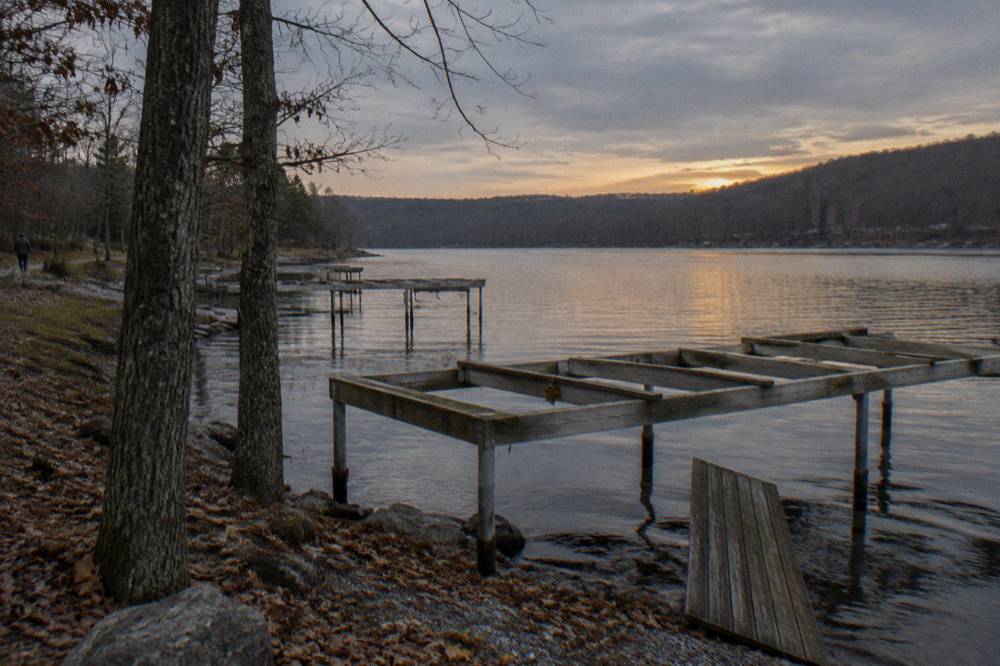
Rental operations wind down on roughly the same clock. Lake Life Boat Rentals runs its pontoon and ski boat fleet from about mid-May to mid-October, and Deep Creek Lake Boats lists its season from late May to early September. After the fleets come out, the lake quiets down for paddlers and anglers, then flips to hardwater season. The Garrett County Chamber is explicit that Deep Creek Lake does not shut down in winter; the ice fishing guide covers what happens after freeze-over, and the water levels and winter drawdown page explains why the lake sits lower by then (see Fall Drawdown).
| Season marker | What happens | Source to check |
|---|---|---|
| Mid-October | First public dock sections come out; fall color peaks | State Park phone line |
| Early November | More dock sections removed | State Park postings |
| End of November | Private and commercial docks must be out | Lake regulations |
| Mid-December to mid-March | Main gate closed for snowmobile season | State Park page |
| After freeze-over | Ice fishing season, conditions permitting | State Park phone line |
Beaching a boat is not permitted on Deep Creek Lake except in emergencies, per the DNR fisheries page for the lake, because the state owns the lake bed and the buffer strip and the shoreline is not open to grounding your hull. Boats can otherwise reach the entire lake except a small buoyed area at the outlet, and shoreline access for anglers runs through designated public access points rather than private lawns. Once your boat is back on its trailer, our guide to free beaches, trails, and shoreline spots around the lake Free Things To Do At Deep Creek Lake covers plenty of ways to enjoy the water without spending a dime.
The no-beaching rule surprises visitors used to reservoirs where pulling the bow onto a bank is normal. Here the shoreline is a regulated buffer strip, docks are permitted structures with their own rules, and the state treats the bed and bank as protected public land. Practically, this means the boat stays in the water while you swim off it, tie to your own dock or a rented slip, or use the State Park facilities. It also explains why the rental fleets are so aggressive about briefing customers on where to stop.
| Activity | Allowed at the launch area? | Notes |
|---|---|---|
| Launching a trailer boat | Yes | Fee or permit each use |
| Overnight slip | Only for State Park campers | Campground reservation required |
| Beaching on the shoreline | No | Emergencies excepted |
| Fishing from ranger docks and swim area | No | Closed to fishing per the park page |
| Reaching the full lake | Yes | Small buoyed area at the outlet excepted |
The fishing closures near the ramp are worth knowing before you cast: ranger docks and the swim area at the State Park are closed to fishing, so the productive water starts once you idle out of the no-wake zone. Anglers chasing walleye and smallmouth should also note the seasonal walleye closure from March 1 through April 15, detailed on the fishing guide.
The closest lodging to the State Park ramp sits in McHenry, minutes north of the launch on the lake's northern end. Lake Pointe Inn is listed near the lake and the State Park with a free full breakfast and an adjacent golf course, which puts a full tank of coffee between you and the ramp queue. Farther out, Oakland options trade proximity for price.
Staying near McHenry is the play for early launches because the four-vehicle ramp area fills fastest on summer weekends, and the difference between arriving at 8 a.m. and 10 a.m. is often the difference between launching immediately and idling in line. Lake Pointe Inn puts you closest, with the roster noting its position near the lake and the State Park plus the breakfast that saves a stop. The Wisp Resort area a little north adds dining and the Wisp-run pontoon tour concession for anyone whose group splits between boaters and non-boaters.
McHenry
Lodging in McHenry, at the north end of the lake near the rental docks and the Wisp concession.
Check ratesSouth of the lake, Oakland keeps a cluster of well-priced inns within a short drive of the Thayerville end of the water. The Garrett Inn is listed about 2.4 miles from the lake, roughly a three-minute drive, which matters less for the State Park ramp and more if your day starts with a High Mountain Sports pontoon tour departing from Garrett Highway. The where to stay for boating guide breaks down the full map of north-end versus south-end lodging for launch strategy.
Paddle craft have their own entry point at the State Park main beach lot, where the DNR park page notes a canoe and kayak launch, skipping the trailer ramp queue entirely. The same Clean Drain Dry law applies, and beach rentals of kayaks, paddleboards, tubes and chairs are available at the State Park beach in season, so paddlers can arrive empty-handed.
The carry-in launch is the quiet advantage of paddling here. Trailer boats queue at the four-vehicle ramp while kayakers slide in from the beach lot, and the cove tips that kayakers favor, per the Garrett County Chamber's geography notes, are reachable under paddle power from several points. The invasive species rule still applies to every hull, paddle and leash that touched another waterway, and the 48-hour drying advice is easiest to satisfy with gear you dedicated to this lake.
Rental delivery services extend the option further. Deep Creek Paddle Co delivers single kayaks, SUPs, tandems and fishing kayaks to addresses around the lake, with the operator listing single kayaks from $35 and SUPs from $40 on its own page; prices change, so confirm before booking. The full rundown of put-ins and paddling routes is on the kayak and paddleboard guide.
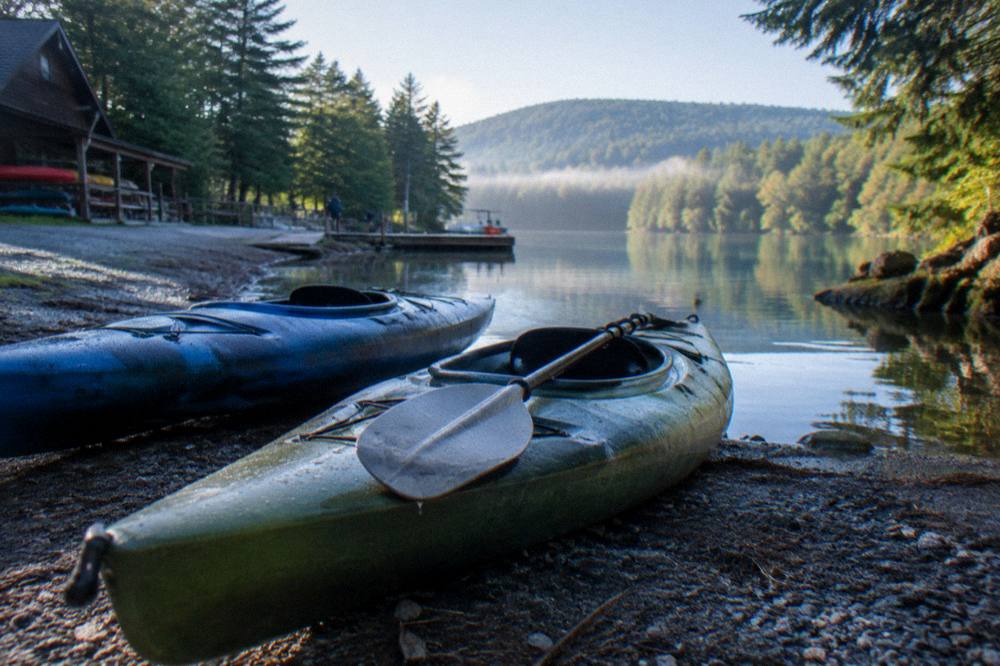
A launch day at Deep Creek Lake works best when the ramp is your first stop, not your second thought: arrive early, pay the launch fee or display the permit, accept the steward inspection, and idle out under the 100-foot no-wake rule before opening up toward McHenry Cove or the southern coves. Everything downstream, from gas to food to swimming, assumes you cleared the ramp smoothly.
The lake's geography gives you a natural loop. North of the launch, the main basin holds the State Park beaches and the open water where ski boats work; through the Deep Creek Lake Bridge, McHenry Cove gathers the rental docks, restaurants and Wisp Resort energy. South below the Glendale Bridge, the character flips to quiet coves and sailboats, the water the Chamber describes as the lake's mellow half. A pontoon day can cover the whole arc at no-wake-legal cruising speed with time to swim off the boat, which is legal where beaching is not.
Guided options exist for the boatless or the trailerless. Wisp Resort Lake Adventures, the State Park boating concession, lists its guided pontoon tour at $34 for adults and $19 for children 12 and under on its own page, with hour-long departures through the day and a 9 a.m. longer run; High Mountain Sports in Oakland lists its tour at $37 for adults and $19 for children. Funtime Watersports in Thayerville lists adult tours at $34 with children 3 to 15 at $16. Each operator's prices change, so confirm on the live listing before booking, and every one of them takes reservations directly rather than through any intermediary. Deep Creek Boat Tours exists as a guide to exactly this landscape, not as an operator.
Oakland
About 2.4 miles (3 minutes by car) from the lake per the listing.
Check rates| Launch-day stage | What to know | Where it is covered |
|---|---|---|
| Arrival and fee | Fee per use or permit/pass displayed | DNR fees page |
| Steward inspection | Free, voluntary, checks for plants and mussels | This guide, Clean Drain Dry section |
| Leaving the ramp | No-wake within 100 feet of shore and structures | DNR lake rules page |
| On the water | Full lake reachable except buoyed outlet area | DNR fisheries page |
| End of day | Pull out before dark; overnight slips are camper-only | State Park page |
For boaters who arrive without a boat at all, the pontoon boat tours page compares the guided trips, and the jet ski and PWC guide covers the personal watercraft side with its own rules. Swimmers can read up on the beaches at the swimming guide, and families watching a budget have a free-things roundup that pairs well with a launch day's cheaper halves.
The primary public launch is inside Deep Creek Lake State Park at 898 State Park Road, Swanton, on the eastern shore of the main basin. DNR describes it as the primary access for boaters on the lake, with a four-vehicle launch area and 24-hour access weather permitting.
Yes. Each use of the State Park ramp requires a launch fee or a valid lake use permit or Maryland State Park pass, and park day-use entry is charged separately. The current figures are listed on the DNR fees page, which is the right place to confirm before your trip since rates change.
The ramp is open 24 hours a day, weather permitting, so night launching is possible in principle, though park day-use hours run 8 a.m. to sunset and night skiing is illegal. PWC may not operate between sunset and sunrise at all. Call the park at 301-387-5563 for after-hours access questions.
It is illegal to place a vessel or equipment with attached aquatic plants, zebra mussels or other prohibited nonnative organisms into Maryland waters. DNR advises cleaning, draining and drying all gear with at least 48 hours of drying time, and launch stewards at the State Park ramp offer free voluntary inspections in season.
Public dock sections come out in stages during late fall, from around mid-October through early December per DNR-linked park postings. Private and commercial docks must be out of the water from November 30 until April 1. Confirm the exact schedule with the park before a late-season launch.
No. Beaching a boat is not permitted except in emergencies because the state owns the lake bed and surrounding buffer strip. Boats can otherwise reach the entire lake except a small buoyed area at the outlet, and anglers use designated public access points for shoreline fishing.
Before you go, the pick for this guide:
Lake Pointe Inn
Close to the lake and the State Park, with free full breakfast and an adjacent golf course per the listing.
Check rates →