What Bait To Use At Deep Creek Lake?
A practical bait guide for Deep Creek Lake: what to throw for walleye, smallmouth, pike, perch and panfish across the seasons, plus where to launch a boat and what the rules say.
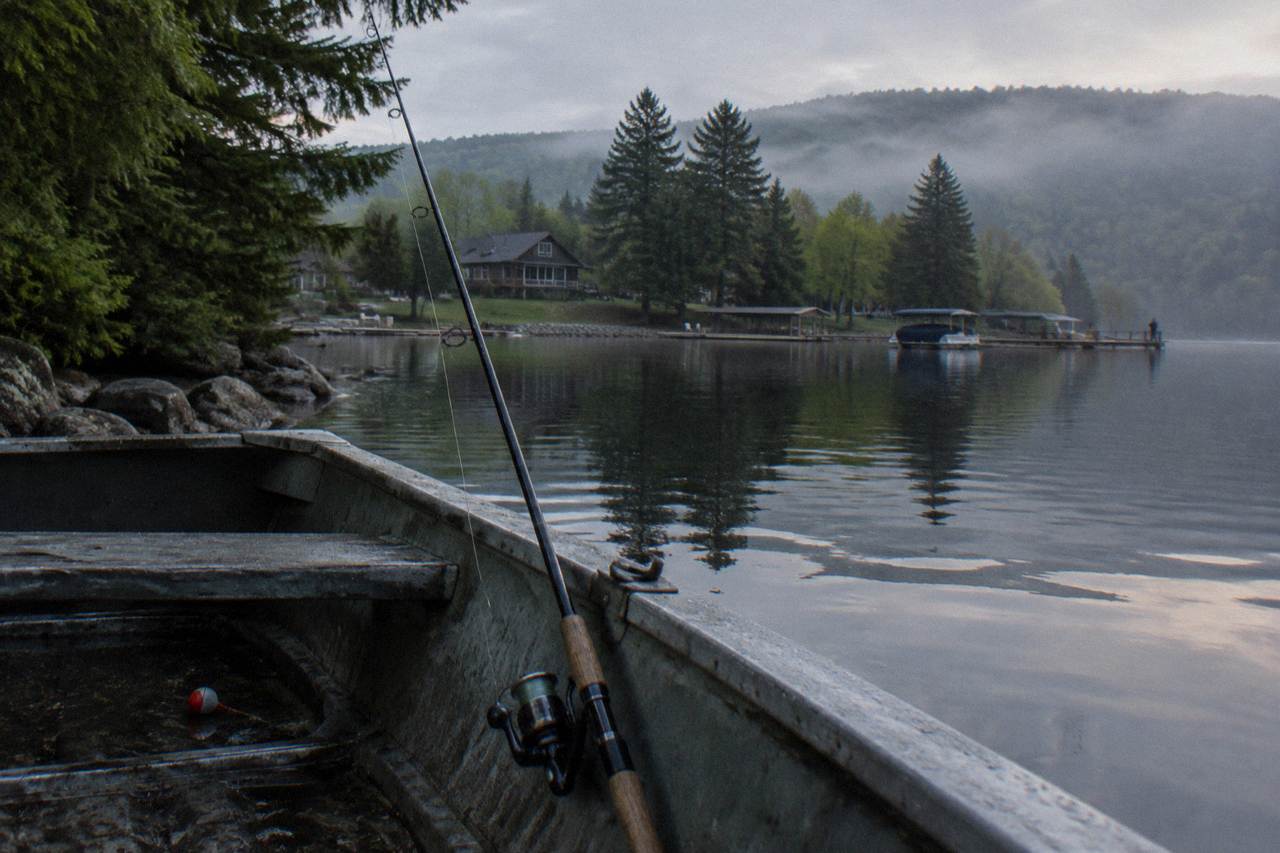
Deep Creek Lake holds largemouth and smallmouth bass, walleye, northern pike, chain pickerel, yellow perch, bluegill, pumpkinseed and crappie, according to the Maryland DNR, and the same water produces northern pike over 40 inches often enough that the DNR calls it routine. That mix is the whole reason bait choice matters here: a nightcrawler that fills a perch bucket does nothing for a walleye holding in 20 feet, and a jig worked for smallmouth will get shredded by pickerel in the grass. This guide matches bait to the fish the lake actually grows, season by season, for anglers fishing from the shore, from a kayak, or from a rented pontoon anchored over a school.
The species list comes straight from the state's own fisheries page for the lake, and the seasonal rhythm follows it: panfish and perch first in spring, walleye and bass through summer, and a hard-water season in winter that makes this Maryland's premier ice fishing destination when the weather cooperates. Details below, including the walleye rules that decide what you can keep.
At Deep Creek Lake, match your bait to the species: live nightcrawlers and minnows for walleye, yellow perch, and panfish; jigs and crankbaits for smallmouth and largemouth bass; and large live bait or big spoons on stiff wire leaders for northern pike and chain pickerel. The Maryland DNR manages the lake for exactly those fish, so one small bait box covers everything.
The single most useful thing an angler can know about this lake is that it is a two-speed fishery. In the cold months and at first light, the predators, walleye, smallmouth and pike, are the target, and they want minnows, leeches and baitfish imitations worked near structure. Through midday in summer, the panfish factory takes over: bluegill, pumpkinseed, crappie and yellow perch will take worms, small jigs and bait bits almost anywhere there is a dock, a weed edge or a shaded shoreline.
A simple starting spread for a first day on the water looks like this:
| Target | First-choice bait | Backup | Where to fish it |
|---|---|---|---|
| Walleye | Live minnow or nightcrawler on a jig head | Deep-diving crankbait | Points and drops into deep water |
| Smallmouth bass | Tube jig or crawfish-imitating crankbait | Live crayfish where legal | Rocky banks and shoals |
| Largemouth bass | Texas-rigged plastic worm | Spinnerbait | Weed edges and dock shade |
| Yellow perch | Small minnow or piece of nightcrawler | Small jig tipped with bait | Weed edges and cove mouths |
| Bluegill and pumpkinseed | Worm piece or cricket under a bobber | Tiny jig | Docks, shallows, any cover |
| Crappie | Small minnow | Small tube jig | Wood cover and dock pilings |
| Northern pike / pickerel | Large spoon or inline spinner, wire leader | Dead or live baitfish where legal | Weed beds and cove points |
The bait column is deliberately conventional. Deep Creek Lake is not a mystery fishery; it is a big, deep, cold impoundment with a forage base of baitfish, crawfish and insect life, and the fish in it respond to the presentations that have worked in such lakes forever. What changes your day is depth, season and location, not exotic bait.
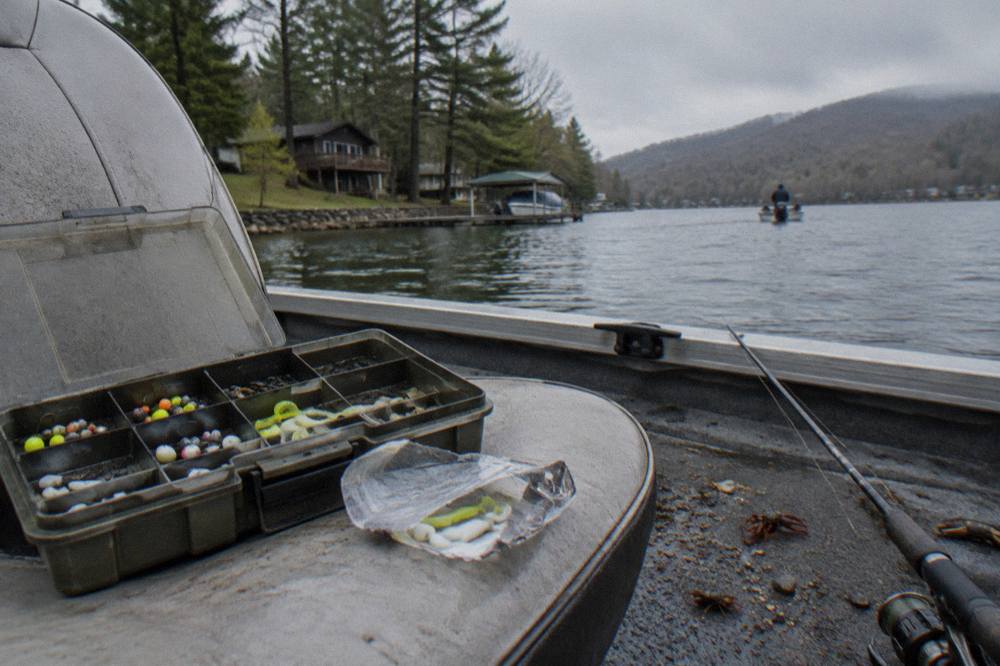
What Do Walleye Take At Deep Creek Lake?
Walleye respond best to live bait, minnows, nightcrawlers and leeches, fished on a jig head or a slow bottom rig along points and drop-offs, with deep crankbaits as the artificial alternative. Walleye are abundant here according to the DNR, and they feed hardest in low light, so first light, dusk and overcast days are the windows. Anglers must also know the harvest rules, because the lake has a closed season and a protected slot.
The walleye rules matter as much as the bait. The DNR closes walleye to harvest from March 1 through April 15 to protect spawning fish; the open season then runs April 16 to the end of February, with a daily limit of 5 fish, 10 in possession, a 15-inch minimum, and a protected slot between 18 and 21 inches, meaning fish in that size range go back. Those numbers come from the state's fisheries page for the lake, and they are the reason many local anglers fish walleye primarily for sport through the spring.
Presentation-wise, the classic approach is a jig head from 1/8 to 3/8 ounce matched to depth, tipped with a minnow or the front half of a nightcrawler, bounced slowly along the bottom near the many points that drop into the lake's deep basin. Trolling a worm harness, a spinner ahead of a crawler, along those same breaks at walking speed covers water when the fish are scattered. In summer, when walleye slide deeper during bright days, deep-diving crankbaits trolled at dawn and dusk take over.
The lake's depth structure helps: the DNR puts maximum depth near the dam breast at roughly 75 feet with an average around 25 feet, so there is a lot of mid-depth edge for walleye to hold along. Anglers who want the deeper picture should read the companion piece on finding Deep Creek Lake's best fishing spots, which maps the coves and basins.
What Bait Works For Bass On The Lake?
Smallmouth bass, the lake's signature bass, take tube jigs, crawfish crankbaits and live crayfish presentations along rocky banks, while largemouth in the coves want Texas-rigged plastic worms, spinnerbaits and paddletail swimbaits around weeds and docks. Both species are managed here, and the DNR describes the lake as known for abundant smallmouth, so rocky structure is the natural first stop. Match bait size down in cold water and up in summer.
Smallmouth and rocky structure go together everywhere, and Deep Creek Lake has plenty of both. Rock shoals, points with fist-size stone, and the riprap near bridges all hold smallmouth through the open-water season. A 3-inch tube in a crawfish or olive color, dragged with short hops along the bottom, is the standard offering; a deep-diving crawfish-pattern crankbait that hunts the rocks adds a search option. In low light, topwater lures worked over the same banks draw aggressive strikes.
Largemouth behave differently. They sit farther back in the coves, in the shade of the many private docks and in the weed beds that thicken by midsummer. A Texas-rigged 7-inch plastic worm, worked slowly through that cover, is the honest default. Spinnerbaits and bladed jigs let you cover weed edges faster, and a paddletail swimbait fished like a baitfish imitates the forage the DNR says these fish are eating anyway.
One local consideration: chain pickerel and northern pike share that same weedy cover, and they cut through light fluorocarbon leaders with ease. Anglers throwing worms for largemouth should accept some tackle losses or step up to a heavier leader; those fishing deliberately for pike should read the section below. Bass anglers fishing from a boat will find the full picture of ramps and launches in the guide to boat ramps and launching at Deep Creek Lake.
What Should You Use For Perch And Panfish?
For yellow perch, bluegill, pumpkinseed and crappie, think small: worm pieces, crickets or small minnows fished under a bobber, or tiny jigs tipped with bait worked near docks and weed edges. A simple spinning outfit, a bobber and a carton of worms covers the whole setup, and since the DNR describes the lake as known for large panfish, the payoff is real fish.
Perch schools roam the weed edges and cove mouths, and they feed aggressively. A small minnow or a nightcrawler chunk on a jig head, cast and retrieved slowly, finds them; when you locate a school, the bite can be nonstop until the school moves. Crappie hold tighter to wood cover and dock pilings, and a 2-inch tube jig or a small minnow suspended at the depth they are marking is the reliable play.
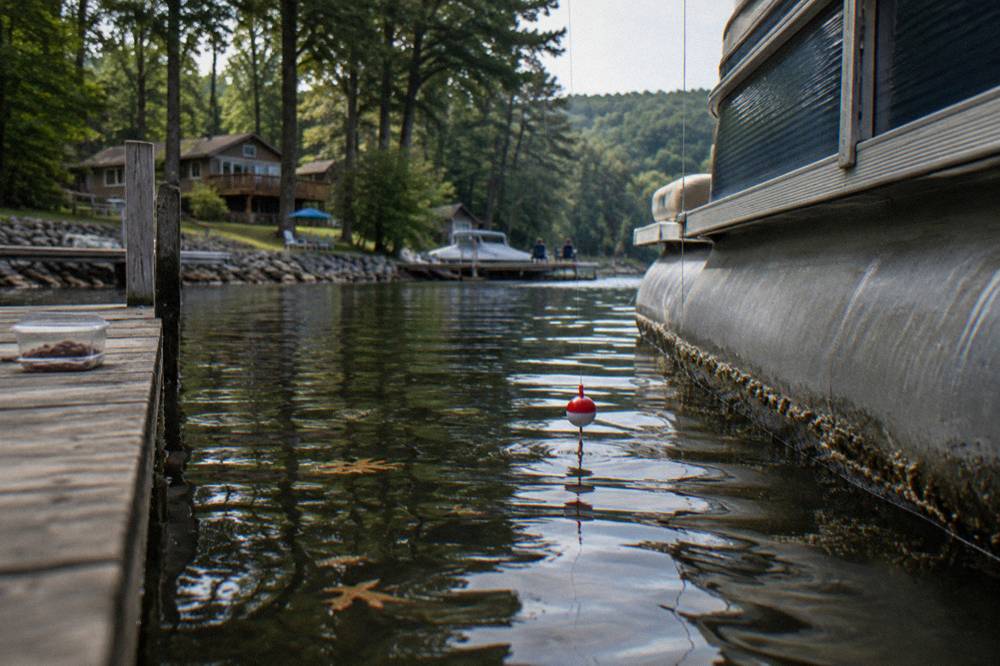
Bluegill and pumpkinseed are the dock fish. A worm piece or a cricket under a bobber, set a foot or two deep beside any shaded piling, will produce all summer, and these are the fish that make a family day on a rented pontoon work: drop anchor near cover, set the kids up with bobber rods, and the action sustains itself. The Garrett County Chamber notes beach rentals of kayaks, paddleboards and tubes at the State Park beach, and the Wisp concession that runs the State Park boating operation lists tube rental at $9 a day on its own page, so the non-fishing half of a group has something to do while the perch bite.
What About Northern Pike And Pickerel?
Northern pike and chain pickerel want movement and bulk: large spoons, inline spinners and swimbaits fished along weed bed edges, with a wire leader because their teeth shred line. The DNR notes northern pike over 40 inches are caught regularly at Deep Creek Lake, which puts real trophy potential behind the effort. Early spring and late fall, when the water is cold, are the strongest windows, and the same weeds that hold largemouth hold pike.
The bait logic for pike is simple: imitate a wounded baitfish, and make it big. A 4 to 5-inch spoon in silver or gold, a large inline spinner, or a paddletail swimbait rigged on wire all work. Live baitfish will also take pike where legal, but artificial presentations are easier to fish around weeds and easier to release cleanly from a toothy mouth. Long-nose pliers and a leader are not optional equipment. Other pages covering the same trip are gathered on Deep Creek Boat Tours.
Pickerel are the pike's smaller cousin and far more numerous in the grass. They attack the same lures, which is why bass anglers lose tackle in the coves, and they provide steady action on days when the bass ignore everything. Handle them carefully; both species have teeth and attitude.
The weed beds themselves are a moving target, because the lake's hydrilla, first found in the water in 2013, has been under a DNR herbicide treatment program since. Where the treatment thins the grass, the predator fish pack tighter onto the remaining edges, and those edges are exactly where a spoon cast parallel to the weeds earns its place in the box. The DNR's invasive species page explains the treatment program and the CLEAN, DRAIN, DRY rule that applies to any boat or kayak launched here.
Does Bait Choice Change With The Seasons?
Yes. Spring calls for live bait and slow presentations as fish move shallow to spawn; summer pushes predators deep at midday and turns the panfish bite on around docks; fall feeds everything up for winter with baitfish imitations; and hard water turns the whole lake into a live-bait, tip-up fishery. The DNR describes Deep Creek Lake as Maryland's premier ice fishing destination, so the calendar genuinely runs all year for bait anglers.
Season by season, the bait box shifts:
| Season | Main targets | Best bait approach | Notes |
|---|---|---|---|
| Spring (March to May) | Walleye, perch, pickerel | Live minnows and crawlers, slow jigging | Walleye harvest closed March 1 to April 15; perch school in cove mouths before spawning |
| Early summer (June) | Bass, crappie, bluegill | Plastics, small jigs, bobber rigs | Panfish move to docks and shallow cover |
| Midsummer (July to August) | Smallmouth, walleye, panfish | Deep crankbaits, nightcrawlers, jigging deep edges | Feed low-light periods: dawn, dusk, night |
| Fall (September to October) | Walleye, pike, perch | Larger minnows, spoons, trolled harnesses | Fish feed up before winter; stocked trout appear near creek mouths from the first full week of October |
| Winter ice season | Yellow perch, walleye, bluegill | Small live minnows and jigging spoons on tip-ups and jig rods | Ice typically forms late December into early January in a normal cold winter |
The fall row deserves a note. Fall trout stocking begins the first full week of October with rainbows, browns and golden rainbows statewide, and the lake sits in a put-and-take zone with no special spring closure, so anglers fishing creek mouths with worms, salmon eggs or small spinners can connect with stocked fish while the walleye and perch fishery builds toward its winter peak. The DNR runs a trout stocking hotline during active periods for anglers who want day-by-day detail.
Winter is its own discipline. Yellow perch through the ice take small minnows and jigging spoons tipped with bait; walleye come on slightly larger minnows set under tip-ups at first and last light. The DNR's ice guidance is blunt: no ice is 100 percent safe, never go alone, tell someone your plans, test thickness in multiple spots with an auger or spud bar, wear a life jacket and carry ice picks, and beware weak spots from springs, bubbles and currents, which the lake has. The full hard-water picture is in the guide to ice fishing on Deep Creek Lake.
Where Can You Buy Bait Near The Lake?
Bait near Deep Creek Lake comes from the sporting goods and marine businesses serving the Garrett County lake area rather than from the shoreline itself, so most anglers buy worms, minnows and leeches before launching, at shops toward McHenry and Oakland or on the drive up. The launch points, chiefly the State Park ramp, do not sell bait.
Planning around bait purchase is a real part of a fishing day here. The lake is 13 miles long with 69 miles of shoreline and the commercial cluster sits at the north end around McHenry, so an angler launching at the State Park on the eastern shore or fishing the southern coves should build a bait stop into the drive. Calling ahead for live minnows is wise on busy summer weekends, when stock sells through.
Artificial bait travels better anyway. A tackle box stocked with jigs in the 1/8 to 3/8 range, tubes, a few spoons, spinnerbaits, plastic worms and a jar of soft baits covers every species in the DNR's list for the lake, with live bait bought fresh as the day's upgrade. Ice anglers should treat live minnows as the core purchase, because the hard-water bite is overwhelmingly a live-bait bite.
Anglers who want a boat under them for the day have several options laid out in the guide to renting a fishing boat at Deep Creek Lake, including Bill's Marine Service, which rents fishing boats in the summer rental season and takes reservations directly. Kayak anglers have a delivered-rental option too: Deep Creek Paddle Co lists fishing kayaks from $40 on its own page, dropped at the water, with online reservations. Prices change, so confirm before booking.
Where Should You Stay For An Early Start On The Water?
For first-light bait fishing on Deep Creek Lake, base yourself in Oakland at the south end, where The Garrett Inn sits about 2.4 miles, roughly three minutes by car, from the water and close to the quiet coves and Thayerville end. In McHenry, Lake Pointe Inn places you near the lake and the State Park launch point, with a free full breakfast and an adjacent golf course per the listing.
The north-versus-south choice maps onto how you fish. McHenry, at the northern tip of the lake, is where the boat rentals, restaurants and Wisp Resort cluster, per the Garrett County Chamber's geography of the lake, and it is the shortest drive to the State Park ramp. Oakland, at the south end, is the quieter base, closer to the lower coves where kayakers favor the cove tips and where the early perch bite goes undisturbed.
Shamrock Inn (In The Heart Of Deep Creek Lake)
Oakland
Oakland inn listed under the Deep Creek Lake name.
Check ratesFor anglers watching the budget, a plain motel room near the southern launch waters does the job; Baja Motel in Oakland is a budget option a short drive from the Thayerville end of the lake. Families who want the breakfast handled before a dawn launch lean toward Lake Pointe Inn in McHenry, near the State Park and the lake. Whichever end you pick, the same rule applies: bait in the cooler the night before, rods rigged, and the boat or kayak reservation already made, because summer-season rentals at the lake generally require or strongly recommend advance booking.
Do The Lake Rules Affect How You Fish?
Yes, though not by restricting bait. The walleye season and slot limit decide what goes in the cooler, the ranger docks and State Park swim area are closed to fishing, and the invasive species rule requires every boat, kayak, or trailer to be clean of plants before launch, with CLEAN, DRAIN, DRY advised and 48 hours of drying recommended. Violations can cost up to $2,500 per offense, so these rules shape your whole day on the water.
The launch mechanics matter too. The State Park boat launch is open 24 hours a day weather permitting, with a four-vehicle launch area, and boaters pay a launch fee each use or display a valid lake use permit or State Park pass; a fee applies and the DNR fees page carries the current numbers, so check it before you go. Beaching a boat is not permitted except in emergencies, which matters for anglers used to pulling up on a bank to fish a shoreline; here you anchor or drift instead. Shoreline anglers use the public access points, and except for a small buoyed area at the outlet, a boat can reach the entire lake, which is the DNR's own framing of why the fishery is so accessible.
The hydrilla angle rounds out the rules picture. The DNR asks the public to report sightings, treats infestations with herbicide through a multi-year program, and stations Launch Stewards at the State Park ramp offering free voluntary inspections. For a bait angler the practical translation is simple: pull every strand of weed off the trailer and the trolling motor before you leave the ramp, and dry your gear before the next lake.
Finally, if a motorized rental boat is part of the plan, the certificate rules are friendly. Renters of a motorized vessel born on or after July 1, 1972 read a safety sheet and the rental company issues a 10-day temporary boating safety certificate, so no advance course is needed; the same renters operating their own boat would need the standard certificate. That, plus a lake map, a carton of worms and a jig box, is the complete checklist for a bait day here. The broader rule set is laid out in the guide to boating rules on Deep Creek Lake.
What Tackle Rounds Out The Bait Box?
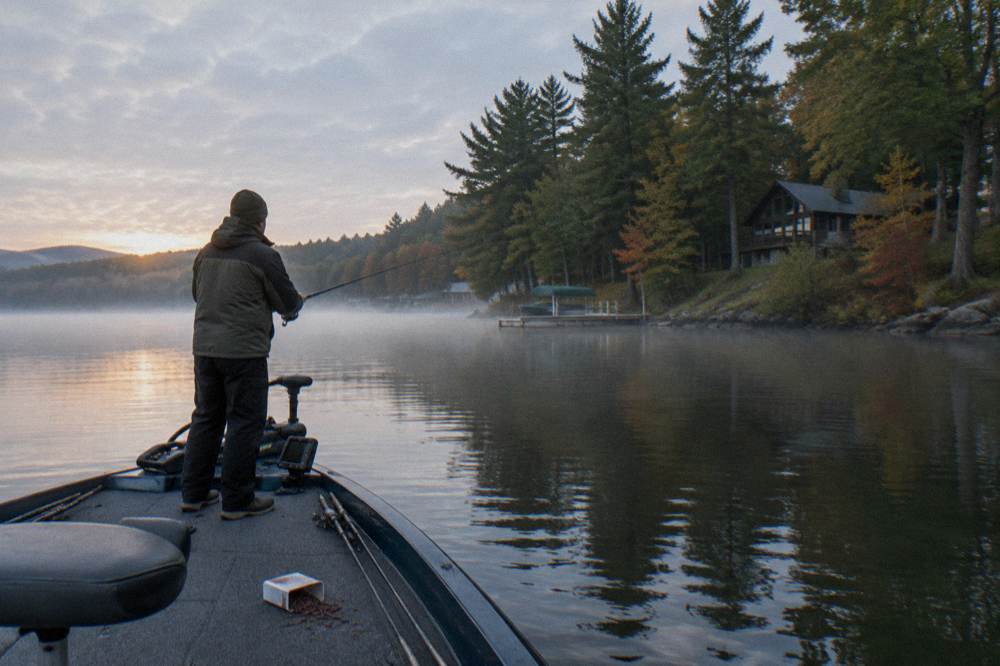
Pack a medium-light spinning outfit for panfish, a medium rod for walleye and bass, and a heavier baitcaster or spinning rod rigged with wire leader for pike, and you have everything the DNR lists in the lake. Spool the light rods with 6 to 10 pound line, keep heavier line and leaders for toothy species, and add jig heads from 1/8 to 3/8 ounce, floats, split shot and hooks to fill one small box.
Depth is the one variable worth rigging for in advance. With an average depth around 25 feet and basins running much deeper near the dam, a day that starts with bobbers at the dock can end with bottom-bouncing crawlers in 20 feet. Carrying jig heads across that 1/8 to 3/8 range lets one rod cover both without re-rigging from scratch, and a small selection of sliding sinkers turns the same rod into a live-bait bottom rig for walleye after dark.
Boat anglers should add a net, pliers and a measuring board, because the walleye slot between 18 and 21 inches means every decent fish gets measured before it goes in the cooler. Kayak anglers, who per the Chamber's geography favor the cove tips where perch and panfish hold, can travel even lighter: one rod, one small tray of jigs, a container of worms and a clip stringer.
Anglers planning several days on the water often base themselves south to be near those coves first thing. The Garrett Inn in Oakland sits about three minutes by car from the lake per its listing, and the lower end's quiet water is where the bait-and-bobber approach scores heaviest through summer. Baja Motel is the budget alternative in the same area.
Baja Motel
Oakland
Budget motel in Oakland, a short drive from the Thayerville end of the lake.
Check ratesCommon Questions About Bait At Deep Creek Lake
What Bait To Use At Deep Creek Lake?
Live nightcrawlers and minnows for walleye, yellow perch and panfish; tube jigs and crawfish crankbaits for smallmouth; plastic worms and spinnerbaits for largemouth; and large spoons on wire leaders for northern pike and pickerel. The DNR manages the lake for all of these species, so one modest bait box covers a full day.
What is the best bait for walleye at Deep Creek Lake?
A live minnow or nightcrawler on a 1/8 to 3/8 ounce jig head, bounced slowly along points and drop-offs. Remember the walleye rules: harvest is closed March 1 through April 15, and the open season carries a 15-inch minimum with a protected slot between 18 and 21 inches.
Do you need live bait, or will lures work?
Lures work for every species in the lake, and through the ice, live bait simply outproduces them. Jigs, tubes, spoons and plastic worms catch bass, walleye and panfish all open-water season; small minnows remain the strongest hard-water presentation for yellow perch and walleye.
Where can you catch panfish with bait at the lake?
Anywhere there is cover: dock pilings, weed edges and cove mouths all hold bluegill, pumpkinseed, crappie and yellow perch. A worm piece or cricket under a bobber beside a shaded dock is the simplest reliable setup, and the DNR notes the lake is known for large panfish.
Is fishing allowed everywhere on the lake?
Almost. A boat can reach the entire lake except a small buoyed area at the outlet, and shoreline anglers use public access points. The ranger docks and the swim area at the State Park are closed to fishing, and beaching a boat is not permitted except in emergencies.
When does the bait fishing turn to ice fishing?
In a normal cold winter, ice forms from late December into early January and can support fishing through February, with yellow perch, walleye and bluegill the main catch on small minnows and jigging spoons. The DNR does not measure or certify ice thickness, so test it yourself and follow posted safety guidance.