When Do They Lower Deep Creek Lake In The Fall?
How the fall drawdown works at Deep Creek Lake: the rule band Brookfield keeps, dock removal deadlines, and what the changing level means for boaters.
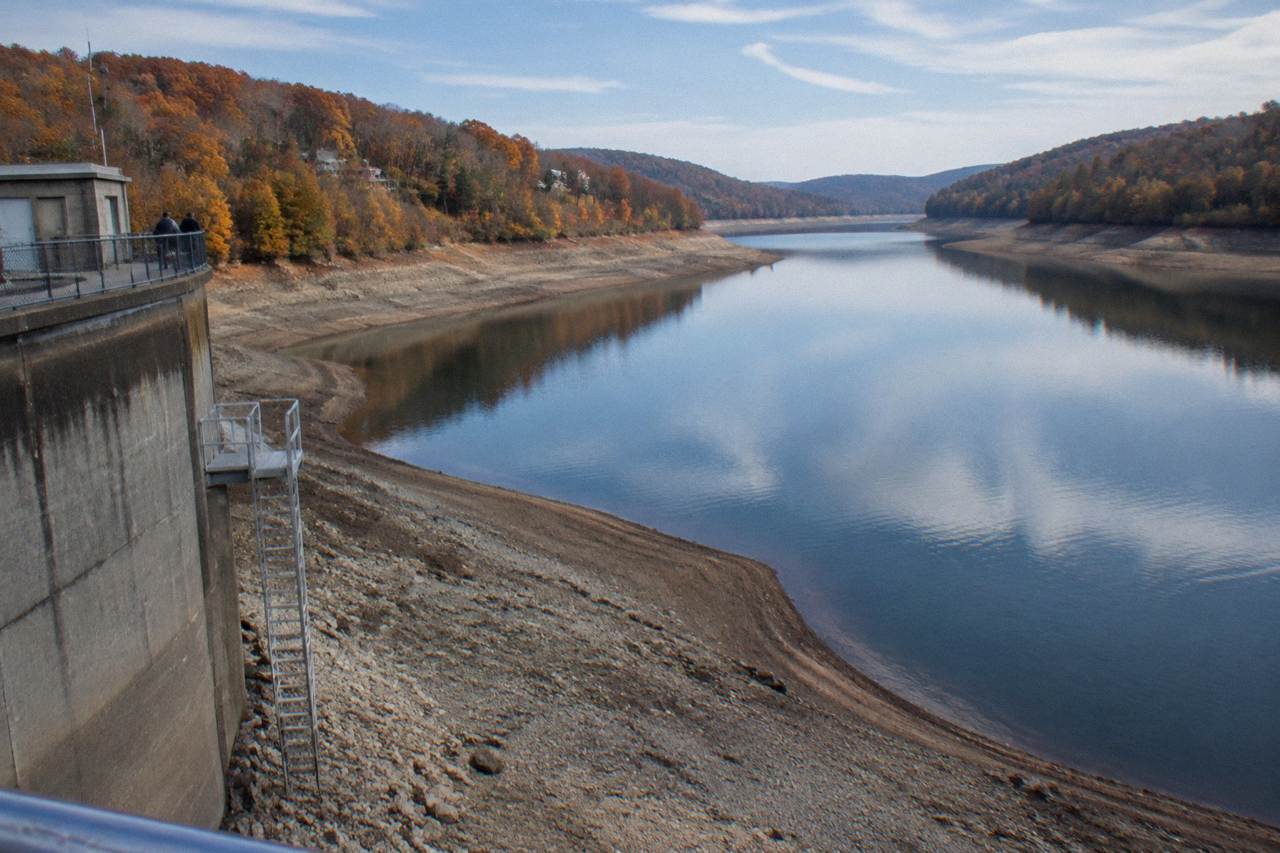
The lake everyone boats on in July is not the same lake you stand above in November. Deep Creek Lake was impounded on Deep Creek in the 1920s and filled by 1929, built to feed a small hydroelectric plant, and that plant still runs. Its operator, Brookfield Renewable, works inside a permit from the Maryland Department of the Environment, holding the lake between an upper and a lower desirable level. In fall, the balance shifts, and the shoreline you knew from summer pontoon runs slowly widens. There is no single "lowering day" printed on any calendar, and that is exactly why the question gets asked so often.
There is no fixed fall lowering date. The lake is managed inside a permitted operating rule band, an upper and a lower desirable reservoir level, rather than lowered on a schedule, and Brookfield Renewable works to keep it inside that band with allowances for high runoff or drought. What looks like a sudden drop is a gradual transition that unfolds through late fall, and the clearest public sign of it is the docks coming out of the water in stages.
The details matter here, because most of what circulates about the fall drawdown is folk knowledge. No month-by-month rule band table or explicit drawdown schedule appears in the current primary sources. Brookfield's Safe Waters page describes the band concept for Deep Creek without publishing a curve. So when a neighbor at the ramp insists the lake "always" drops to a certain number by a certain weekend, treat that as an observation of one year, not a rule.
What is documented is the shape of the transition. Through the summer recreation season the lake is held toward the upper end of the band. After the boating rental season winds down and the foliage crowd goes home, the level is allowed to drift lower, and by late fall the lake sits at its winter resting level. How low it goes in any given year depends on rainfall, inflow, and the hydroelectric dispatch decisions that follow the permit.
That winter level is not arbitrary either. Maryland owns the lake, the lake bed, and the buffer strip of land around it, which means the level is a public-policy question as much as an engineering one, argued over by the operator, state agencies, and lakefront property owners. For boaters, the practical takeaway is simpler: launch early in fall, expect the water to keep moving down through October and November, and call the State Park before towing a trailer over.
Who Controls The Deep Creek Lake Water Level?
Brookfield Renewable, the operator of the small hydroelectric plant at the dam, controls day-to-day levels at Deep Creek Lake, working inside an operating rule band permitted by the Maryland Department of the Environment. The rule band concept was amended some years ago and stands as the governing framework. Maryland owns the lake bed and the surrounding buffer strip, which keeps the state a permanent party to every level decision.
The arrangement is unusual enough to be worth understanding before you plan a late-season boat day. The lake exists because a utility wanted a reservoir, and recreation grew up around the consequence. The Garrett County Chamber notes the electric plant started in the 1920s and that the lake is now managed to hold a level that serves recreation, not just power generation. That management tension, power demand against boating and dock interests, is the background hum of every drawdown conversation on the lake.
For current conditions, boaters can check the lake level reading published on Brookfield's Safe Waters page for Deep Creek, and the U.S. Geological Survey maintains a gauge near Thayerville. Those two numbers can differ slightly because they measure at different points, so use either one for trend rather than gospel. A falling trend through October is normal; a sharp single-day drop large enough to notice from a dock is not typical and usually traces back to heavy generation plus low inflow.
The regulatory documents sit with the state. The Department of Natural Resources explains the lake's management and rules framework on its Natural Resource Management Area regulations page, which is also where the dock and buffer strip rules that kick in each fall are spelled out.
What Is The Operating Rule Band?
The operating rule band is the permitted range between an upper and a lower desirable reservoir level that Deep Creek Lake is managed within. Brookfield strives to keep the lake between those bounds, with allowances when high runoff or drought pushes conditions around. It is a band, not a line, which is why the fall level moves gradually rather than dropping to a fixed mark on a fixed date.
Think of it as a corridor. In spring and early summer the operator holds the lake toward the top of the corridor so docks float, boats launch, and the shoreline looks like the postcard. As the recreational season ends, the practical pressure to hold the top of the band eases, generation continues, and the level slides down the corridor toward its winter position. Rain refills it, drought deepens it, and neither happens on a published timetable.
The band has real-world consequences beyond the shoreline view. A past fall lowering for the Arrowhead Cove dredging project took the lake down to about 2,456.5 feet, inside a permit band of 2,455 to 2,458 feet specified for the end of November that year, with a return to the upper band by mid-December. That episode is the clearest public example of how the band works in practice: the state issued a permit for a specific lower window, the operator hit it, and the lake came back up.
For anyone comparing notes at the ramp, the honest summary is this. The full pool elevation is 2,462 feet, the lake runs 13 miles long with 69 miles of shoreline, and in a normal fall it settles somewhere below full pool for the winter. The exact winter number varies year to year, and nobody publishes the curve in advance.
How Far Does The Lake Drop, And When Is The Lowest Point?
In a typical fall the lake settles a few feet below its summer level, with the lowest point arriving in late winter before spring refill, not on a published fall date. The documented example is the Arrowhead Cove dredging lowering to about 2,456.5 feet, which sat inside a permitted end-of-November band of 2,455 to 2,458 feet before the lake returned to the upper band by mid-December.
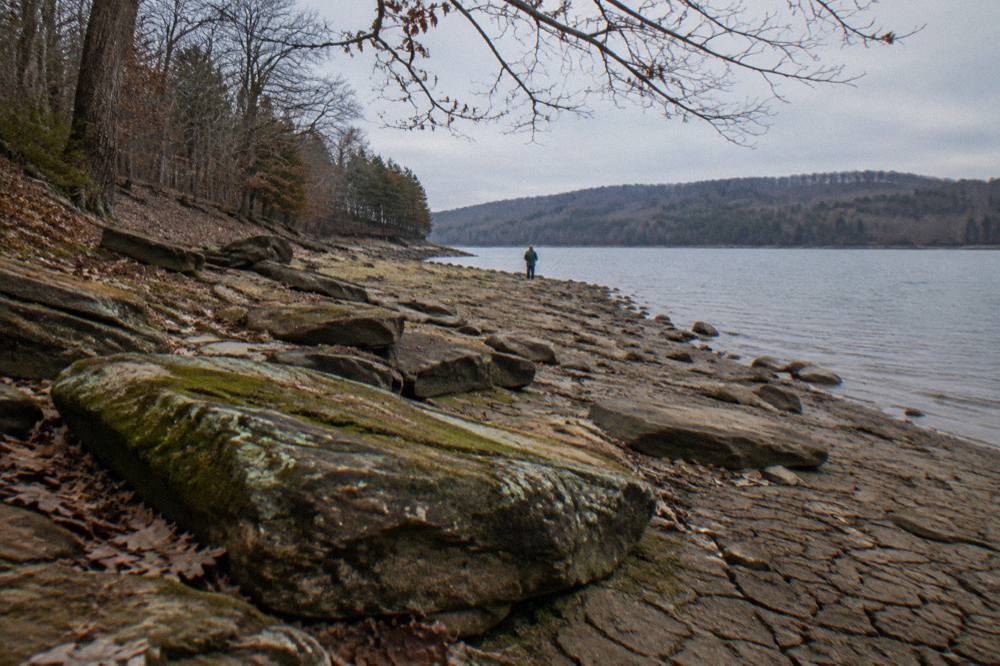
A few feet does not sound like much until you see it. Deep Creek Lake covers 3,900 acres with an average depth of about 25 feet, so a multi-foot drop exposes wide gravel banks at the cove tips, leaves some low dock ends above water, and changes which parts of the shoreline a kayak can reach. The shallow northern coves around McHenry show it first, and the quiet coves below the Glendale Bridge, favorites of kayakers and sailboat owners, change character noticeably.
The lowest point of the year is generally late winter, after the lake has been drawn down through the cold months and before snowmelt and spring rain push it back toward the top of the band. That means the "lowering" a visitor sees in fall is really the middle of a longer slide. If you boat in early October, you are on a lake that still feels summery. By Thanksgiving, the same cove can look like a different body of water.
One caution for anglers and paddlers: the exposed band of shoreline in late fall is soft in places, and banks that were easy to land a kayak on in July can be mudflats after the drop. The rule of thumb lake regulars use is to add distance, whatever your plan, assume the water is farther from your launch, your campsite, or your car than it was in summer.
When Do The Docks Come Out At Deep Creek Lake?
Private and commercial docks must be out of the water from November 30 until April 1 under the lake's buffer strip rules, so late fall is dock-removal season across the shoreline. Public docks at the State Park come out in stages across late fall, starting with sections near the Discovery Center and finishing with the last center sections near the end of the period.
The dock deadline is the most concrete, checkable fact in the whole drawdown story, and it is the one boaters should plan around. The lake association and the DNR regulations page both state the November 30 to April 1 requirement for private and commercial docks. Every lakefront owner on the lake is working to that same deadline, which is why late-fall weekends bring a slow parade of dock sections up boat ramps and driveways.
| Dock or structure | Who owns it | Removal requirement | Notes |
|---|---|---|---|
| Private docks | Lakefront property owners | Out of the water from November 30 to April 1 | Buffer strip rule enforced by DNR |
| Commercial docks | Businesses on the buffer strip | Out of the water from November 30 to April 1 | Same seasonal window as private docks |
| State Park public docks | Maryland State Park | Removed in stages through late fall | Earlier sections come out first, final sections last |
| Overnight slips at State Park | State Park campers | Seasonal, campers only | Confirm availability with the park before any late-season trip |
The staged removal of the public docks matters for anyone launching late. The dock sections near the Discovery Center side of the State Park launch area are the first to come out, with the remaining sections following into early winter. DNR-linked summaries describe the staging rather than publishing exact dates, and the park can confirm what is still in the water if you call. The Deep Creek Lake State Park page carries the contact number and winter-access details, including the snowmobile-season gate closure from December 15 to March 15, when parking moves to the Discovery Center.
What the dock calendar tells you, indirectly, is the shape of the level calendar. Docks come out on a fixed regulatory deadline, but they come out partly because the lake beneath them is dropping. The two rhythms, one legal and one hydrological, overlap every November.
Can You Still Boat On Deep Creek Lake After The Level Drops?
Yes, boating continues into fall, but the practical season narrows. The State Park boat launch stays open 24 hours a day weather permitting, so launching is possible even as docks come out, while the rental fleet winds down on its own schedule, with some operators finished for the season by the end of September and others running into mid-October before closing until late spring.
The gap between "the lake is lower" and "the lake is closed" is wide, and a lot of visitors miss it. Maryland DNR states plainly that except for a small buoyed area at the outlet, boats can reach the entire lake, and the State Park ramp is the primary access for boaters. The water is there. What changes is everything around it: rental counters shut, beach services end, docks pull out, and the number of people on the water drops with the level.
| Operator or service | What they offer | Fall and winter availability |
|---|---|---|
| Wisp Resort Lake Adventures | Guided pontoon tours, kayak, SUP and tube rental at the State Park beach | Summer season; confirm the operator's page for closing dates |
| High Mountain Sports | Guided pontoon tours and paddle rentals | Summer season; reservations required online |
| Funtime Watersports | Pontoon tours plus pontoon and jet ski rental | Summer season; reservations recommended |
| Lake Life Boat Rentals | Full-day pontoon and ski boat rentals, 9 AM to 5 PM | Season runs about mid-May to mid-October |
| Deep Creek Lake Boats | Pontoon rentals by the day | Season runs about late May to early September |
| Bill's Marine Service | Pontoon, speed and fishing boat rental | Summer rental season; check with the operator |
If you own a boat or trailer one in, fall is arguably the reward season. The 100-foot no-wake rule near shore still applies, personal watercraft restrictions still stand on weekends and holidays into Labor Day, and every regulation from the summer stays in force, but traffic thins dramatically. Walleye season, closed to harvest from March 1 through April 15 and open the rest of the year, makes late fall a genuine angling window, and the lake is known for abundant walleye and smallmouth bass. Cooler water, quiet coves, and shoreline color reflected flat on a calm morning are the draw.
Late-season boaters should also remember the invasive species rules. DNR requires that no vessel or trailer carry attached aquatic plants into state waters, with penalties that run steep, and hydrilla found in the lake is under ongoing herbicide treatment. Clean, drain and dry your boat before launching, at Deep Creek or anywhere else. That advice matters most in fall, when trailered boats are moving between waters for the last time before winter.
What Does A Lower Lake Mean For Launching And Ramps?
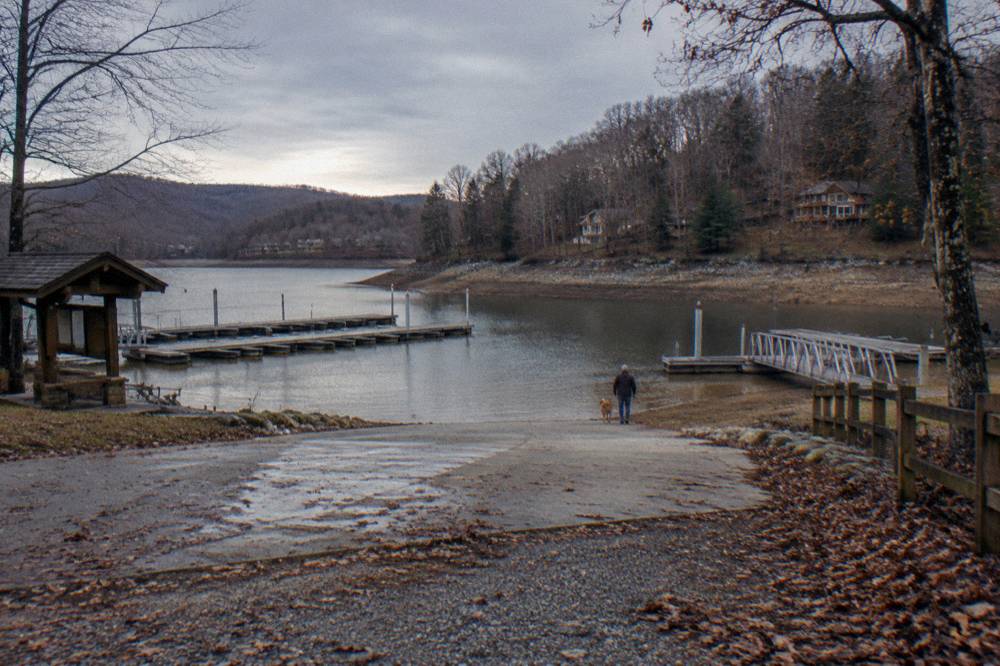
A lower lake means longer, steeper ramp runs and shallow water at some launch areas, though the State Park launch is built to stay usable through the seasonal drop. The ramp is open around the clock weather permitting, with a four-vehicle launch area, and a launch fee or a valid lake use permit applies at each use. Confirm conditions by phone in late fall before you tow.
Shallow water is the quiet hazard of the season. Rocks and gravel bars that sit comfortably under several feet of water at full pool can come within inches of a propeller by November. The northern coves and cove tips are the classic spots where a falling lake narrows the navigable channel, and the DNR marks specific hazards with buoys, so treat every unmarked shallow patch with respect. Pontoon captains, with their draft measured in inches but their width measured in feet, feel the changes differently than a fishing boat, and both feel them more as the level drops.
The launch itself is the least of the problems. The State Park boat launch on the lake's eastern shore operates 24 hours a day, weather permitting, and the park can be reached at 301-387-5563 for winter conditions, with a duty ranger line as backup. Our guide to Deep Creek Lake boat ramps and launching covers the ramp, the fees structure, and what changes when the gates close for snowmobile season. The short version: you can launch later into fall than most visitors assume, but call first.
One structural note worth knowing: beaching a boat is not permitted on the lake except in emergencies. That rule matters more when the water is low, because the temptation to nose onto a newly exposed bank is real. Tie off, anchor properly, or use what dock sections remain, and keep the hull off the shoreline.
Why Does The Lake Get Lowered At All?
The lake gets lowered because the reservoir serves hydroelectric generation and flood management inside a state-permitted band, not because of any single recreational decision. Holding the lake lower through winter leaves room to absorb snowmelt and spring rain, protects shoreline structures from ice damage, and lets the operator generate through the cold months before refilling toward summer levels.
Every drawdown conversation eventually reaches ice. A lake that sits lower through the coldest months gives ice less grip on dock pilings and shoreline walls, and lakefront owners who must pull their docks by November 30 are following a rule built partly around that reality. The lake does not shut down in winter, as the Garrett County Chamber is quick to point out: it becomes an ice fishing destination when the weather allows, and the chamber directs visitors to call the State Park for conditions.
The fisheries side benefits too. Deep Creek Lake is managed for largemouth and smallmouth bass, walleye, northern pike, yellow perch and a strong panfish fishery, and DNR's fisheries page describes it as Maryland's premier ice fishing destination when the weather cooperates. Ice typically forms in late December or early January in a normal cold winter and can support fishing through February in good years, though DNR does not measure or certify ice thickness, and no ice is ever guaranteed safe. The fall drawdown is the first domino in that whole winter sequence.
There is also plain economics. The plant generates electricity year-round, and the water that stored summer recreation becomes winter kilowatt-hours. The state's interest, through ownership of the lake bed and the permit, is that the corridor is wide enough that neither power demand nor drought strands docks and boats. It is a negotiation that has run for decades and will keep running.
Where Should You Stay To See The Lake Change In Fall?
Stay in the McHenry or Oakland areas to watch the fall transition, since both sit within easy reach of the State Park launch and the coves that show the drop first. Wisp Resort sits about 0.6 miles from the lake in McHenry, and condo-style and inn lodging around Oakland keeps you close to the southern coves and the quiet water below the Glendale Bridge.
The fall lake is a different lodging proposition than the summer one. You are not chasing beach access; you are chasing morning light on flat water and a short drive to the ramp for a late-season boat run. The north end around McHenry puts you near Wisp Resort, which sits 0.6 miles from the lake, and near the State Park a few minutes south. Oakland, at the lake's south end, puts you closer to the Thayerville end of the water and the coves where the level change reads most clearly.
Suites At Silver Tree
Oakland, Wisp and lake area
Condo-style suites listed in the Oakland and Deep Creek Lake area.
Check ratesThe Suites At Silver Tree, listed in the Oakland and Deep Creek Lake area, offer condo-style suites near the lake, a handy base for a fall trip built around a boat day, a foliage drive, and evenings in. Also in Oakland, The Garrett Inn sits about 2.4 miles from the lake, roughly a three-minute drive, which is close enough to get to a ramp early without paying lakefront rates. Near the State Park itself, the Lake Pointe Inn area around McHenry is the practical pick if the launch is your first stop each morning.
For readers planning the whole season, our best time for boating guide walks through the full calendar, and the Deep Creek Lake in fall guide covers foliage, festivals and the shoulder-season rhythm around the water. Both pair with the drawdown timeline here: the level story and the color story overlap for about three weeks each October, and that window is the best of the year to be on this lake.
What Comes After The Drawdown: Winter And Spring Refill
After the drawdown the lake settles into its winter level, ice fishing begins when the weather allows, and the same rules that governed fall continue through the cold months. The refill starts late winter as snowmelt and rain arrive, docks may go back in from spring, and the operator works the lake back toward the top of the band for the summer season.
The handoff from drawdown to winter happens quietly. The park's main gate closes during snowmobile season from December 15 to March 15, and parking moves to the Discovery Center. Docks are all out by their deadline. The launch remains open in principle, weather permitting, but the audience changes from pontoon families to ice anglers checking the hotline and reading DNR's ice guidance: no ice is 100 percent safe, never go alone, tell someone your plans, and test thickness in multiple spots, with at least four inches of clear, solid ice recommended for foot travel. Deep Creek has known weak spots from springs and currents, so local knowledge matters.
Spring brings the whole machine back. Docks may be reinstalled after the winter closure window, rental operators reopen on staggered schedules beginning in late spring, and the lake climbs the band toward summer full pool. Anyone who watched a cove turn to gravel in November gets to watch it fill again in April. Deep Creek Boat Tours follows that cycle year-round, and our water levels and winter drawdown guide tracks the mechanics in more depth for readers who want the full picture rather than the fall slice.
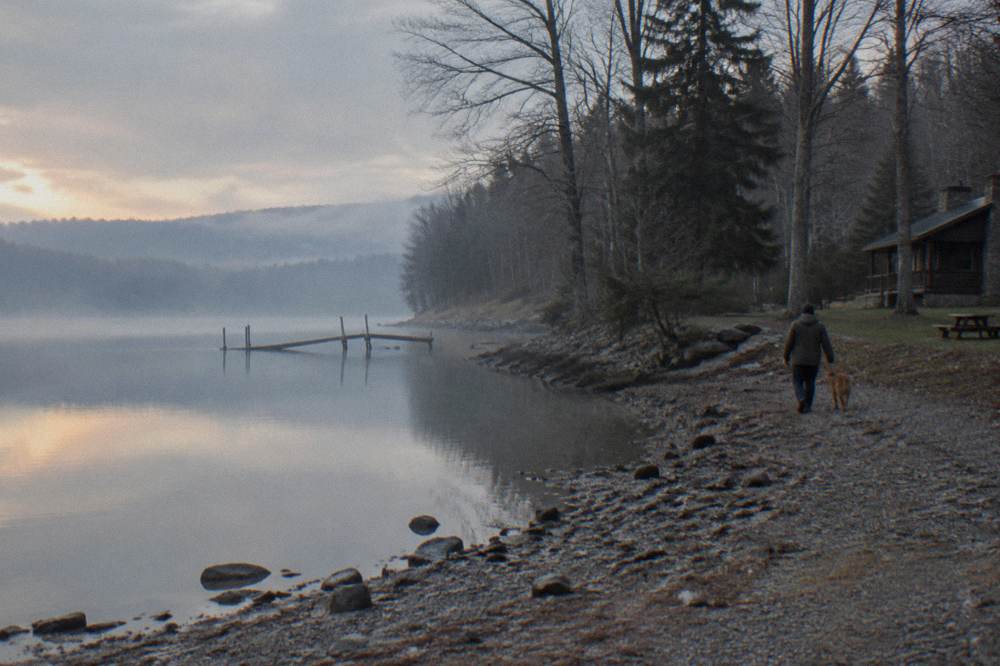
If a late-fall visit is on your list, the lodging around the lake stays open through the transition. LakeFront Lodge is a lodging option in the McHenry area at the north end of the lake, and the Oakland inns stay handy to the southern coves. Book for the foliage weeks early: the county's autumn festival and the peak color window draw a bigger crowd than the water temperature suggests.
LakeFront Lodge
McHenry
Lodging in McHenry, at the north end of the lake near the rental docks and the Wisp concession.
Check ratesCommon Questions About The Fall Drawdown
When Do They Lower Deep Creek Lake In The Fall?
There is no fixed lowering date. The lake is managed inside a permitted operating rule band, and the level drifts down gradually through late fall after the summer recreation season, with the lowest point typically arriving in late winter before spring refill.
How far does Deep Creek Lake drop in the fall?
In a typical fall the lake settles a few feet below its summer level. A documented past lowering for the Arrowhead Cove dredging project took the lake to about 2,456.5 feet, inside a permitted end-of-November band of 2,455 to 2,458 feet, before returning to the upper band by mid-December.
When do docks have to come out of Deep Creek Lake?
Private and commercial docks must be out of the water from November 30 until April 1 under the lake's buffer strip rules. State Park public docks come out in stages across late fall, with the final sections removed near the end of the period.
Can you still launch a boat after the level drops?
Yes. The State Park boat launch is open 24 hours a day, weather permitting, with a four-vehicle launch area and a launch fee or valid lake use permit required. Call the park before a late-season trip to confirm ramp and dock conditions.
Who decides the water level at Deep Creek Lake?
Brookfield Renewable, the hydroelectric plant operator, manages day-to-day levels inside a rule band permitted by the Maryland Department of the Environment. Maryland owns the lake bed and the surrounding buffer strip, so the state stays involved in every level decision.
Does the lake freeze after the drawdown?
Often, yes. In a normal cold winter ice forms in late December or early January and can support ice fishing through February in good years. Maryland DNR does not measure or certify ice thickness, so follow posted guidance, test thickness in multiple spots, and never go alone.