The Lodge at Wisp Resort
McHenry, north end of the lake
Same 0.6-mile walk to Deep Creek Lake as the main resort per the listing.
Check ratesDeep Creek Lake runs on a boating calendar that few first-time visitors expect: rental fleets open in stages from mid-May, July and August bring the biggest crowds and the tightest rules, October pairs quiet water with peak color, and the lake never closes, it just freezes. Here is how each part of the year actually plays out on the water.
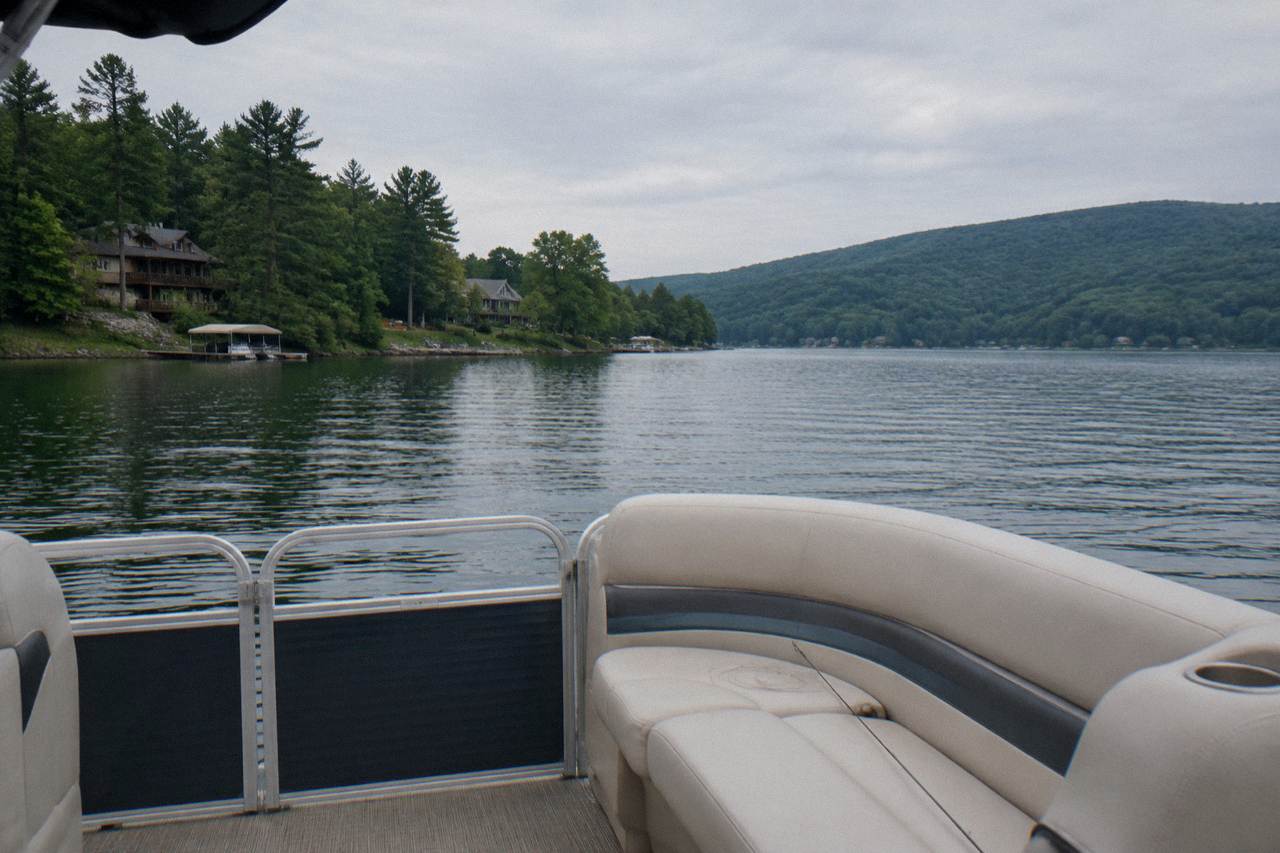
Short answer
The best time for boating on Deep Creek Lake is July through September for warm water and full rental availability, or the first half of October for fall color and thinner boat traffic. Rental fleets run roughly mid-May to mid-October, and the lake turns to an ice fishing destination after freeze-over.
Deep Creek Lake is Maryland's largest impoundment, 3,900 acres at full pool, 13 miles long with 69 miles of shoreline, and nearly all of its visitor year is organized around one question: when can you get a boat on the water. The Maryland Department of Natural Resources, which owns the lake and its bed as part of the state park system, keeps the ramp at Deep Creek Lake State Park open 24 hours a day, weather permitting. What changes through the year is everything else: which rental fleets are running, how many boats share the main basin, when the docks come out, and whether the thing floating on the lake is a pontoon or an ice auger.
The boating year here divides into four rough chapters. Mid-May to late June is the ramp-up, when rental shops open in stages and the water is still cold. July and August are peak season, with the warmest water, the biggest crowds and the tightest operating rules. September into early October is the local favorite, warm days with thinning traffic. And from late fall through winter the lake lowers, the docks come out in stages, and ice fishing takes over as the marquee on-water activity. This guide walks through each one, month by month, with the rental windows, rules and timing details that decide which month fits your trip.
The best window for most visitors is July through mid-September, when water and air temperatures are warm, every rental operator is running, and the full lake from McHenry Cove to the southern coves is in play. Boaters who want quieter water should target the first half of October, when foliage peaks, crowds thin, and most rental fleets are still open before docks come out in late fall.
Between those two windows the trade-offs are real. July and August weekends fill the State Park launch area, and personal watercraft face afternoon restrictions on summer weekends, a rule we cover in detail below. Weekdays in peak summer behave more like shoulder-season weekends: launch lines are short and the main basin has room to ski and tube. October flips the calculus. Color in Garrett County typically peaks in the second or third week of October, and a pontoon run along the shoreline in that window is one of the best ways to see it, but the water is cold, rental availability narrows week by week, and the public docks at the State Park come out in stages across late fall. If your trip is flexible, the sweet spot many returning boaters aim for is mid-September to the first week of October: summer-warm afternoons, empty coves, and the color just starting.
The Deep Creek Lake boating year runs on a rental calendar of roughly mid-May to mid-October, with July and August as the crowded peak, September as the calm shoulder, and October split between prime foliage boating and the progressive removal of docks. From late fall to early spring the lake lowers within its permitted band and ice fishing replaces boating.
The table below compresses the year into a planning grid. It reflects the rental windows and lake patterns described by the operators' own pages and the Maryland DNR, and it is the fastest way to see which month matches your priorities, whether that is warm water for swimming off the boat, thin crowds for waterskiing, or color for photography.
| Month | Boating character | What to plan around |
|---|---|---|
| May | Rental fleets open in stages; cold water, quiet lake | Book early; check operator pages for opening dates |
| June | Full rental availability arrives; water still cool | Good balance of availability and space on the water |
| July | Peak season: warm water, biggest crowds, weekend rules | PWC afternoon restrictions on summer weekends |
| August | Warmest water; families dominate weekdays too | Launch early; weekdays beat weekends for space |
| September | Shoulder sweet spot: warm days, thinning traffic | Many operators' best availability of the year |
| October | Foliage boating; color typically peaks mid-month | Fleets close in stages; docks come out in late fall |
| November | Rental season over; lake lowering within its band | Boat season effectively finished |
| December to March | Ice fishing season when ice forms | Docks out of the water; snowmobile season at the park |
Two structural facts explain the shape of that calendar. First, the lake is a hydroelectric reservoir managed by Brookfield Renewable within a permitted operating rule band, so the water level is allowed to drift down from its summer full pool as fall progresses, a pattern covered in detail in when the lake gets lowered. Second, private and commercial docks around the lake must be out of the water for winter, and the public docks at the State Park follow a staged removal in late fall, which pulls the rental season to a close even when the weather would still allow a good boat day.
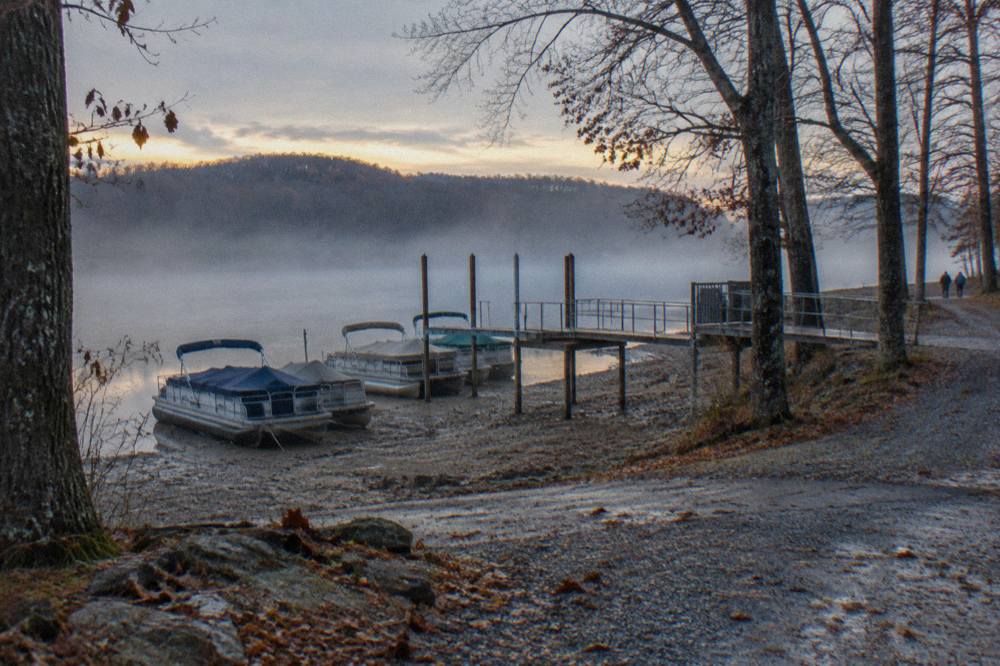
Rental seasons at Deep Creek Lake run roughly mid-May to mid-October, but each operator sets its own window, and the differences matter. One fleet on the lake lists a season of about mid-May to mid-October, another runs late May to early September, and a third closes its rental season at the end of September, so late-season boaters must match the month to the operator.
The rental shops around McHenry each publish a season on their own page, and the spread between them is wide enough to sink a poorly timed trip. A group planning a pontoon day in early October cannot assume every fleet is running; by that point some have closed for the year while others are still booking. The reverse is true in mid-May, when the water is quiet but only some shops have opened. Always confirm the current window on the operator's own page before locking in dates, because seasons shift with the weather.
| Operator | Rental type | Season as listed |
|---|---|---|
| Wisp Resort Lake Adventures | Pontoon tours, kayak, SUP, tube | Summer season, State Park beach |
| High Mountain Sports | Guided pontoon tours, kayak, SUP | Summer |
| Funtime Watersports | Pontoon tours, pontoon and jet ski rental | Summer |
| Lake Life Boat Rentals | Pontoon, ski and watersports boats | About mid-May to mid-October |
| Deep Creek Lake Boats | Pontoon rental | Late May to early September |
| Bill's Marine Service | Pontoon, speed and fishing boats | Summer rental season |
For a deeper comparison of hulls, horsepower and pricing, the Deep Creek Lake boat rental guide breaks down what each fleet offers and what a day on the water costs. If a guided outing rather than a bare rental is the goal, the pontoon tour guide for Deep Creek Lake compares the tour operators, their departure times and what a one-hour cruise covers.
July and August deliver the warmest water and the fullest lake of the year, with every rental fleet running, beaches busy, and the State Park launch handling its heaviest traffic on weekends. The trade-off is regulation and congestion: personal watercraft are barred from midday hours on summer weekends, no-wake zones govern the shoreline, and launch parking fills early.
The summer weekend rule that surprises the most visitors is the personal watercraft restriction. Under the lake's regulations, PWC and similar jet-driven vessels may not operate between 11 a.m. and 4 p.m. on Memorial Day weekend and on Saturdays, Sundays and holidays from July 1 through Labor Day. Anyone planning a jet ski day in peak summer should build the morning and evening around that window, and the jet ski and PWC rental guide for Deep Creek Lake covers the operator requirements alongside it. The DNR's Deep Creek Lake Natural Resources Management Area page states the other core rule: boats run at no-wake speed within 100 feet of shoreline, bridges, piers, docks or other vessels.
Crowd management on a peak summer weekend mostly comes down to timing. The launch at Deep Creek Lake State Park is open around the clock, so early morning launches beat the mid-morning queue, and weekday boat days often feel like a different lake entirely. Boats can reach nearly the entire lake from the State Park ramp, with only a small buoyed area at the outlet off limits, so escaping the busiest stretches of the main basin is realistic: the coves below the Glendale Bridge are the quiet water, where sailboats and kayakers concentrate away from the ski traffic. Vessel size limits shape the fleet too, with a 26-foot overall cap for boats and a 30-foot cap for pontoons under the lake's regulations, which is why the rental fleets here are built around pontoons and mid-size ski boats rather than large cruisers.
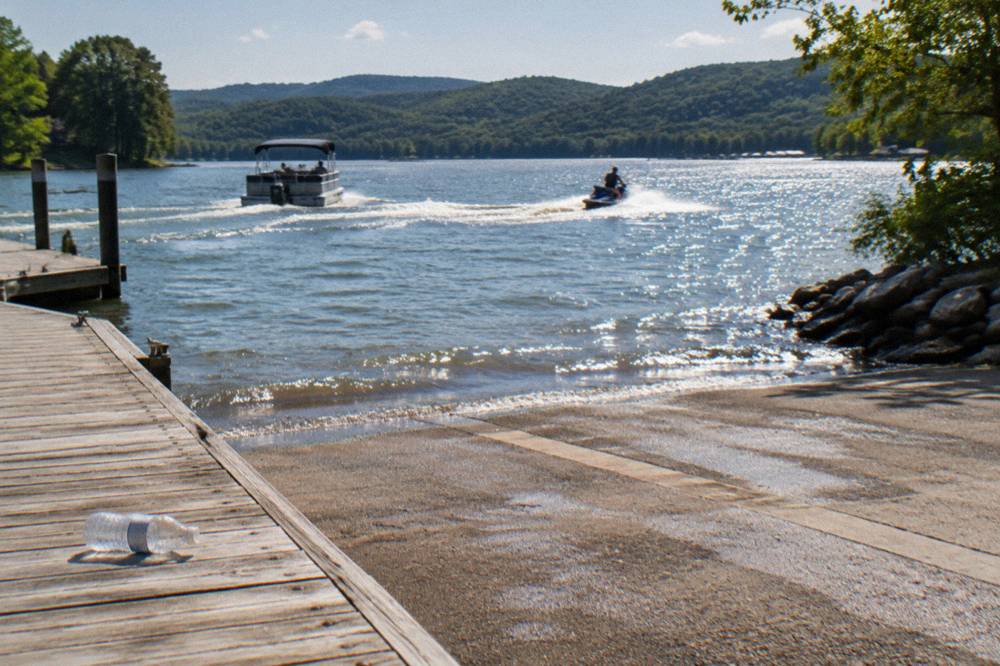
September and the first week of October offer the year's best ratio of good weather to boat traffic: water still warm enough for swimming off the stern, launch lines mostly gone after Labor Day, and rental fleets running at full schedule with their best availability. Locals treat this stretch, not August, as the real boating season.
The mechanics are simple. The summer holiday crowds leave after Labor Day, the PWC midday restrictions fall away with them, and the lake's water temperature drops slowly from its August peak, staying swimmable well into September. Rental operators, meanwhile, are still fully staffed and often easier to book than in July. For waterskiers and tubers it is the best combination of the year: flat morning water, warm air, and enough open lake that a tow rope does not cross four other wakes. Anglers rate the shoulder season highly too, since walleye and bass fishing picks up as water cools, and the fishing on Deep Creek Lake guide maps the species calendar against it.
The one caution is the calendar's back edge. As October advances, operators close in sequence, and the lake level is allowed to drift within its permitted band toward winter elevations, which can affect some cove depths and the condition of ramps and docks. A late-September pontoon day and a late-October one can be completely different experiences even when the air temperature matches. Check the operator's page for end-of-season dates and the Brookfield Safe Waters page for the current level reading before trailering or booking late in the year.
October is one of the most rewarding boating months at Deep Creek Lake and one of the least forgiving to plan poorly. Foliage typically peaks in the second or third week of October, and a slow pontoon pass along 69 miles of shoreline is arguably the single best color view in Garrett County, but rental fleets close in stages, water temperatures are cold, and public docks start coming out in late fall.
The color run works in three acts. Early October brings the first reds on the higher terrain around the north end, mid-month is typically peak across the county, and the final week mutes to golds and browns before wind and rain strip the ridgelines. From the water the view is layered differently than from any road: you see the whole slope from shoreline to ridge, and the reflection doubles it. The Deep Creek Lake in fall guide covers the fuller autumn picture, including Autumn Glory, the county's signature fall festival that fills the area's lodging in peak color weeks.
Planning around October means respecting the season's back edge. The lake association and DNR-linked summaries note that public docks at the State Park come out in stages beginning in mid-to-late fall with the Discovery Center side of the launch area, and private and commercial docks must be out of the water through winter. Practically, that means booking any guided pontoon tour or rental early in the month rather than late, packing real layers rather than sweatshirts, and treating anyone who falls overboard as a cold-water event, not a swim. A launch fee or valid lake use permit applies at the State Park ramp; the DNR fees page carries the current figures.
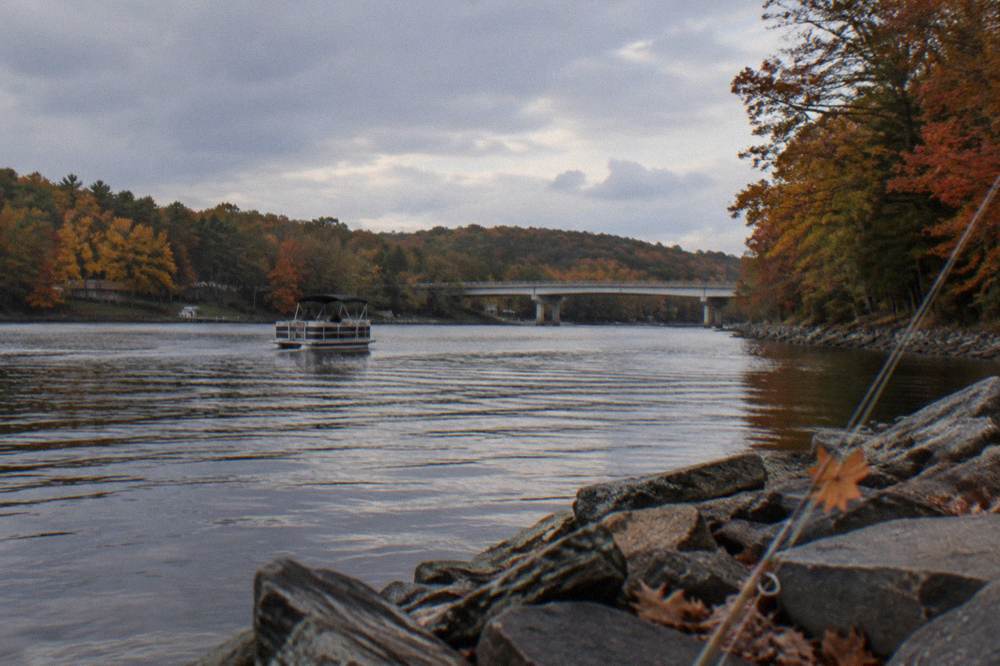
Morning is the best time of day for boating on Deep Creek Lake in every season: the water is calmest before midday wind picks up, launch traffic is thinnest before about 10 a.m., and in July and August the PWC restrictions clear the lake of jet-driven traffic until 11 a.m. Late afternoon is the second-best window; rentals run until about 5 p.m., so head out then or watch from shore.
The daily rhythm pairs with the seasonal one. On a July weekend, the hours between 8 and 11 a.m. combine flat water, open launch lanes and a PWC-free lake, which is why ski boats and serious slalom drivers are on the water at breakfast. By early afternoon the main basin carries the day's heaviest traffic, and the 100-foot no-wake rule near shore funnels everyone toward the middle. Evening reverses it: as dinner approaches the lake empties and the wind drops. No cruises run at sunset, so the best move is to watch the last light from shore. The sunset and evening guide for Deep Creek Lake covers that window in detail, including where the best west-facing water sits.
| Time of day | Water and traffic | Best for |
|---|---|---|
| Sunrise to 10 a.m. | Calmest water, empty launch, PWC-free summer mornings | Skiing, tubing, fishing |
| 10 a.m. to 1 p.m. | Traffic building, midday wind on the main basin | Cruising, swimming coves |
| 1 to 4 p.m. | Peak traffic; PWC barred on key summer weekends | Pontoon lounging, beach stops |
| 4 to 7 p.m. | Traffic thins, wind drops, light softens | Photography |
| After dusk | Navigation lights required; night skiing illegal statewide | Slow cruising only |

Most boating visitors stay at the McHenry end of the lake near the State Park and the launch, where the rental fleets, the beach and the ramp sit within a short drive. Wisp Resort sits about 0.6 miles from the lake, a walk of roughly eleven minutes per its own listing, and its lake concession runs the pontoon tours and beach rentals at the State Park, making it the most boat-adjacent full-service base.
The north-end cluster is the practical choice for a boat-heavy trip. Staying near McHenry puts the State Park ramp, the beach rental operation and two of the major rental fleets within minutes, which matters on a 9 a.m. pontoon pickup or an early-morning launch before the queue forms. Wisp Resort is the anchor option there, and because the Wisp concession operates the State Park's pontoon tours and beach gear, guests are effectively staying with the boat operator. Condo-style space suits larger crews: Suites At Silver Tree is a condo-style suite listing in the Oakland area near Deep Creek Lake. Closer to the State Park itself, Lake Pointe Inn pairs proximity to the park with a free full breakfast and an adjacent golf course per its listing.
McHenry, north end of the lake
Same 0.6-mile walk to Deep Creek Lake as the main resort per the listing.
Check ratesFor boaters who prioritize the launch over everything else, the driving differences inside the area are small but real: the lake runs 13 miles north to south, and a lodging choice at the McHenry end keeps the drive to the ramp under ten minutes, while Oakland-area stays add a short but winding drive up Garrett Highway to the State Park end. The where to stay for boating guide compares the areas against launch access, boat rental pickup points and the beach.
The rules that shape timing at Deep Creek Lake are seasonal rather than constant: personal watercraft face midday bans on summer weekends only, the no-wake zone within 100 feet of shore applies all season, night skiing is illegal, and the boating safety certificate requirement for anyone born on or after July 1, 1972 applies year-round. Renters get a temporary certificate issued by the rental company.
The certificate rule is the one that catches out-of-state visitors. Maryland requires anyone born on or after July 1, 1972 who operates a numbered or documented motorized vessel to carry a NASBLA-approved boating safety education certificate. Renters of motorized vessels, other than PWC, have a simpler path: they read a safety sheet and the rental company issues a 10-day temporary certificate on the spot, a process described on the DNR rental requirements page. The Maryland boating license question for pontoon renters walks through it step by step.
| Rule | Applies when | What it means for planning |
|---|---|---|
| PWC midday ban | Summer weekends and holidays, 11 a.m. to 4 p.m. | Book jet skis for morning or evening |
| No-wake within 100 ft | Always | Budget extra time along shorelines |
| Boat length cap | Always | 26 ft overall, 30 ft for pontoons |
| Safety certificate | Operators born on or after July 1, 1972 | Renters get a 10-day temporary certificate |
| Clean Drain Dry | Every launch | Clean, drain and dry, 48 hours of drying advised |
| Dock removal | Late fall through winter | Season ends for rentals and private docks |
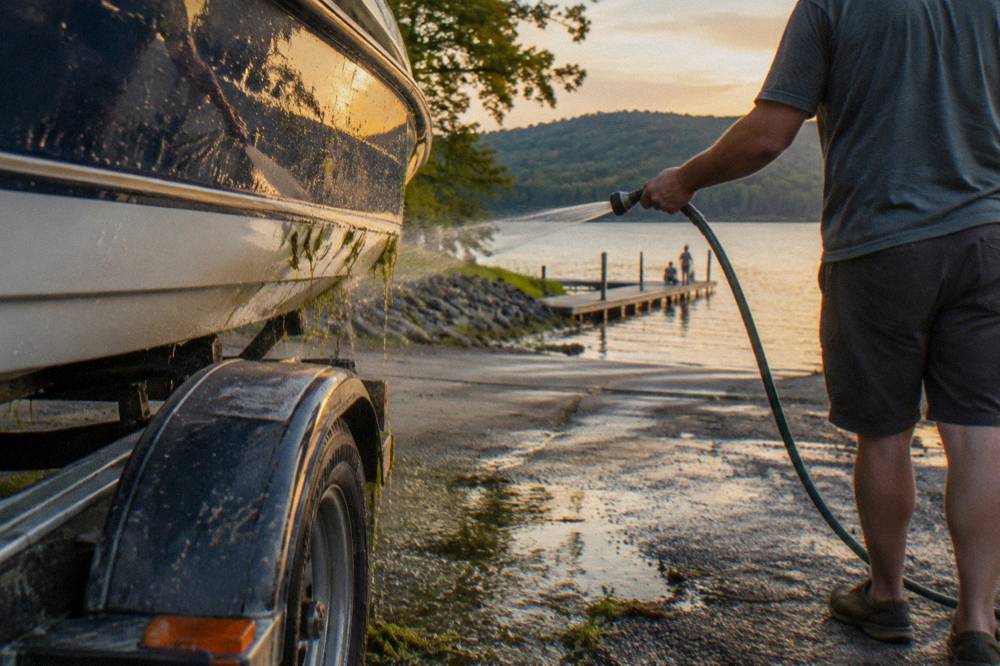
The invasive-species rule deserves a line in any timing discussion because it applies at the ramp on every launch of the year. State regulation prohibits putting a boat or trailer with attached aquatic plants into Maryland waters, and DNR asks boaters to follow Clean, Drain, Dry with at least 48 hours of drying between water bodies, since hydrilla found in the lake is under a continuing herbicide treatment program. Launch stewards at the State Park ramp offer free voluntary inspections. It adds a few minutes to a launch day and protects the fishery that makes the off-season worth visiting for.
Open-water boating effectively ends between mid-October and the end of November as rental fleets close and docks come out of the lake, but the lake itself never shuts down. Through winter it draws down within its permitted operating band, the State Park gate closes for snowmobile season from mid-December to mid-March, and attention shifts to ice fishing, which the Department of Natural Resources calls Maryland's premier ice fishing destination when the weather allows.
The transition happens in stages rather than on a single date. As October ends, the remaining rental fleets close in sequence, public docks at the State Park come out section by section beginning on the Discovery Center side, and private and commercial dock owners must have their docks out of the water from November 30 until April 1. The lake level, managed within its permitted band, is allowed to drift below the summer full pool elevation. The Garrett County Chamber is explicit that the area does not shut down in winter; it changes sports. The ice fishing on Deep Creek Lake guide covers the winter season, the species under the ice and the safety guidance, and anglers can call the State Park at 301-387-5563 for current conditions.
Ice itself is never certified safe by Maryland DNR, which does not measure ice thickness; the agency's guidance is that no ice is 100 percent safe, that a minimum of four inches of clear, solid ice is recommended for foot travel, and that conditions change daily. In a normal cold winter, ice forms in late December or early January and can hold the fishery through February, a short season that makes January the heart of the hardwater year. For boaters, the honest summary is that November and December are the quietest water months at Deep Creek Lake: too cold for pontoons, not yet frozen for augers.
Pick July or August if warm-water swimming and full availability matter most, and accept crowds. Pick September for the best overall balance of warm water, open fleets and thin traffic. Pick the first half of October for color and quiet, while confirming your operator is still running. Pick mid-May to June for a budget-conscious, uncrowded trip with cold water, and January for ice instead of boats.
The decision matrix below matches the four most common trip styles to the months that serve them best, using the rental windows, rule timing and traffic patterns covered above. Treat it as a starting point, then confirm the specific operator's season and schedule on its own page, because a single week can separate an open fleet from a closed one in the shoulder months.
| Trip style | Best months | Why | Watch out for |
|---|---|---|---|
| Family swim-and-tube trip | July to mid-August | Warmest water, beach rentals running | Weekend crowds; book lodging early |
| Waterski and wake trip | September, weekday mornings | Flat water, thin traffic, warm air | Fleet availability narrows late month |
| Fall color cruise | First half of October | Peak foliage from the water | Confirm operator still open; cold water |
| Quiet budget trip | Late May to June | Low rates, empty lake | Cold water; some fleets not yet open |
| Fishing-focused trip | September to October, or ice season | Active fish as water cools | Walleye harvest closed March 1 to April 15 |
| Pontoon tour, no driving | Any summer month | Tours run daily at set times | Reserved ahead in peak weeks |
One last timing note that applies to every month: the guided pontoon options run on fixed schedules, and those schedules are themselves seasonal. Wisp Resort's State Park operation lists departures at 9:00, 11:30, 1:30 and 3:30 in summer, and High Mountain Sports runs most days at 1 and 3 p.m., both by reservation. A tour is the right format for visitors who want the water without the certificate, the cleaning routine or the wheel. The Deep Creek Lake pontoon tour guide compares the operators, departure times and pricing structures side by side.
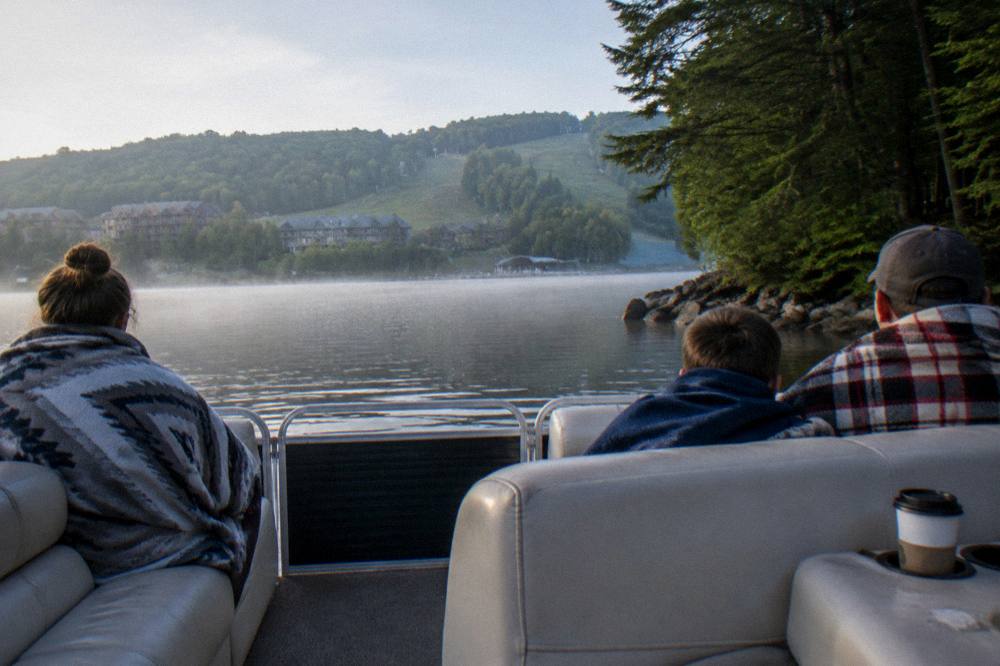
However you time it, the practical base for a boating trip is the same: the McHenry end of the lake, close to the ramp, the rental fleets and the beach. LakeFront Lodge offers lodging in the McHenry area, close enough that the drive to a morning launch stays short. More on how the site's coverage of the lake fits together is on the Deep Creek Boat Tours homepage.
McHenry
Lodging in McHenry, at the north end of the lake near the rental docks and the Wisp concession.
Check ratesJuly through mid-September for warm water and full rental availability, or the first half of October for fall color with thinner crowds. September is the local favorite, combining summer-warm afternoons with post-Labor Day peace on the water.
Roughly mid-May to mid-October, but each operator sets its own window: one fleet lists about mid-May to mid-October, another late May to early September, and a third closes at the end of September. Confirm the current window on the operator's own page before booking.
The first half of October is a prime month, with foliage typically peaking in the second or third week, but fleets close in stages and public docks begin coming out in late fall. Book early in the month, pack layers and treat the cold water seriously.
Public docks at the State Park come out in stages across late fall, starting with the Discovery Center side of the launch area. Private and commercial docks must be out of the water from November 30 and cannot go back in until April 1.
Not on open water once the season ends. Winter shifts to ice fishing, which the Maryland Department of Natural Resources describes as the state's premier ice fishing destination when the weather allows, typically late December or January through February in a normal cold winter.
Morning, in every season: calmest water, shortest launch lines, and on summer weekends a lake free of personal watercraft until 11 a.m. Late afternoon is the second window, though no operator here runs sunset cruises.
Before you go, the pick for this guide:
Wisp Resort
Full-service resort 0.6 miles from the lake (11-minute walk per the listing); the Wisp concession runs the State Park pontoon tours.
Check rates →