LakeFront Lodge
McHenry
Lodging in McHenry, at the north end of the lake near the rental docks and the Wisp concession.
Check ratesDeep Creek Lake has two sandy swim beaches inside Deep Creek Lake State Park, and swimming is permitted only when the park has its swim lines installed. Here is what the official pages say about the beaches, the season, water quality questions, hydrilla, and how swimming fits with boating on the lake.
Short answer
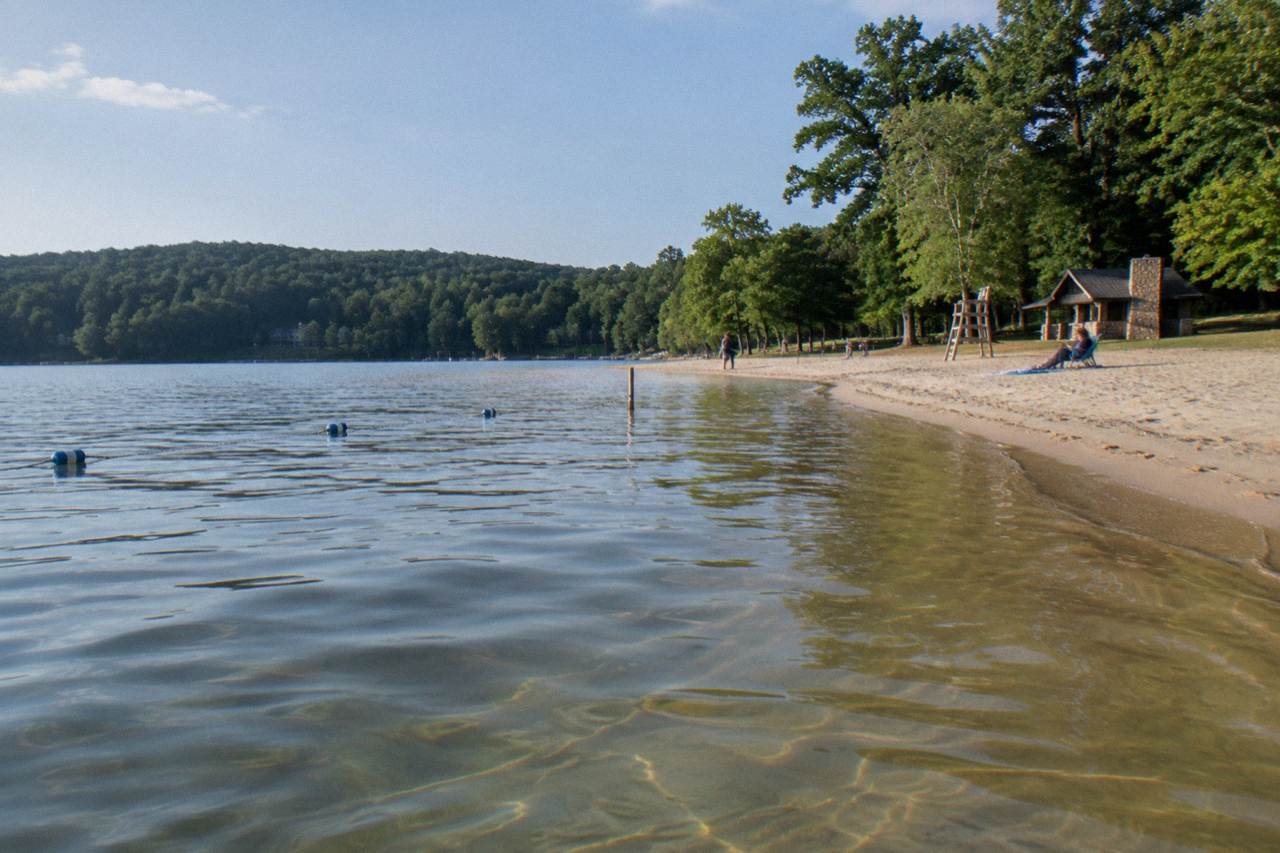
Swimming at Deep Creek Lake happens mainly at the two sandy beaches in Deep Creek Lake State Park near Swanton, open 8 a.m. to sunset with day-use fees of $3 per Maryland resident and $5 per non-resident per person in summer. Swimming is permitted when swim lines are installed, and pets are kept off the sandy beach in summer.
The sand beach question at Deep Creek Lake has a shorter answer than most visitors expect: the lake has exactly two sandy swimming beaches, both inside Deep Creek Lake State Park, and both operate on a simple rule the park states plainly. Swimming is permitted only when swim lines are in the water. Everything else, from cove swimming off a pontoon to water quality questions and the lake's hydrilla treatments, branches out from that State Park core, and most of it connects back to boating because the same body of water serves swimmers, kayakers and pontoon crowds all summer. If you want the fuller picture on safety before you wade in, our guide to swimming safety at Deep Creek Lake covers where swimming is allowed and the rules that protect swimmers.
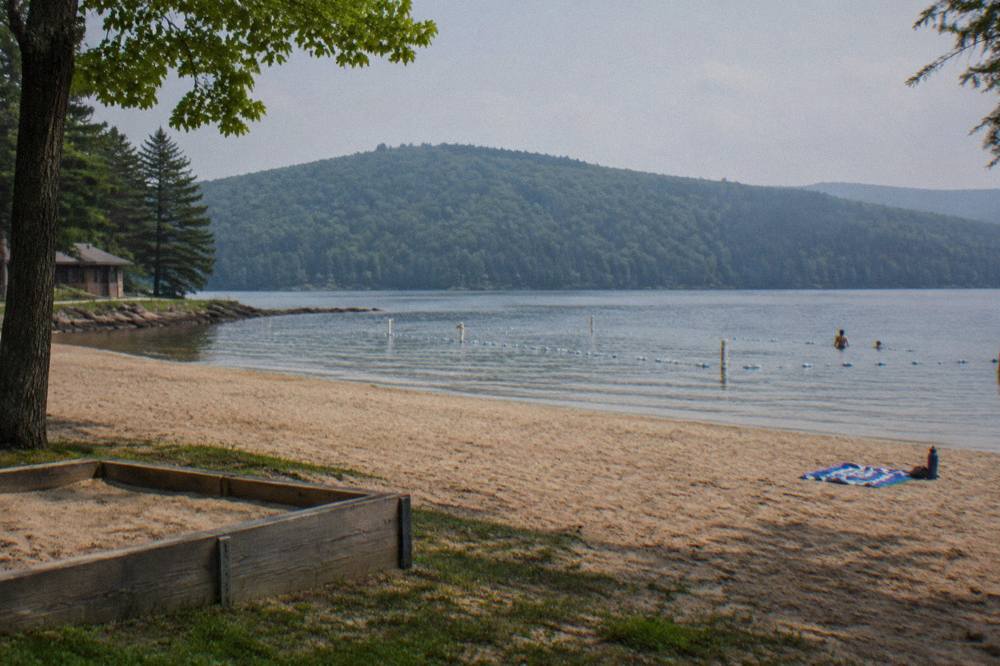
Swimming at Deep Creek Lake centers on Deep Creek Lake State Park near Swanton, which has two sandy beaches and permits swimming only when swim lines are installed. Day use runs 8 a.m. to sunset, and the park charges per person in summer and per vehicle the rest of the year. Outside the park, swimming from boats and from shoreline access points is the other main way people get in the water. If you'd rather keep your day budget-free, our guide to free beaches, trails, and shoreline access at Deep Creek Lake covers plenty of ways to enjoy the water without paying park fees.
The State Park is the only place with a maintained sand beach and lifeguard-style infrastructure on the lake. The official State Park page describes the two sandy beaches, the swim line condition, and a canoe and kayak launch at the main beach lot. That combination matters for families: you can park once, swim at the beach, and put a kayak in at the same lot without moving the car.
Elsewhere on the lake, swimming is a boating activity. The lake itself is a state-owned body of water within the park system, as the regulations page explains, and boaters anchor in coves to swim all summer. The Garrett County Chamber's fast facts page notes that kayakers favor the cove tips south of the Glendale Bridge, and the same quiet coves draw swimmers arriving by boat.
There is one firm geographic boundary to remember. The Department of Natural Resources fisheries page notes that except for a small buoyed area at the outlet, boats can reach the entire lake, but shoreline access for people on foot runs through public access points. So a swimmer without a boat is effectively choosing between the State Park beaches and public access spots, while a swimmer with a boat has the whole 69-mile shoreline to pick from, within the rules covered below.
| Swim setting | Where | Access notes |
|---|---|---|
| Main sandy beach | Deep Creek Lake State Park | Swim lines, canoe/kayak launch at main beach lot |
| Second sandy beach | Deep Creek Lake State Park | Same day-use entry, seasonal swim line rule |
| Cove swimming | South of Glendale Bridge coves | Usually reached by boat or kayak |
| Public access shoreline | Designated public access points | Listed by DNR for anglers and shore users |
For readers planning a wider trip, the State Park guide page covers the campground, trails and Discovery Center in more depth.
The two State Park beaches are sandy, guarded by swim lines rather than by designations elsewhere, and paired with a canoe and kayak launch in the main beach lot. Beach rentals of kayaks, paddleboards, tubes and chairs are available at the beach itself in summer. The sand is the only maintained beach sand on the lake, which is why the park draws most swimmers.
The beaches sit inside the day-use area of the park on 898 State Park Road in Swanton. Day use runs 8 a.m. to sunset year round, and the fee structure switches between a per-person charge in the summer season and a per-vehicle charge the rest of the year. Pets are not allowed on the sandy swim beach from Memorial Day weekend until after Labor Day, which keeps the sand itself clear for barefoot swimming families in high season.
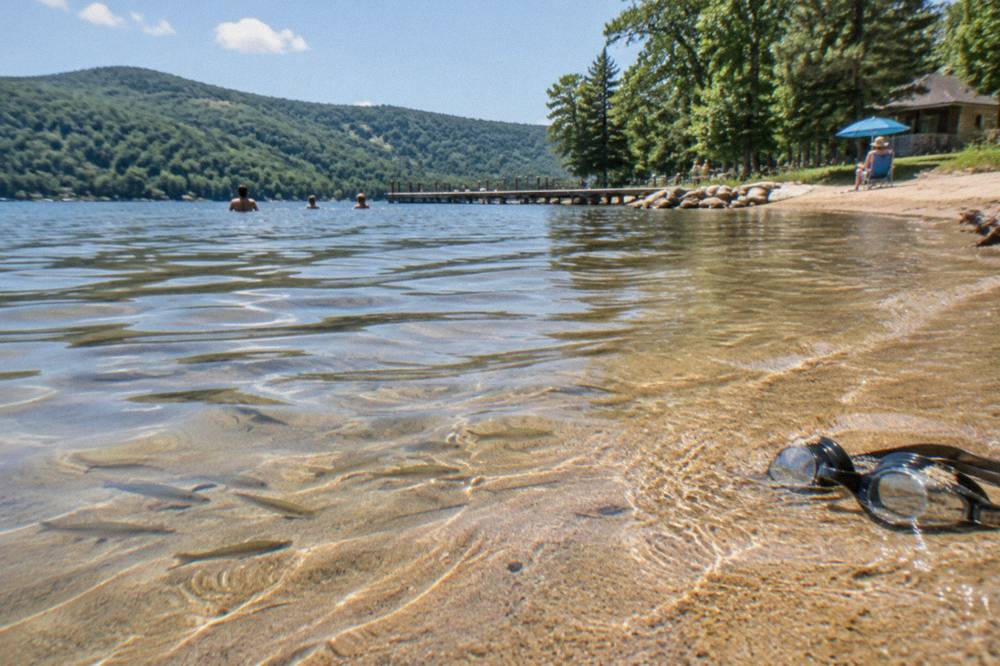
The rental operation at the beach comes through the Wisp Resort lake concession. Wisp's Lake Adventures page lists kayak, paddleboard and tube rentals alongside its guided pontoon tours, and the operator lists a tube at $9 per day on its own page, with a one hour guided pontoon tour for adults at $34 and children 12 and under at $19. Those prices change, so confirm on the operator's page before you go. That makes the beach a launch point for paddling, not just swimming: rent a kayak on the sand, then carry it to the canoe and kayak launch in the same lot.
One rule from the fishing side of the park matters to swimmers. The ranger docks and the swim area at the State Park are closed to fishing, which keeps hooks and swimmers separated during the summer months when both crowds are large.
| Beach amenity | What the park provides |
|---|---|
| Swim beaches | Two sandy beaches, swimming when swim lines are installed |
| Paddle launch | Canoe and kayak launch at the main beach lot |
| Rentals | Kayaks, paddleboards, tubes and chairs at the beach in summer |
| Pets | Not on the sandy swim beach Memorial Day to after Labor Day |
| Hours | Day use 8 a.m. to sunset |
Swimming season at Deep Creek Lake effectively runs from Memorial Day weekend through Labor Day, the window when the per-person day-use fee applies and the swim lines and beach rentals are in place. The lake sits at 2,462 feet full pool elevation in Garrett County's mountains, so summer water stays cool and the shoulders of the season are short. Outside that window the beaches remain open but swimming conditions get cold quickly.
The park's fee calendar marks the practical season: per-person day-use charges run Memorial Day weekend to Labor Day, and the pet restriction on the swim beach follows the same dates. The beach rental operation through the Wisp concession is a summer-season activity as well. Swimmers who arrive in June will find everything running; swimmers who arrive in late September will find quieter sand, colder water and rentals winding down.
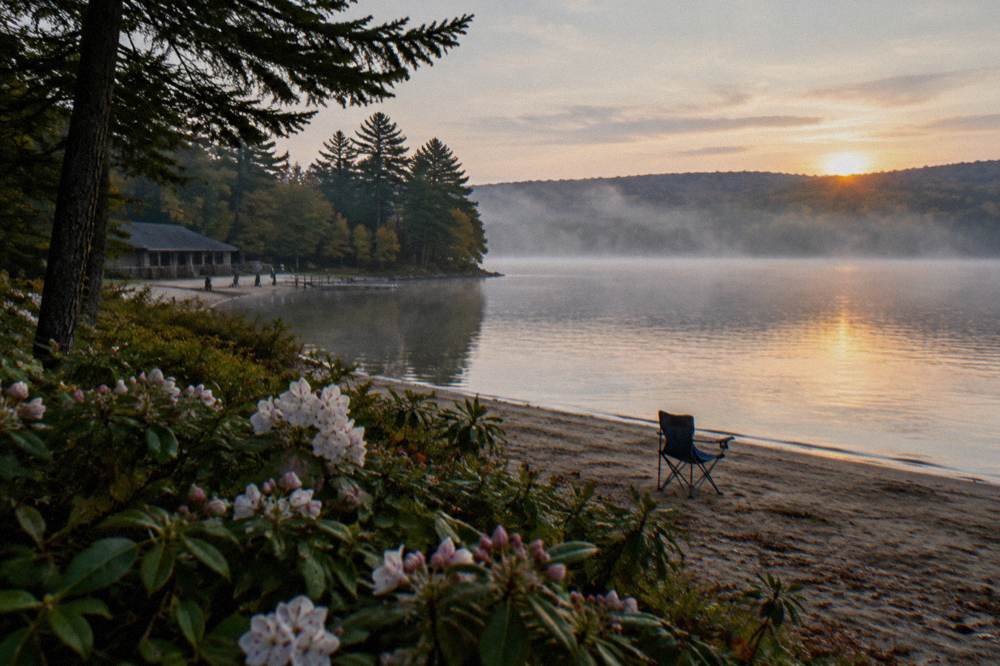
The mountain setting is the reason. The lake fills to 2,462 feet and averages about 25 feet deep with a maximum near 75 feet at the dam breast, so even August water at the beach edge is bracing by lowland standards. Families with small children usually plan beach days for July and August, when the shallow sand at the swim lines has had the longest stretch of warm weather.
Fall is a different pleasure entirely. The guide to Deep Creek Lake in fall covers the foliage season, and swimmers are mostly off the sand by then, replaced by anglers and pontoon riders watching the color move down the mountains. Winter turns the same water into Maryland's premier ice fishing destination, a complete seasonal flip described on the ice fishing page.
| Season | Swimming picture |
|---|---|
| Memorial Day to Labor Day | Swim lines in, per-person entry, beach rentals running |
| September to mid-October | Beaches open, water cooling, rentals ending |
| Late fall | Public docks come out in stages, lake level managed by Brookfield |
| Winter | Ice fishing replaces swimming when the lake freezes |
The State Park permits swimming at its beaches when swim lines are installed, and no official page publishes a water quality sampling program for the lake. DNR manages the lake as a state-owned resource, runs hydrilla treatments, and enforces invasive species rules at the launch. Swimmers should treat the question as one of conditions on the day rather than a published rating.
There is no swimming advisory page, no weekly bacteria count and no posted water quality index for Deep Creek Lake in the official sources, and this site will not invent one. What the official record does establish: Maryland owns the lake, the lake bed and the buffer strip around it, and manages it within the State park system. The fisheries page describes a healthy managed fishery with largemouth and smallmouth bass, walleye, northern pike and abundant panfish, which is consistent with a functioning lake ecosystem but is not a swim safety certification.
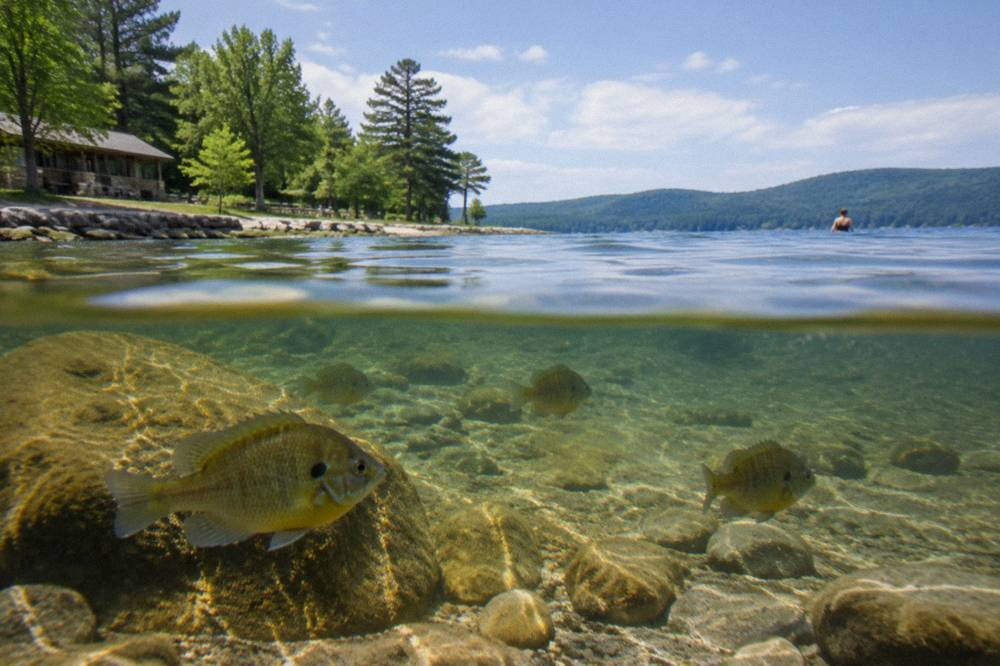
The practical safety guidance is condition based. Swim at the beaches inside the swim lines, follow posted rules and ranger direction, and keep small children in the designated area. Boaters who swim from their boats should know the no-wake rule: vessels must operate at no-wake speed within 100 feet of shoreline, bridges, piers, docks or other vessels, which protects swimmers at anchored boats and at the beach edge alike. That rule sits on the DNR lake rules page and applies everywhere on the water.
Swimmers who arrive by paddlecraft have a designated entry point at the main beach lot, and the wider paddle picture is covered in the kayak and paddleboard guide.
Hydrilla, an invasive aquatic plant, was first found in Deep Creek Lake in 2013 and has been under DNR herbicide treatment since, with treatments continuing through the summer season and a new infestation noted at Arrowhead Cove. For swimmers this means plant growth in some coves, especially late summer, and clean, drain, dry rules for any boat or gear that enters the water.
The DNR invasive species page is the primary source. It explains that hydrilla found in 2013 triggered an ongoing treatment program, that zebra and quagga mussels are not currently believed to be in the lake, and that Launch Stewards at the State Park ramp offer free voluntary inspections. The regulation behind it is strict: a person may not place a vessel or equipment with attached aquatic plants, zebra mussels or other prohibited nonnative organisms into State waters, and penalties are steep. DNR advises CLEAN, DRAIN, DRY with at least 48 hours of drying before moving gear between waters.

For swimmers the experience side is simple: the maintained beaches are kept swimmable, while some coves grow thick with plants by late summer, which is pleasant for fish and less pleasant for bare feet. Kayakers and pontoon swimmers pick their coves accordingly. The pilot dredging project at Arrowhead Cove, completed with a lessons learned report available through Garrett County, was a sediment project aimed partly at the same shallow water problem, and DNR's harvesting and herbicide work continues as a multi year program. Other pages covering the same trip are gathered on Deep Creek Boat Tours.
Yes, swimming from an anchored boat is a normal summer activity on Deep Creek Lake, and the no-wake rule within 100 feet of shore, docks and other vessels is the main protection for people in the water. Beaching a boat is not permitted except in emergencies, and posted zones carry a 6 knot limit with no skiing. Pontoon renters should pick a quiet cove, anchor, and keep an eye on passing traffic.
The rules stack up clearly across the DNR pages. Vessels run at no-wake speed within 100 feet of shoreline, bridges, piers, docks or other vessels, with an exception for starting a tow from a pier or shore. Posted speed limited areas are 6 knots with no skiing, marked by white signs or buoys with an orange circle, and night skiing is illegal. Beaching a boat is not permitted except in emergencies, per the DNR fisheries page. All of this shapes where boaters swim: an anchored pontoon in a cove, not a boat run up on the sand.
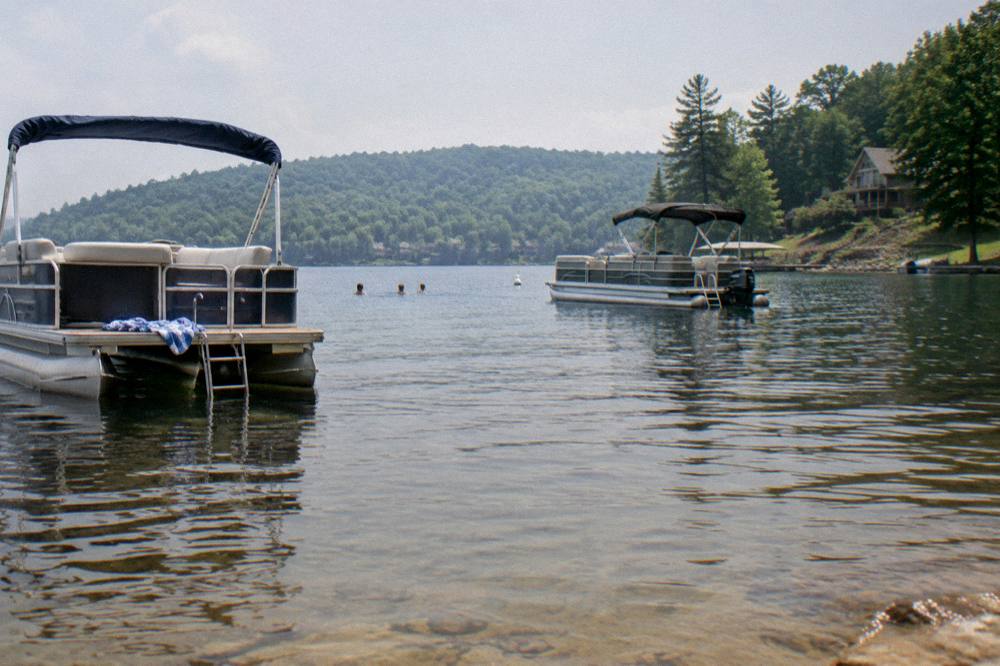
Renters have one licensing step to know about. Anyone born on or after July 1, 1972 must hold a boating safety education certificate to operate a numbered vessel in Maryland, but a renter of a motorized vessel reads a safety sheet and receives a 10 day temporary certificate from the rental company, per the DNR rental requirements page. That makes a swim cove day on a rental pontoon straightforward for visiting families. The rental fleet itself, from operators like Lake Life Boat Rentals and Deep Creek Lake Boats on Deep Creek Drive in McHenry, is covered in the boat rental guide.
| Rule | What it means for swimmers |
|---|---|
| 100 ft no-wake zone | Boats slow near shore, docks and anchored boats where people swim |
| 6 knot posted zones | No skiing in marked areas, marked by white signs or orange circle buoys |
| No beaching a boat | Swim from anchor, not from a boat run onto the sand |
| Rental certificate | Renters born after July 1, 1972 get a 10 day temporary certificate on site |
The most convenient base for the State Park beaches is the McHenry area, minutes from the park entrance and from the boat launch, with Lake Pointe Inn close to the lake and the State Park and offering a free full breakfast and an adjacent golf course. Oakland options like The Garrett Inn sit a short drive from the lake and suit travelers combining the beach with Swallow Falls State Park.
Lake Pointe Inn sits in McHenry near Deep Creek Lake State Park, close to the lake, with free full breakfast and an adjacent golf course per its listing. That location is the practical draw for swim families: the park gate, the sand and the launch are all in one short drive, and mornings can start with breakfast at the inn rather than a cooler in the car. Visitors who want to compare the full lodging picture across the lake's north and south ends can start with the where to stay for boating guide.
McHenry
Lodging in McHenry, at the north end of the lake near the rental docks and the Wisp concession.
Check ratesSouth of the bridge, Oakland works well for a mixed itinerary. The Garrett Inn is about 2.4 miles from the lake by car, and the Shamrock Inn is an Oakland property marketed under the Deep Creek Lake name, both a short drive from the Thayerville end of the water and from Swallow Falls State Park nine miles north of Oakland, where Muddy Creek Falls drops 53 feet. A beach morning at the State Park, a pontoon afternoon, and a waterfall hike the next day is a realistic Oakland based plan.
For readers whose day centers on paddling rather than the sand, Shamrock Inn keeps you in the Oakland area near the quiet coves south of the Glendale Bridge, where kayakers favor the cove tips.
Bring what the beach does not rent: swim gear, towels, sun protection, water shoes and a full day plan, since the park charges per person in summer and the rental stand covers kayaks, paddleboards, tubes and chairs. The lake sits at mountain elevation, so mornings are cool even in July, and afternoons on the water demand sunscreen and drinking water.
The rental stand at the State Park beach covers the on-water gear. What it does not cover is the basics of a mountain lake day. Air temperatures at 2,462 feet swing wide: a July morning can need a sweatshirt and a July afternoon can need shade, and the same shallow sand that warms the swim area reflects sun back onto fair skin. Water shoes earn their place on the pebbly stretches outside the maintained sand.
| Packing item | Why it matters at Deep Creek Lake |
|---|---|
| Water shoes | Sand at the beach, stones at public access points |
| Layers for morning | Mountain elevation keeps early hours cool |
| Sunscreen and shade | Reflected sun off water and sand |
| Drinking water | Day use runs 8 a.m. to sunset, no short beach day |
| Dry bag for paddling | Keeps keys and phones safe on kayak and tube rentals |
If the plan stretches to a full lake day, the packing question grows. The blog post on what to bring for a day on Deep Creek Lake runs the full checklist for pontoon and beach days alike.
Swim inside the installed swim lines, follow posted signs and ranger direction, and keep pets off the sandy beach from Memorial Day weekend through the summer season. Boaters must observe the 100 foot no-wake rule around people and craft, and anyone operating a motorized vessel born on or after July 1, 1972 needs a boating safety certificate, with a temporary version issued to renters.
The DNR guidance for the lake is condition and signage based, and the official answer to most questions is posted at the park. The two beaches, the swim line rule and the pet restriction come straight from the State Park page. The no-wake, speed zone and beaching rules come from the lake rules and regulations pages. Nothing in the official record asks swimmers to do anything more exotic than stay inside the lines, mind the buoys and keep the sand pet free in summer.
The water temperature point deserves repeating for first time visitors. This is not a Piedmont pond: it is a 3,900 acre impoundment averaging 25 feet deep in the mountains, and even in August swimmers feel the drop-off beyond the swim lines. Children, weaker swimmers and anyone swimming from a boat should wear a properly fitted life jacket, the same standard DNR applies to personal watercraft operators, and the boating on Deep Creek Lake overview collects the on-water rules in one place. When you're ready to dry off, the guide to land-based activities around Deep Creek Lake covers plenty of ways to fill the rest of your day.
Families weighing the water itself can read the safety discussion on the blog question is it safe to swim in Deep Creek Lake, which works through the same official record from a swimmer's angle, and Lake Pointe Inn remains the closest inn option to the park for early beach arrivals.
Swimming is one pillar of a lake day that usually also includes a pontoon tour, a paddle rental or fishing from a boat, all running on the same summer calendar. The State Park beach is the hub, the coves south of the Glendale Bridge are the quiet boating counterpart, and the whole rhythm slows after Labor Day as rentals end, docks come out in stages in late fall, and the lake turns toward ice season.
That seasonal arc is worth planning around. Summer concentrates everything at once: swim lines, beach rentals, pontoon tours from the Wisp concession and the private operators, and the no-wake etiquette that keeps it all workable. Fall strips it back to foliage pontoon rides and fishing, and winter hands the lake to ice anglers when the weather allows, with the DNR guidance that no ice is 100 percent safe and thickness should be tested before anyone walks out.
Oakland
About 2.4 miles (3 minutes by car) from the lake per the listing.
Check ratesFor a trip built around the water, the sequencing that works for most families is a beach morning inside the swim lines while the sand is quiet, a paddle or pontoon afternoon, and lodging on the McHenry side for the shortest drives. The deeper comparisons, from pontoon tour pricing to launch logistics, live in the pontoon boat tours guide and the boat ramps and launching guide.
Deep Creek Boat Tours exists to make that planning easier: the lake is a managed body of water with real rules, real seasons and a short list of official access points, and the sand beach at the State Park is where most of it begins.
Yes. Deep Creek Lake State Park has two sandy beaches, and swimming is permitted when swim lines are installed. These are the only maintained sand beaches on the lake; other swimming happens from boats in the coves or at public shoreline access points.
Swimming is permitted at the State Park beaches inside the installed swim lines, and no official page publishes a water quality rating or sampling program for the lake. Follow posted rules and ranger direction, stay inside the lines, and note that the water is a cool mountain lake even in August.
Yes, swimming from an anchored boat in a cove is a normal summer activity. Boats must run at no-wake speed within 100 feet of shore, docks and other vessels, beaching a boat is not allowed except in emergencies, and posted 6 knot zones prohibit skiing.
Day use is $3 per Maryland resident and $5 per non-resident per person from Memorial Day weekend to Labor Day, and per vehicle the rest of the year. A launch fee applies at the boat ramp; check the DNR fees page for current amounts before you go.
The practical swim season runs Memorial Day weekend through Labor Day, when swim lines are in, beach rentals operate and the per-person entry applies. The beaches stay open into fall, but mountain water cools quickly after September.
Hydrilla was first found in the lake in 2013 and is under ongoing DNR herbicide treatment, including the Arrowhead Cove site. The maintained beaches are kept swimmable, while some coves grow thick with plants late in summer, so paddle and boat swimmers choose their spots accordingly.
Before you go, the pick for this guide:
Lake Pointe Inn
Close to the lake and the State Park, with free full breakfast and an adjacent golf course per the listing.
Check rates →