Is It Safe To Swim In Deep Creek Lake?
A straight answer on swimming safety at Deep Creek Lake: where swimming is permitted, the rules that protect swimmers, and what to know before you get in the water.
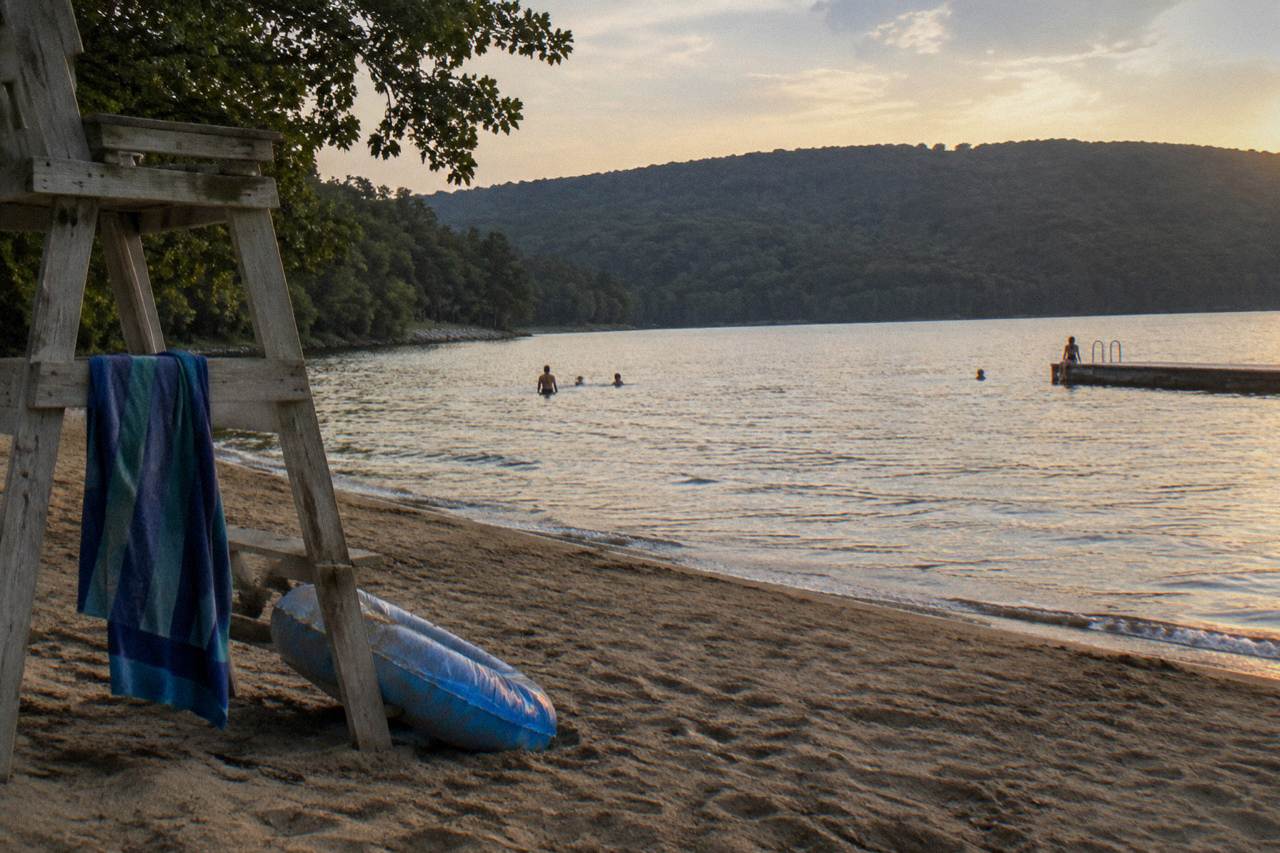
Deep Creek Lake is Maryland's largest impoundment, 3,900 acres of water held at a full pool elevation of 2,462 feet, filling 13 miles of valley with 69 miles of shoreline. People come for pontoon tours, kayak rentals and walleye fishing, and a large share of them ask the same question at some point: can you actually get in the water? The short answer is yes, with the right location and a little judgment. Swimming at Deep Creek Lake is a normal, popular summer activity, and the state park exists partly to host it, but this is a natural lake, not a chlorinated pool, and the rules matter more than most visitors expect.
Yes, swimming at Deep Creek Lake is safe when you stick to designated areas and posted rules, meaning the two sandy beaches at Deep Creek Lake State Park, where swimming is allowed only when swim lines are installed. The lake is natural and untreated, so conditions vary with weather, boat traffic, and season, and no published water-quality readings exist; your best guide is the managed beach, posted signs, and ranger direction on the day.
The State Park's day-use area is the center of swimming at the lake. Maryland DNR's State Park page states plainly that the park has two sandy beaches and that swimming is permitted when swim lines are in place, which means the swim area is a defined, buoyed zone rather than the whole shoreline. That single detail answers most of the safety question. A buoyed swim area keeps boats, pontoons and personal watercraft outside the swimming zone, and it marks a space the park manages for people in the water.
What the official pages do not provide is a water-quality dashboard, and this site will not invent one. There is no published bacteria count, clarity index or temperature log to quote, so any page promising precise water readings is guessing. The practical approach: the park posts conditions at the beach, rangers answer conditions questions at 301-387-5563, and the Discovery Center line 301-387-7067 covers visitor questions. When swim lines are up and the beach is open, that is the park's own signal that swimming is on.
Where Can You Legally Swim At Deep Creek Lake?
The managed swimming spots are the two sandy beaches at Deep Creek Lake State Park, on the lake's eastern shore near Swanton. Elsewhere, swimming from a boat, a kayak or a paddleboard is a normal part of a day on the water, but beaching a boat is not permitted except in emergencies, and the primary boater access to the lake is the State Park ramp. Shoreline access away from the park is limited.
The State Park is the answer for most families, and it is built for it: day use runs 8 a.m. to sunset, the beaches sit beside a main lot with a canoe and kayak launch, and rentals of kayaks, paddleboards, tubes and chairs are available at the beach itself in the summer season, per the Garrett County Chamber's fast-facts page. One pet rule matters to beach-goers: pets are not allowed on the sandy swim beach from Memorial Day weekend until after Labor Day, which keeps the swim zone clean and predictable.
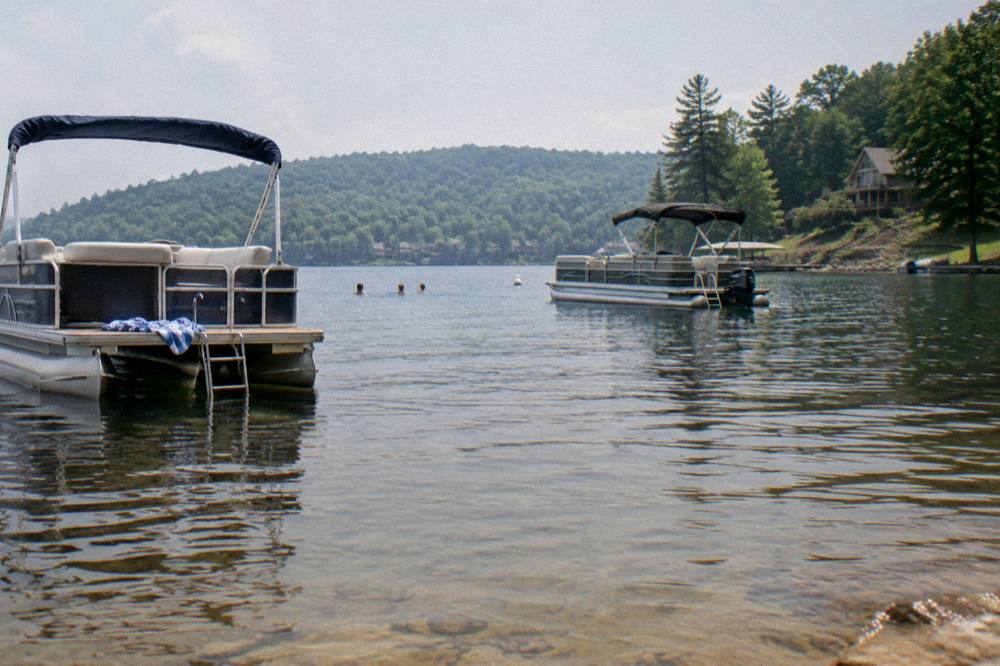
Away from the beach, swimming is something boaters do from their boats. A pontoon anchored in a quiet cove, a kayak beached for a minute at a cove tip, a paddleboard pause in glassy morning water: all of it is ordinary. What the rules constrain is where the boat itself goes. Beaching a boat is not permitted except in emergencies, per DNR's fisheries page on the lake, and swimming in coves means sharing water with boat traffic, which brings the no-wake rule into play.
| Swimming situation | Where it happens | What governs it |
|---|---|---|
| Beach swimming | Two sandy beaches, Deep Creek Lake State Park | Swimming permitted when swim lines are installed |
| Swimming from a boat | Anywhere on the lake, away from marked hazards | No-wake rule within 100 ft of shore, docks and other vessels |
| Swimming from a kayak or SUP | Coves and shoreline margins | Clean, Drain, Dry rules if equipment has been in other waters |
| Wading from shore outside the park | Public access points only | Maryland owns the lake bed and the buffer strip around it |
How Does Boating Traffic Affect Swimming Safety?
Boat traffic is the single biggest practical safety factor for swimmers outside the buoyed beach, and Maryland's no-wake rule is the main protection: vessels must travel at no-wake speed within 100 feet of the shoreline, bridges, piers, docks or other vessels. That keeps wakes small near shore, but it does not keep boats away, and a swimmer in open water is hard to see from a boat helm.
The no-wake buffer comes straight from the DNR lake rules page for the Deep Creek Lake Natural Resource Management Area, and it exists for exactly this mix of uses: a lake where rental pontoons, jet skis, fishing boats, kayaks and swimmers all share 69 miles of shoreline. Within 100 feet of shore or a dock, boats must crawl. Outside that band, they can run, which is why open-water swimming across a main-lake channel is a poor idea and why the buoyed beach exists.
There is one more interaction worth naming: fishing and swimming do not mix in specific spots. The ranger docks and the swim area at the State Park are closed to fishing, per the park's own page, so anglers casting near the beach are out of bounds and the swim zone stays free of hooks. If you are swimming from a boat in a cove, be aware that coves are also where anglers work the shoreline; a glance around before you slip over the side is basic seamanship.
For readers planning a mixed day, the site's swimming at Deep Creek Lake guide covers the beach in more depth, and the boating on Deep Creek Lake overview explains how boat traffic patterns shift through the day. The short version: mornings are calm water, afternoons are boat-heavy, and late afternoon light makes swimmers nearly invisible from a helm.
Is The Water Clean At Deep Creek Lake?
The lake is a natural, untreated freshwater impoundment, and no public water-quality dashboard for it exists to quote, so the honest answer is structural: the lake feeds a hydroelectric plant, Maryland owns the lake bed and the buffer strip around it, and the state runs an invasive-species and plant-treatment program on the water. Those facts describe a managed natural lake, clean by the standards of a mountain reservoir, not a treated swim facility.
A few verified facts frame what is in the water. Hydrilla, an invasive aquatic plant, was first found in the lake and has been under a multi-year herbicide treatment program since, with the DNR Invasives page tracking it and asking the public to report sightings. Zebra and quagga mussels are not currently believed to be in the lake, which is a genuinely good sign and one reason the Clean, Drain, Dry rule is enforced so seriously here. Placing a vessel or equipment with attached aquatic plants or prohibited species into state waters carries penalties of up to $2,500 per offense.
None of that is a reason to stay out of the water. It is a reason to understand what kind of water this is: a living lake with plants along its coves, cold depths in the main basin, and warm shallows in July. Swimmers who dislike plant contact should stay inside the buoyed beach, where the swim zone is kept clear, and expect a natural feel rather than a pool feel everywhere else.
What Are The Swim Rules At Deep Creek Lake State Park?
The park's rules are specific: day use runs 8 a.m. to sunset, swimming is permitted when swim lines are installed, pets are barred from the sandy swim beach from Memorial Day weekend until after Labor Day, and the ranger docks and swim area are closed to fishing. A day-use fee applies per person in summer, per vehicle the rest of the year, and the lake carries its own launch fees for boaters.
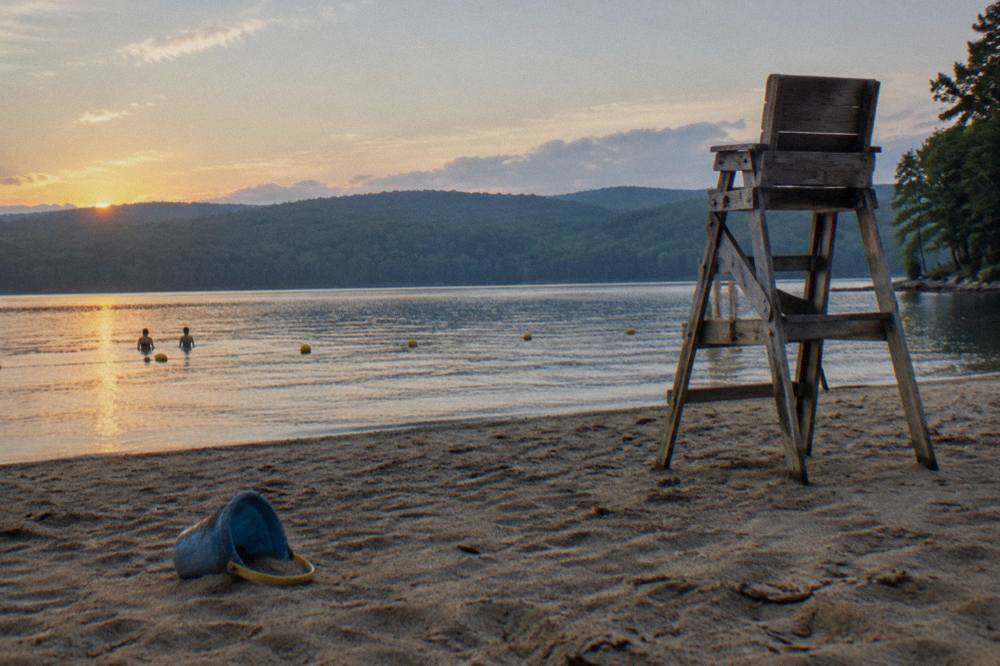
The fee structure is worth understanding because it shapes the beach experience. Memorial Day weekend through Labor Day, the park charges per person, and the rest of the year it charges per vehicle; a boat launch fee applies on top for anyone trailering a boat, and the launch fee or a valid lake use permit or State Park pass is required each use. Day-use entry runs $3 per Maryland resident or vehicle and $5 for non-residents; for the current boat launch fee, check the DNR fees page, and the Deep Creek Lake State Park guide walks through the whole day-use picture.
The swim-lines detail deserves emphasis because it is a genuine safety mechanism, not decoration. When lines are in, the swim zone is defined and boats are excluded. When lines are out, early and late in the season, swimming is not permitted at the beach even on a warm October afternoon, and the water is cold enough that the rule is doing you a favor. Call ahead rather than assuming.
Pets get their own rule because families ask: off the sandy swim beach in summer, fine elsewhere in the park on leash per standard park rules. The campground's 112 sites sit close enough that the beach is a short walk or drive, which is why the park fills up on summer weekends.
Do You Need A Boating Certificate To Enjoy The Water Here?
Most visitors never need a certificate, but anyone operating a motorized rental boat born on or after July 1, 1972 does: Maryland requires a NASBLA-approved boating safety education certificate, though renters of motorized vessels get a 10-day temporary certificate issued by the rental company after reading a safety sheet. Swimmers, kayakers and paddleboarders need no certificate at all.
This matters to a swimming article because so many swim days here are boat days. The typical pattern: a family rents a pontoon out of McHenry, cruises the north end, and anchors in a cove so the kids can swim off the back. The person at the helm is the one the rule touches, not the swimmers, and the rental path is deliberately easy. The DNR boating safety page states the certificate requirement, and the rental-requirements page explains the temporary certificate renters receive.
Human-powered craft carry no certificate requirement at all, which is part of why kayaking is so popular here; the can you kayak on Deep Creek Lake piece covers that world in full. The lake's geography rewards it: kayakers favor cove tips, per the Chamber's fast facts, and the water below the Glendale Bridge is the quiet, sailboat-and-cove country of the southern lake.
One safety note that spans both worlds: Maryland's life-jacket rules apply to children on boats and to personal watercraft operators, and a life jacket on a kid swimming off a pontoon is never a bad call in deep cove water. The DNR's personal watercraft page is the authority on jet ski rules, including the summer daytime operating restrictions that keep PWC off the water during the busiest midday hours on weekends and holidays from July 1 through Labor Day, which conveniently also clears the noisiest traffic from peak swim time.
| Activity | Certificate needed | Who issues it |
|---|---|---|
| Swimming from the beach | No | Not applicable |
| Swimming from a boat | No, for swimmers | Helm operator's requirement only |
| Renting a motorized boat (born on or after July 1, 1972) | 10-day temporary certificate | The rental company, after a safety sheet |
| Operating your own motorized boat (born on or after July 1, 1972) | Permanent boating safety certificate | Maryland DNR, NASBLA-approved course |
| Kayak, SUP, canoe | No | Not applicable |
What About Water Temperature And Depth?
Deep Creek Lake sits at elevation, and its water behaves like mountain water: about 75 feet at its deepest near the dam and about 25 feet on average, which means shallow coves warm pleasantly by July while the main basin stays cold enough to take your breath. Swimmers stay in the shallows and the beach zone; depth comes on fast beyond the swim lines.
The lake's physical facts come from DNR's fisheries page, and they explain a lot about swimming here. The lake was built as a hydroelectric impoundment, dammed on Deep Creek and filled by 1929, and it still generates power while being managed to hold a level for recreation. Management for electricity means the level moves inside a permitted band rather than holding perfectly still, and Brookfield Renewable operates within that band. For swimmers, the practical effect is minor: a slightly lower beach waterline in the off-season, and slightly higher in spring.
Temperature is the honest limit on the swim season. The beaches and swim lines operate on the summer calendar, and by mid-October the county's attention has shifted entirely to foliage, not swimming. Water that felt fine in July cools through September, and cooling water plus distance from shore is the classic risk combination in any mountain lake. Swim parallel to the beach, not out toward the buoys, is the standard advice that applies here as anywhere.
Depth is also why the beach matters for families. Inside the swim lines the bottom slopes gradually; off a boat in the main basin, the water under the swim ladder can be 20 feet deep with nothing to stand on. Kids who are confident in the shallows can panic in deep water, so a life jacket off the boat is cheap insurance, and cove swimming should stay within sight of the helm.
Where Should You Stay For A Swim-And-Boat Day?
The practical base is McHenry or the State Park side of the lake: lodging near McHenry puts the beach, the boat launch and the rental docks within a few minutes of each other, while Oakland options sit a short drive from the Thayerville end. For a day that pairs a morning swim with an afternoon pontoon rental, staying near the park saves the most driving.
On the McHenry side, Lake Pointe Inn is the closest match to a beach-and-launch day: it sits in McHenry near Deep Creek Lake State Park, includes a free full breakfast, and has a golf course adjacent for anyone splitting the group between the water and the links. That combination, park proximity plus breakfast handled, is exactly what a swim morning wants.
LakeFront Lodge
McHenry
Lodging in McHenry, at the north end of the lake near the rental docks and the Wisp concession.
Check ratesOn the Oakland side, the calculus changes. Oakland is the county seat, a real town with restaurants and services, and the drive to the State Park beach is longer than from McHenry, though the Thayerville end of the lake and operators based on Garrett Highway are close. The Garrett Inn sits in Oakland about 2.4 miles, roughly three minutes by car, from the lake, which makes it a reasonable base if your day leans toward the southern coves and a town dinner afterward. The site's where to stay for boating guide maps every pocket of the lake against what you plan to do on the water.
What Should You Know About Invasive Species Rules Before Swimming Or Boating?
If your boat, kayak or paddleboard has been in any other water, Maryland law requires it to be clean before launching here: no attached aquatic plants, zebra mussels or other prohibited nonnative organisms may enter state waters, with penalties up to $2,500 per offense and $25,000 per enforcement action. DNR advises Clean, Drain, Dry with at least 48 hours of drying, and free voluntary inspections run at the State Park ramp.
This is a swimming article, so why does the invasive-species rule matter to swimmers? Because the lake's water quality story is mostly an invasive-species story. The DNR Invasives page for Deep Creek Lake lays out the stakes: hydrilla under treatment, mussels not yet present, and a Clean, Drain, Dry discipline that keeps it that way. A visiting boat that launches dirty is the single vector that could change what the water feels like for everyone, swimmers included.
The rules are stricter than most visitors expect, and they apply at the public ramp. Launch Stewards at the State Park ramp offer free voluntary inspections, and the DNR invasive-species page for the lake states the CLEAN, DRAIN, DRY standard in full. For a family bringing their own kayak or SUP from home, the 48-hour drying advice is the part to actually follow; it costs nothing and it protects the lake your next visit depends on.
Swimmers themselves carry almost no risk in either direction. The rules bind vessels and equipment, not people. But the health of the swim zone, the clarity of the beach water and the state of the coves all ride on the treatment program and the launch discipline, so it is worth knowing the system exists before you wonder why a steward wants a look at your trailer.
Are There Any Times When Swimming Is Off Limits?
Yes, and the boundaries are calendar-based rather than judgment-based: the swim beaches operate on the summer pattern with swim lines installed in season, day use ends at sunset, the park's main gate closes during snowmobile season from December 15 to March 15, and boats themselves come off the water in stages across late fall as docks come out. Winter at this lake means ice, not swimming.
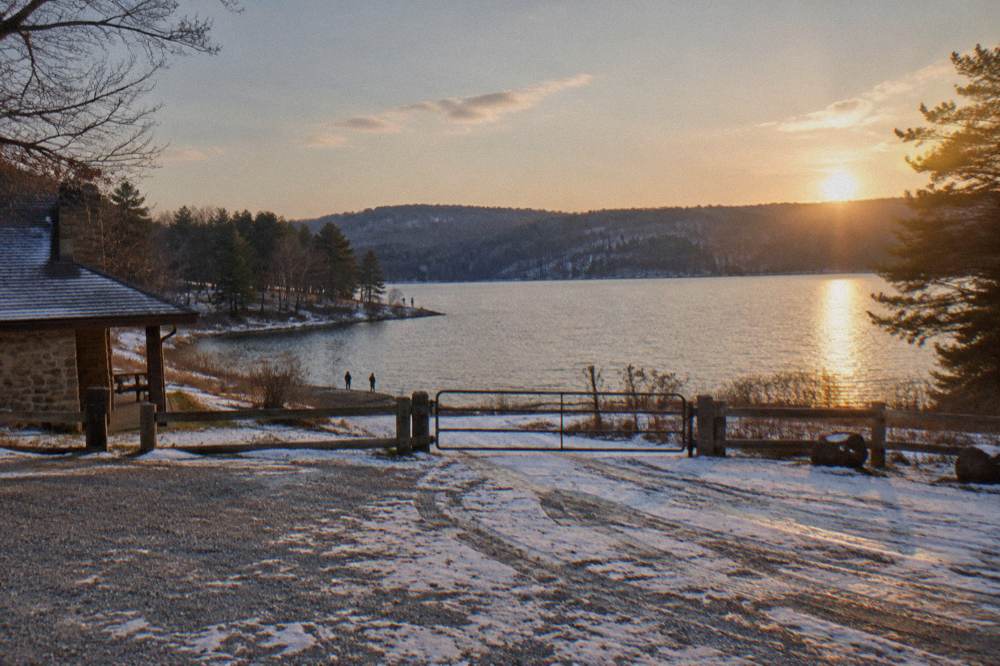
The seasonal arc is predictable. Summer is swim season, anchored by the beaches and the buoyed zones. Fall belongs to foliage, and the Chamber's fast-facts page notes the county does not shut down in winter; it pivots to ice fishing once the lake freezes over, which the fisheries page calls Maryland's premier ice-fishing destination when weather allows. Maryland DNR does not measure or certify ice thickness, and its guidance is blunt: no ice is 100 percent safe, never go alone, test thickness in multiple spots, and wear a life jacket. That is the winter water-safety message, and it is about ice, not swimming.
The dock calendar matters to anyone planning a late-fall trip that mixes boating and a last cold swim. Public docks at the State Park come out in stages across late fall, and private and commercial docks must be out of the water for the winter period. The site's Deep Creek Lake in fall guide covers the shoulder-season rhythm, and the best time for boating guide does the same for the boat calendar.
The other practical limit is daily: sunset. Day use closes at sunset, and swimming in any natural lake after dark is a risk with no upside. Plan the swim for midday warmth, the boat ride for the golden hour, and dinner for after, in that order.
What Should Families Bring For A Safe Swim Day?
The short list is a life jacket for every weak swimmer, water and shade for the beach hours, dry bags for anything riding in a boat, and a check of the posted signs before anyone gets wet. The State Park beach rents kayaks, paddleboards, tubes and chairs in season, so the gear barrier to a combined swim-and-paddle day is lower than most visitors expect.
The beach rental detail comes from the Chamber's fast-facts page and the Wisp-run lake adventures operation at the State Park, which handles rentals at the beach area in summer. That means a family can arrive with swimsuits and towels, rent a paddleboard for an hour, swim inside the lines, and never load a roof rack. For boaters, the site's what to bring for a day on Deep Creek Lake checklist is the fuller version.
A few items earn their place specifically because this is a mountain lake. Footwear for rocky cove bottoms, because the lake is natural and coves are not groomed. A dry layer for after a swim, because even August water is cooler than the air by evening. And sunscreen applied before the boat ride, not after, because reflection off open water burns faster than a lawn chair does.
Shamrock Inn (In The Heart Of Deep Creek Lake)
Oakland
Oakland inn listed under the Deep Creek Lake name.
Check ratesThe last item is patience with the parking and gate flow on peak weekends. The State Park fills its day-use lots on summer Saturdays, and the beach is the park's main draw. Arriving before late morning, or choosing a weekday, changes the whole texture of the day, and Shamrock Inn, an Oakland inn marketed under the Deep Creek Lake name, positions you to reach the water early from the south end without the McHenry morning crush. This is one more spot where Deep Creek Boat Tours can help plan: the site exists to map how boating, swimming and the launch calendar fit together around this lake.
Common Questions About Swimming Safety At Deep Creek Lake
Is It Safe To Swim In Deep Creek Lake?
Yes, in the managed places: the two sandy beaches at Deep Creek Lake State Park, where swimming is permitted when swim lines are installed. The lake holds natural, untreated water, so conditions vary with weather and season, and posted rules and ranger direction decide the day. There is no published water-quality dashboard to cite, so the beach zone, the buoyed lines and a phone call to the park are the reliable guide.
Can you swim anywhere on Deep Creek Lake, or only at the beach?
Beaching a boat is not permitted on Deep Creek Lake except in emergencies, and shoreline access outside the state park is limited, so plan swimming around designated beach areas rather than pulling up to shore. The buoyed beach is the managed swim zone; open-water swimming in the main channels is not advisable given boat traffic.
Is the water clean at Deep Creek Lake?
The lake is a natural freshwater impoundment with no public water-quality dashboard. The state manages it actively: hydrilla is under a DNR herbicide treatment program, zebra and quagga mussels are not currently believed to be present, and Clean, Drain, Dry rules apply to visiting boats and gear. Expect natural lake water with plants in the coves, not pool water.
Do you need a pass or fee to swim at the State Park beach?
A day-use fee applies: per person from Memorial Day weekend through Labor Day, and per vehicle the rest of the year. Boat launching carries its own fee each use, or a valid lake use permit or State Park pass. Check the park's page and the DNR fees page for current amounts, since figures change.
When is swimming not allowed at Deep Creek Lake?
Swimming is not permitted at the beach when swim lines are not installed, day use ends at sunset, and the park's main gate closes during snowmobile season from December 15 to March 15. Late fall and winter belong to ice, not swimming, and Maryland DNR does not measure or certify ice thickness.
Does boat traffic make swimming dangerous?
Boat traffic is the main practical risk outside the buoyed beach, and Maryland's no-wake rule within 100 feet of shoreline, docks and other vessels is the core protection. Personal watercraft are restricted from midday operation on peak summer days, and the park's swim area and ranger docks are closed to fishing, which keeps hooks out of the swim zone.