LakeFront Lodge
McHenry
Lodging in McHenry, at the north end of the lake near the rental docks and the Wisp concession.
Check ratesDeep Creek Lake State Park is the main public access point on Maryland's largest lake: one ramp, two sandy beaches, 20 miles of trails and the Discovery Center, all on State Park Road in Swanton.
Short answer
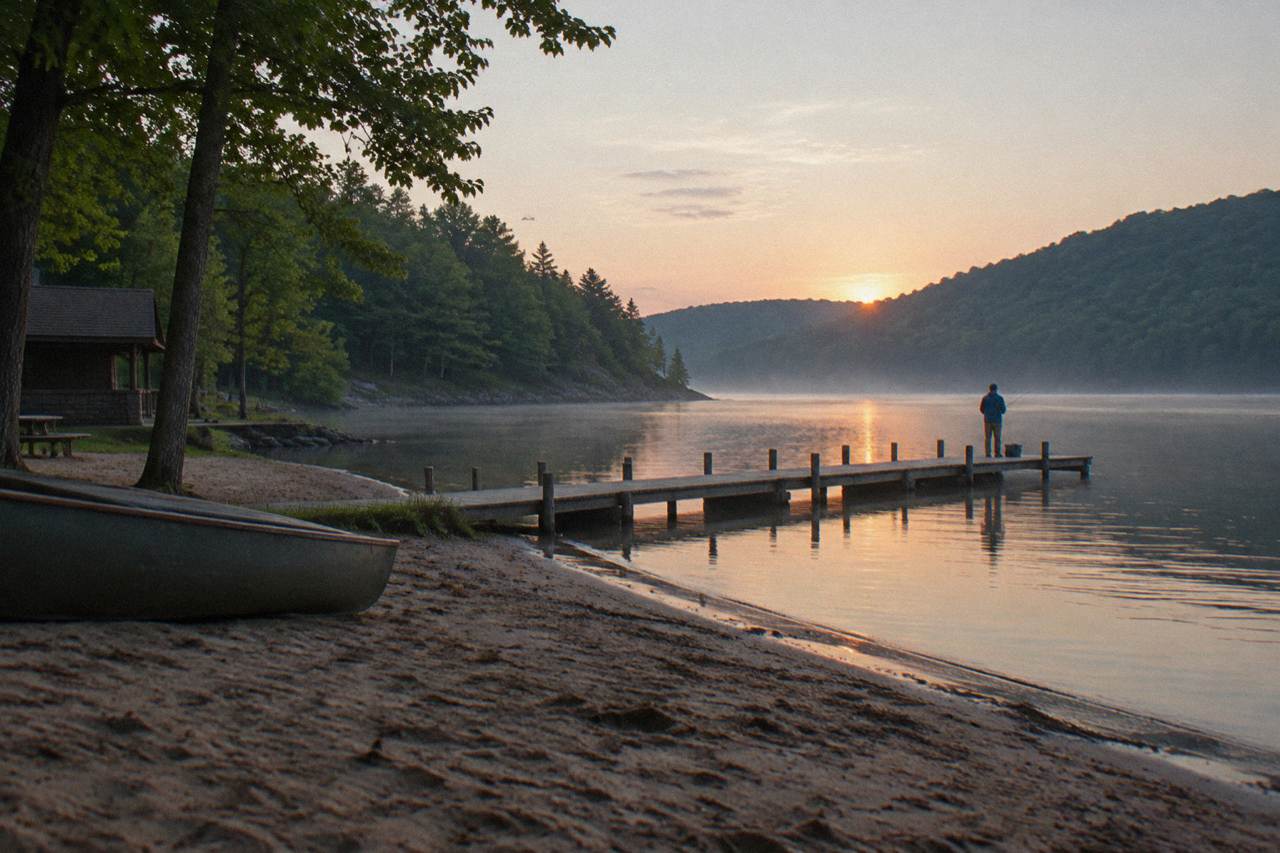
Deep Creek Lake State Park sits at 898 State Park Road, Swanton, on the lake's east side. Day use runs 8 a.m. to sunset. Summer entry costs $3 per Maryland resident and $5 per non-resident, and the boat launch is open 24 hours a day, weather permitting. The park has two sandy beaches, a canoe and kayak launch and a 112-site campground.
Deep Creek Lake covers 3,900 acres, runs 13 miles end to end and holds 69 miles of shoreline, and almost all of the public access to that water flows through one place: Deep Creek Lake State Park. The park sits at 898 State Park Road, Swanton, on the lake's east side, and it bundles the things a boating day needs, a launch ramp, a swimming beach, parking, restrooms and a staffed Discovery Center, into a single day-use area. Maryland owns the lake, the lake bed and the buffer strip around it, which is why the park, not a private marina, is the primary gateway for launching a boat. Before you load the trailer, check our guide to Deep Creek Lake entry and launch fees so you know exactly what to expect at the gate.
This guide walks through the park piece by piece: hours and fees, the two beaches and swim-line rules, how the launch ramp actually works, the canoe and kayak option, the Discovery Center, the boating rules that start the moment your hull leaves the ramp, and where to stay nearby. For the wider picture of the lake itself, start with the guide to boating on Deep Creek Lake.
Deep Creek Lake State Park is the public access heart of Maryland's largest lake, a day-use and camping park on the east shore holding the main boat launch, two sandy swimming beaches, 20 miles of trails, a 112-site campground and the Discovery Center. The lake is part of the state park system, so the park doubles as the working gateway for anyone bringing a boat, kayak or fishing rod to the water.
The park exists because of how the lake itself is owned. Maryland owns the lake, the lake bed and the strip of land around the water, which makes the shoreline a public resource managed through the park system rather than a private one. That arrangement shapes everything about a visit: the ramp, the beaches and the buffer strip are public, while most docks along the coves are private permits held by shoreline owners.
For boaters, the park's importance is bluntly stated by the fisheries side of DNR: the State Park ramp is the primary access for boaters on the lake. Except for a small buoyed area at the outlet near the dam, a boat launched here can reach the entire lake, all 13 miles of it, from McHenry Cove at the north end down to the quiet coves below the Glendale Bridge.
The park is also a four-season property, though its shape changes with the weather. Swimming, paddling and pontoon days fill the summer, foliage walkers pack October, and in winter the main gate closes for snowmobile season, from December 15 to March 15, with parking moving up to the Discovery Center. The Garrett County Chamber is explicit that the lake area does not shut down in winter, and the park phone line, 301-387-5563, is the place to call for conditions.
The park's street address is 898 State Park Road, Swanton, and it sits on the east side of the lake's main basin, south of the Deep Creek Lake Bridge. By car it is a short drive from McHenry and the Wisp Resort area at the lake's north end, about nine miles north of Oakland, and the entrance leads to separate day-use, beach, campground and launch areas served from State Park Road.
Swanton is the mailing address, but most visitors approach the park from either McHenry or Oakland. From the north, Garrett Highway runs down the lake's west side and crosses to the park area; from the south, Oakland is the practical base, with the park roughly ten minutes away by road. The entrance is signed, and the internal road splits the day-use beach and picnic areas from the campground and the boat launch.
Geography matters once you are on the water. North of the launch, the lake narrows toward McHenry Cove, where boat rentals, restaurants and the Wisp Resort cluster. South of the park, the main basin opens up and then narrows again below the Glendale Bridge into quiet coves where sailboats and kayaks gather. Launching at the State Park puts you in the middle of that arc, with the whole lake in range.
If the park is your first taste of the lake and you want the fuller boating map, the Deep Creek Lake boat ramps and launching guide covers the ramp in detail alongside what to expect at the water. And if your day at the park is one stop on a wider visit, Swallow Falls State Park, nine miles north of Oakland, holds Muddy Creek Falls, a 53-foot waterfall, and makes a natural half-day pairing when the lake water is cold.
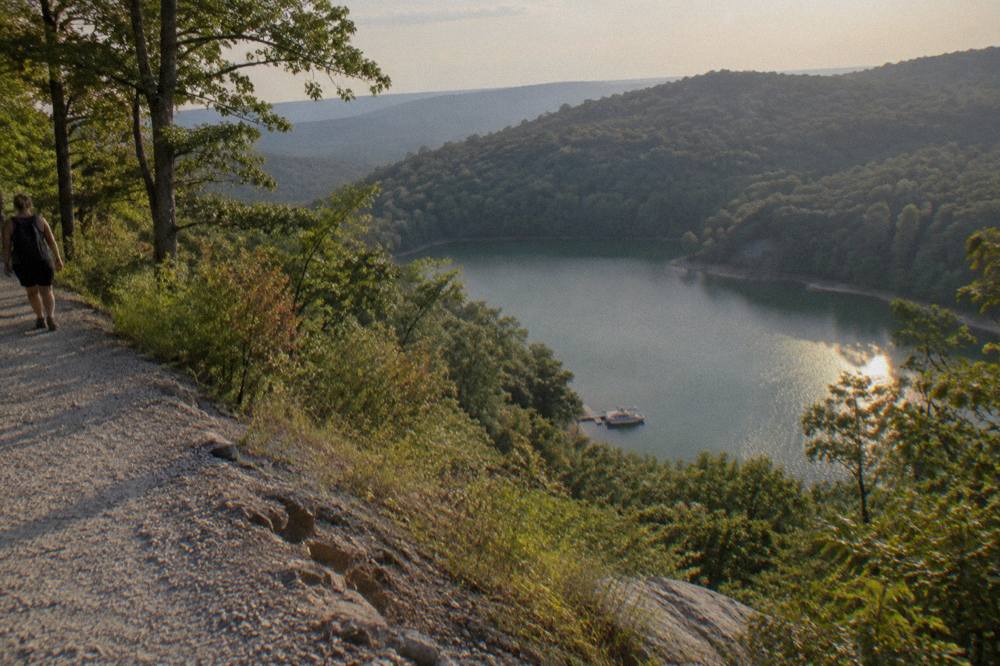
Day use runs 8 a.m. to sunset year-round. Entry costs $3 per Maryland resident and $5 per non-resident per person from Memorial Day weekend through Labor Day, then switches to $3 per Maryland vehicle and $5 per non-Maryland vehicle the rest of the year. A launch fee applies each time you use the ramp, or you can display a valid lake use permit or Maryland State Park pass.
The per-person summer fee and the per-vehicle off-season fee are the two numbers the park's own page publishes, and they are the ones to plan around. What the park page does not state in plain text is the exact launch fee per use or the annual passport price; for those, the DNR fees page is the source of record, and it is worth checking before you go: Maryland DNR park and launch fees. Fees change, and the fee station at the park is the final word on the day you visit.
Here is the practical fee picture assembled from the park's official page:
| Item | What the park page states |
|---|---|
| Day-use hours | 8 a.m. to sunset |
| Summer entry (Memorial Day weekend to Labor Day) | $3 per Maryland resident, $5 per non-resident, per person |
| Off-season entry (rest of year) | $3 per Maryland vehicle, $5 per non-Maryland vehicle |
| Boat launch | Open 24 hours a day, weather permitting; a launch fee applies each use, or display a valid lake use permit or State Park pass |
| Overnight slips at the launch | Only for State Park campers |
| Winter contact | 301-387-5563, or the duty ranger at 240-405-9827 |
Two timing notes save real frustration. First, the 24-hour launch access is weather permitting, and in winter the main gate closes for snowmobile season from December 15 to March 15, with parking at the Discovery Center, so a dawn winter launch takes a phone call first. Second, sunset closes the day-use area, and night skiing is illegal on the lake, so late-evening plans belong to the campground, not the beach lot. The Discovery Center, reached at 301-387-7067, can answer questions about programs and hours.
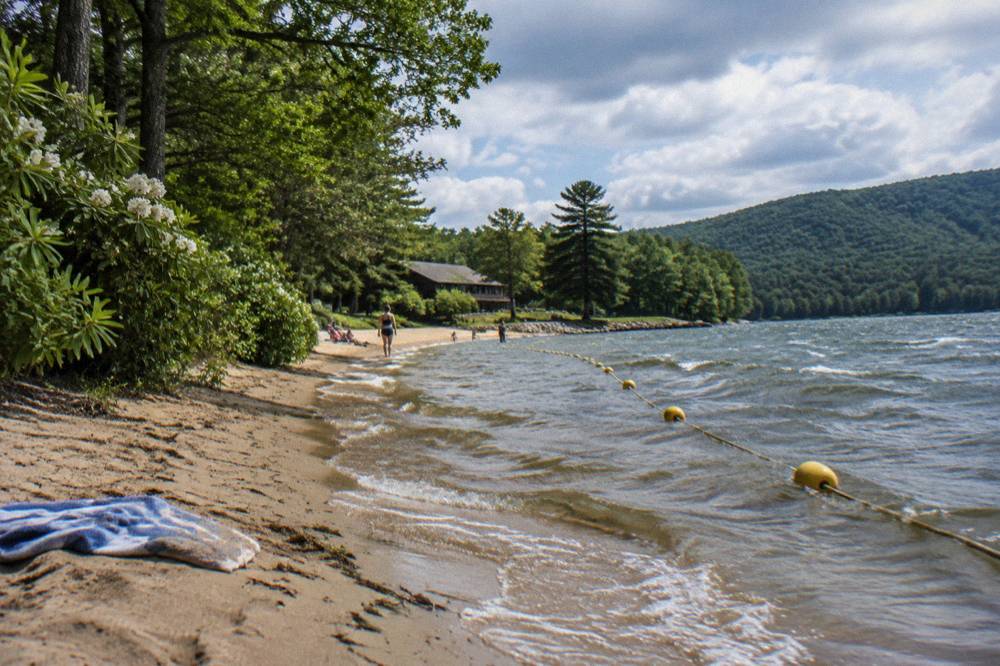
Yes. The park has two sandy beaches, and swimming is permitted when swim lines are installed, which in practice means the staffed summer season. Pets are not allowed on the sandy swim beach from Memorial Day weekend until after Labor Day, and the swim area and the ranger docks are closed to fishing, so the beaches are genuinely swim-first zones during the peak season.
The two-beach setup is the quiet advantage of this park. The main beach sits at the day-use area with the parking lot, and it is the one most families mean when they say the State Park beach. The swim lines are the operational signal: when they are in, swimming is open, and when they come out in the fall, the water is no longer a managed swim area even on a warm afternoon. There is no substitute for looking at the water on the day.
The rules around the beach are specific and worth knowing before you pack. Pets are barred from the sandy swim beach during the summer season, though they remain welcome elsewhere in the park on a leash, so a dog-and-swim day means splitting the group or choosing a different shoreline. Anglers should note the closure: the swim area and the ranger docks are posted against fishing, a rule the park enforces to keep swimmers and casting lines apart.
The beach is also a boating neighbor. Beaching a boat is not permitted on the lake except in emergencies, so the swim beaches stay clear of hulls, and the canoe and kayak launch at the main beach lot gives paddlers their own way in without walking through the swim zone. If swimming is the whole point of your visit rather than one part of a boating day, the swimming at Deep Creek Lake guide goes deeper on the two beaches, the swim-line season and what the water is like.
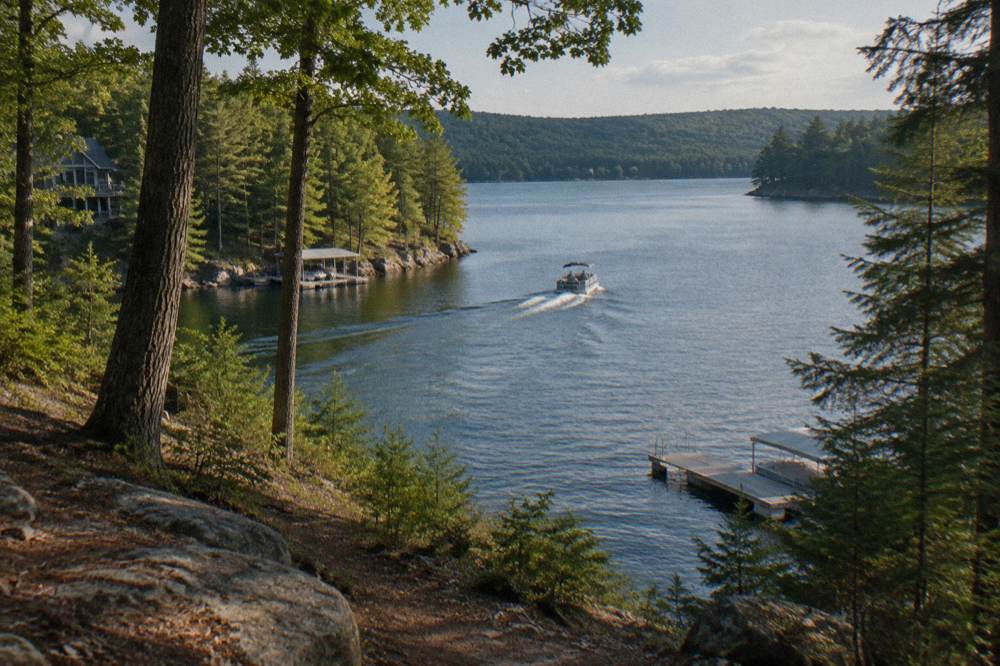
The State Park boat launch is open 24 hours a day, weather permitting, with a four-vehicle launch area, and it is the primary public access for boaters on the entire lake. Pay the launch fee each use or display a valid lake use permit or State Park pass. Overnight slips at the launch are reserved for State Park campers, and the ramp's docks come out of the water in stages across late fall.
The launch is a working ramp, not a marina, and its design shows it. The four-vehicle launch area means the ramp moves quickly on summer Saturdays but can queue when the morning flotilla of pontoon rentals and fishing boats all want the water at once. Arriving early, before the mid-morning rush, is the single best way to make the ramp painless. In winter, call before towing: the main gate closes during snowmobile season and the duty ranger line, 240-405-9827, answers ramp questions when the office does not.
What you can launch is bounded by lake-wide rules rather than by the ramp itself. Boats are limited to 26 feet overall, pontoons to 30 feet, and engines may not exceed the manufacturer's maximum horsepower. A boat launched at the park can reach essentially the whole lake, the only exception being a small buoyed area at the outlet near the dam, so the ramp is the starting point for everything from bass boats working the coves to rental pontoons circling with a full family aboard.
The dock calendar matters for late-season plans. The public docks at the State Park come out of the water in stages in late fall, per park communications, before winter sets in, and private and commercial docks around the lake must be out of the water over winter under the lake's buffer strip rules. Translation: a November launch may be possible but may also mean a dockless ramp, so a call ahead is cheap insurance. The DNR park page carries the current ramp status: Deep Creek Lake State Park official page.
If you would rather not tow your own boat, rental outfits around the lake make the ramp almost irrelevant. Lake Life Boat Rentals, on Deep Creek Drive in McHenry, lists pontoons from about $524 a day and ski boats from about $681 a day, taxes extra, with full-day rentals running 9 a.m. to 5 p.m., and the operator's own page carries the season dates and reservation terms.
Yes. The park has a canoe and kayak launch at the main beach lot, so paddlers get their own entry point separate from the powerboat ramp. The State Park beach also rents kayaks, paddleboards, tubes and chairs in summer through the Wisp-run lake Adventures concession, and delivered rental services will bring a kayak or paddleboard to you anywhere around the lake. If you're wondering how many other entry points exist beyond the park, our guide to public access spots around Deep Creek Lake covers every ramp, shoreline fishing point and rental outfit.
The dedicated paddle launch is the detail many first-time visitors miss. Instead of walking a kayak down the vehicle ramp among trailers, paddlers put in at the beach lot, a calmer, shallower entry that suits families and anyone learning to handle a standup paddleboard. The lake's coves reward this: kayakers favor the quiet cove tips, especially south of the Glendale Bridge, where powerboat traffic thins out and the water flattens. More of these guides are collected on Deep Creek Boat Tours.
Renting on the spot is simple. The Wisp Resort Lake Adventures concession, which operates the boating services at the State Park, lists kayak rental at $19 for one hour or $34 for two, and standup paddleboards at $24 for one hour or $39 for two, with tubes at $9 for the day; the operator lists those rates on its own page, and reservations are required, so check the listing before assuming walk-up availability. That same concession runs the one-hour guided pontoon tours from the State Park area, at $34 for adults and $19 for children 12 and under per the operator's page, a low-commitment way for non-boaters to get on the water.
Two other paddle options sit outside the park gate. Deep Creek Paddle Co delivers single kayaks from $35, paddleboards from $40, tandem kayaks from $55 and fishing kayaks from $40, booked online and brought to your launch point, and High Mountain Sports in Oakland runs guided pontoon tours alongside kayak and paddleboard rentals, with reservations required online. The kayak and paddleboard guide compares all of these in detail.
One rule follows the paddle crowd too: the invasive-species law applies to kayaks and boards, not just powerboats. A person may not place a vessel or equipment with attached aquatic plants, zebra mussels or other prohibited nonnative organisms into state waters, and DNR advises clean, drain, dry with at least 48 hours of drying before launching anywhere else. Launch Stewards at the State Park ramp offer free voluntary inspections.
The core lake rules are a 100-foot no-wake zone around shoreline, bridges, piers, docks and other vessels; a 26-foot boat length limit with a 30-foot maximum for pontoons; a noise limit of 88 decibels tested at idle; and restricted personal watercraft hours on summer weekends and holidays. Anyone born on or after July 1, 1972 must carry a boating safety education certificate to operate a motorized vessel.
The 100-foot no-wake rule is the one that shapes how the lake actually feels. Within 100 feet of the shoreline or any dock, pier, bridge or other vessel, boats drop to no-wake speed, with an exception only for starting a tow from a pier or shore. On a lake with 69 miles of shoreline and cottages packed along the coves, that rule keeps the near-shore water sane for swimmers, paddlers and dock sleepers alike, and it is the first thing a new boater should internalize.
The certificate rule catches many rental customers by surprise. Maryland requires anyone born on or after July 1, 1972 to hold a NASBLA-approved boating safety education certificate to operate a numbered or documented vessel, and that applies to rentals statewide. Renters of a motorized vessel, other than a personal watercraft, get a workable shortcut: read the rental safety sheet and the rental company issues a 10-day temporary boating safety certificate, which covers the vacation. The official detail is on the DNR boating safety page: Maryland boating safety certificate requirements.
Personal watercraft carry the tightest schedule on the lake. Jet skis may not operate from 11 a.m. to 4 p.m. on Memorial Day weekend and on Saturdays, Sundays and holidays from July 1 through Labor Day, which concentrates PWC use into summer mornings and evenings. Operators must be at least 16, wear a U.S. Coast Guard approved life jacket, travel at 6 knots or slower within 100 feet of anything, and stay off the water between sunset and sunrise. The full picture, including the jet ski rental scene, is in the jet ski and PWC guide.
The rules that matter most at the ramp, in one view:
| Rule | What it says | Who it hits hardest |
|---|---|---|
| No-wake zone | No-wake speed within 100 ft of shoreline, bridges, piers, docks or other vessels | Every boat, everywhere near shore |
| Boat length | Max 26 ft overall, 30 ft for pontoons | Trailer boaters with larger hulls |
| Noise | 88 decibels tested at idle; no cutouts | Older or modified powerboats |
| PWC hours | No operation 11 a.m. to 4 p.m. on Memorial Day weekend and Sat/Sun/holidays July 1 to Labor Day | Jet ski renters in peak summer |
| Safety certificate | Required for operators born on or after July 1, 1972; renters can use a 10-day temporary certificate from the rental company | Most adult renters |
| Invasive species | No launching gear with attached plants or mussels; clean, drain, dry with 48 hours of drying | Anyone boating on other waters first |
The Discovery Center is the park's staffed nature center, open year-round, reached at 301-387-7067, and it serves as the interpretive hub for the lake's ecology, wildlife and history. It is also the practical winter pivot point: when the main gate closes for snowmobile season from December 15 to March 15, parking moves to the Discovery Center, making it the park's front door in the cold months.
In summer the center anchors the family side of a park visit. Exhibits and programs cover the lake and its watershed, the same 140,000-acre watershed that drains into the 3,900 acres of water outside the door, and ranger-led programming gives kids a between-swims activity that is not another screen. Calling ahead, 301-387-7067, gets you the program schedule and hours, which shift with the seasons and staffing.
In the off-season the center matters even more. Winter visits to the park, whether for a hard-water look at the lake before ice sets in, a foliage walk in October or a snowmobile outing once the gate closes, all start from the Discovery Center lot. The lake does not shut down in winter, as the Garrett County Chamber notes, and ice fishing becomes the draw after freeze-over, but the center is the staging point for all of it. Conditions questions go to the park line, 301-387-5563.
The center also sits near the trail network. Twenty miles of trails thread the park's wooded east shore, connecting the day-use area, the campground and overlooks above the lake, and the park's 112-site campground puts families within walking distance of both the trails and the beach. Campers get one more perk: overnight slips at the boat launch are reserved for them alone, the only legal overnight dockage at the park ramp.

The closest listed option to the park is Lake Pointe Inn in McHenry, near the State Park, which offers a free full breakfast and sits beside a golf course. Oakland, about ten minutes south, adds The Garrett Inn, roughly 2.4 miles from the lake by car, and Shamrock Inn, marketed under the Deep Creek Lake name. McHenry cluster puts you closest to the ramp; Oakland puts you closer to the southern coves.
The practical geography is simple. The park, the launch and the northern rental docks all sit at the McHenry end of the lake, so a McHenry base minimizes the morning drive to the ramp. An Oakland base trades a few extra minutes for proximity to the quiet southern coves, the Thayerville end of the lake and the Oakland restaurants, which suits paddlers and anglers more than ski-boat crews chasing an early launch.
For a park-first trip, Lake Pointe Inn is the natural pick: it sits in McHenry near the State Park, includes a free full breakfast per its listing, and shares grounds with a golf course, a useful pairing when half the group boats and half plays through. Guests at Wisp-area properties walk to the lake's north end in minutes; the Wisp Resort itself sits about 0.6 miles from the water, an 11-minute walk per its listing, and the Wisp concession is the same outfit that runs the State Park pontoon tours and beach rentals, so staying at the north end keeps the whole boating day connected.
McHenry
Lodging in McHenry, at the north end of the lake near the rental docks and the Wisp concession.
Check ratesThe Oakland side has its own case. The Garrett Inn sits about 2.4 miles, three minutes by car, from the lake per its listing, close enough for a dawn drive to the ramp and well placed for the fall color drives toward Swallow Falls. Budget travelers get a plain, cheap base at the Baja Motel in Oakland, a short drive from the Thayerville end of the lake, though the trade is simplicity rather than charm.
The wider comparison, lakefront options, condo suites and resort properties across McHenry and Oakland, is laid out in the where to stay for boating guide. The short version for this park: stay north to launch early, stay south to paddle quiet water.
Beyond the water, the park offers 20 miles of trails, a 112-site campground, picnic areas at the day-use beach and the year-round Discovery Center with its programs. Fishing is a major draw from boats and from public shoreline access points, with walleye, smallmouth bass and big panfish the lake's signatures, though the ranger docks and swim area are closed to fishing.
The trail system is the most underrated part of the property. Twenty miles of paths cover the east-shore woods, from short beach-adjacent loops to longer climbs with lake overlooks, and October turns them into a foliage destination in their own right. Garrett County typically peaks in color in the second or third week of October, and the park's mixed hardwoods sit in the middle of that window.
Fishing deserves its own paragraph even on a park page. The lake is known for abundant walleye and smallmouth bass, large panfish and northern pike over 40 inches caught regularly, and it is Maryland's premier ice-fishing destination when winter cold locks the surface, with yellow perch, walleye and bluegills through the ice. Shoreline anglers use public access points, and boaters work the coves, with one walleye rule to know: harvest is closed March 1 through April 15, and the open season carries a 15-inch minimum with a protected slot between 18 and 21 inches. The DNR fisheries page carries the species and regulation detail: Deep Creek Lake fishing facts and rules.
Camping rounds out the stay options. The 112-site campground sits within the park, walking distance from trails and a short drive or long walk from the beach, and campers hold exclusive rights to overnight slips at the launch, the only way to keep a boat in the water overnight at the park. Combine a campsite with a rental pontoon and the park becomes a full basecamp: swim in the morning, boat at midday, Discovery Center program in the afternoon.
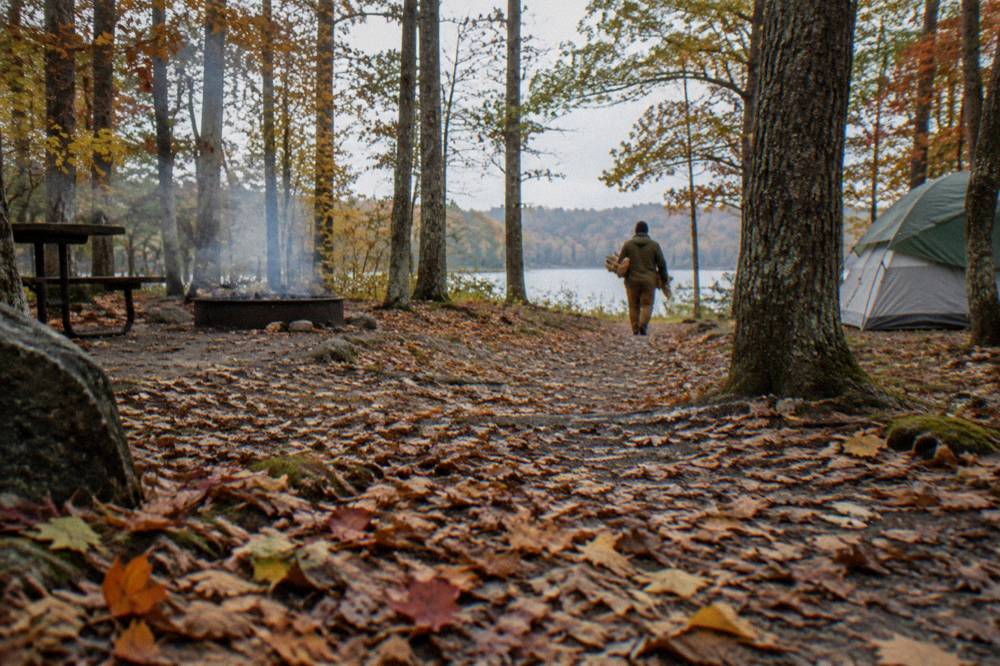
Arrive early in summer, because the four-vehicle launch area and the beach lot both fill on peak weekends. Bring the per-person entry fee in summer, check the DNR fees page for the launch fee before towing, keep pets off the sandy swim beach in season, and call 301-387-5563 in winter since the main gate closes from December 15 to March 15 with parking at the Discovery Center.
The single biggest first-timer mistake is timing. Summer Saturdays concentrate everyone, rental pontoons, trailered fishing boats, beach families, into the same morning window, and the park's layout absorbs crowds well but not infinitely. A pre-9 a.m. arrival changes the whole day: an easy launch, a close parking spot at the beach and calmer water before the recreational fleet thickens.
The second mistake is assuming the ramp is a marina. There is no fuel dock story to tell here, no boat store beyond the beach concession's rentals, and no overnight dockage except for campers, so arrive with what you need. The beach concession covers kayaks, paddleboards, tubes and chairs, and the Wisp-run pontoon tours depart on a schedule, with reservations required, but mechanical help and supplies belong to the private outfits along Deep Creek Drive in McHenry.
The third is paperwork. If anyone born on or after July 1, 1972 will drive a rented motorized boat, plan on the rental company's safety sheet and 10-day temporary certificate, or bring a permanent boating safety certificate. Personal watercraft riders should read the summer hour restrictions before promising teenagers a midday jet ski session, because the 11 a.m. to 4 p.m. blackout on summer weekends and holidays is strictly enforced lake-wide.
A quick packing reference for the two main visit types:
| Visit type | Bring | Know before you go |
|---|---|---|
| Powerboat launch day | Trailer, launch fee or pass, certificate if born after July 1, 1972 | Launch open 24 hours weather permitting; four-vehicle launch area; docks come out in stages in late fall |
| Beach and swim day | Swim gear, per-person entry fee in summer, no pets on the sandy beach | Swim only when swim lines are installed; swim area closed to fishing |
| Paddle day | Kayak or board, or rent at the beach concession | Canoe and kayak launch at the main beach lot; clean, drain, dry before arriving with used gear |
| Camping and boating | Campground reservation, boat, camping gear | Campers get the only overnight slips at the launch |
Within a short drive you can add Swallow Falls State Park and its 53-foot Muddy Creek Falls nine miles north of Oakland, the Wisp Resort area at McHenry, the restaurants and rental docks of McHenry Cove, and the fall color routes over Meadow Mountain and around Savage River Reservoir. The park works best as the anchor of a weekend that mixes one or two boating days with one off-water day in the hills.
The classic weekend shape is straightforward. Day one, launch at the park in the morning, take the boat north to McHenry Cove for lunch, swim at the beach in the afternoon and close with a slow pontoon run along a quiet cove. Day two, leave the boat and drive to Swallow Falls, walk the falls loop among the hemlocks, and finish with a drive through the county's color in October, when Garrett County's foliage typically peaks in the second or third week of the month.
The Wisp Resort area adds the resort layer: the ski mountain in winter, the lake Adventures concession in summer and dining within walking distance of the north-end lodging. Staying at the resort puts you about 0.6 miles from the water per the listing, an 11-minute walk, and the same resort company operates the State Park's beach rentals and pontoon tours, so a resort guest's boating logistics stay unusually simple.
For the southern-cove version of the weekend, base in Oakland instead. Shamrock Inn markets itself under the Deep Creek Lake name from its Oakland listing, and the town gives you restaurants, a short drive to the Thayerville end of the lake and the road to Swallow Falls. Paddlers and anglers tend to prefer this end; the quiet water below the Glendale Bridge is where sailboats and kayaks gather.
Oakland
Oakland inn listed under the Deep Creek Lake name.
Check ratesDay use runs 8 a.m. to sunset. The boat launch is open 24 hours a day, weather permitting, but the main gate closes during snowmobile season from December 15 to March 15, when parking moves to the Discovery Center. Call 301-387-5563 for winter conditions.
From Memorial Day weekend through Labor Day, entry is $3 per Maryland resident and $5 per non-resident per person. The rest of the year it is $3 per Maryland vehicle and $5 per non-Maryland vehicle. The boat launch carries a separate fee each use, or you can display a valid lake use permit or Maryland State Park pass; check the DNR fees page for the current launch fee.
Yes. The park has two sandy beaches, and swimming is permitted when swim lines are installed. Pets are not allowed on the sandy swim beach from Memorial Day weekend until after Labor Day.
Yes, the State Park launch is the primary public access for boaters on the lake, open 24 hours a day weather permitting with a four-vehicle launch area. Boats are limited to 26 feet overall, 30 feet for pontoons. Overnight slips are only for State Park campers.
Yes, there is a canoe and kayak launch at the main beach lot, and the beach concession rents kayaks and paddleboards in summer. The operator lists kayaks at $19 for one hour and paddleboards at $24 for one hour on its own page, with reservations required.
The lake area does not shut down in winter, but the park's main gate closes during snowmobile season from December 15 to March 15, with parking at the Discovery Center. Call the park at 301-387-5563 for conditions before visiting.
Before you go, the pick for this guide:
Lake Pointe Inn
Close to the lake and the State Park, with free full breakfast and an adjacent golf course per the listing.
Check rates →