LakeFront Lodge
McHenry
Lodging in McHenry, at the north end of the lake near the rental docks and the Wisp concession.
Check ratesDeep Creek Lake is Maryland's largest lake at 3,900 acres, and most of its 69 miles of shoreline is quiet enough for a paddleboard. This guide covers where to rent, where to launch and which coves hold the flattest water.
Short answer
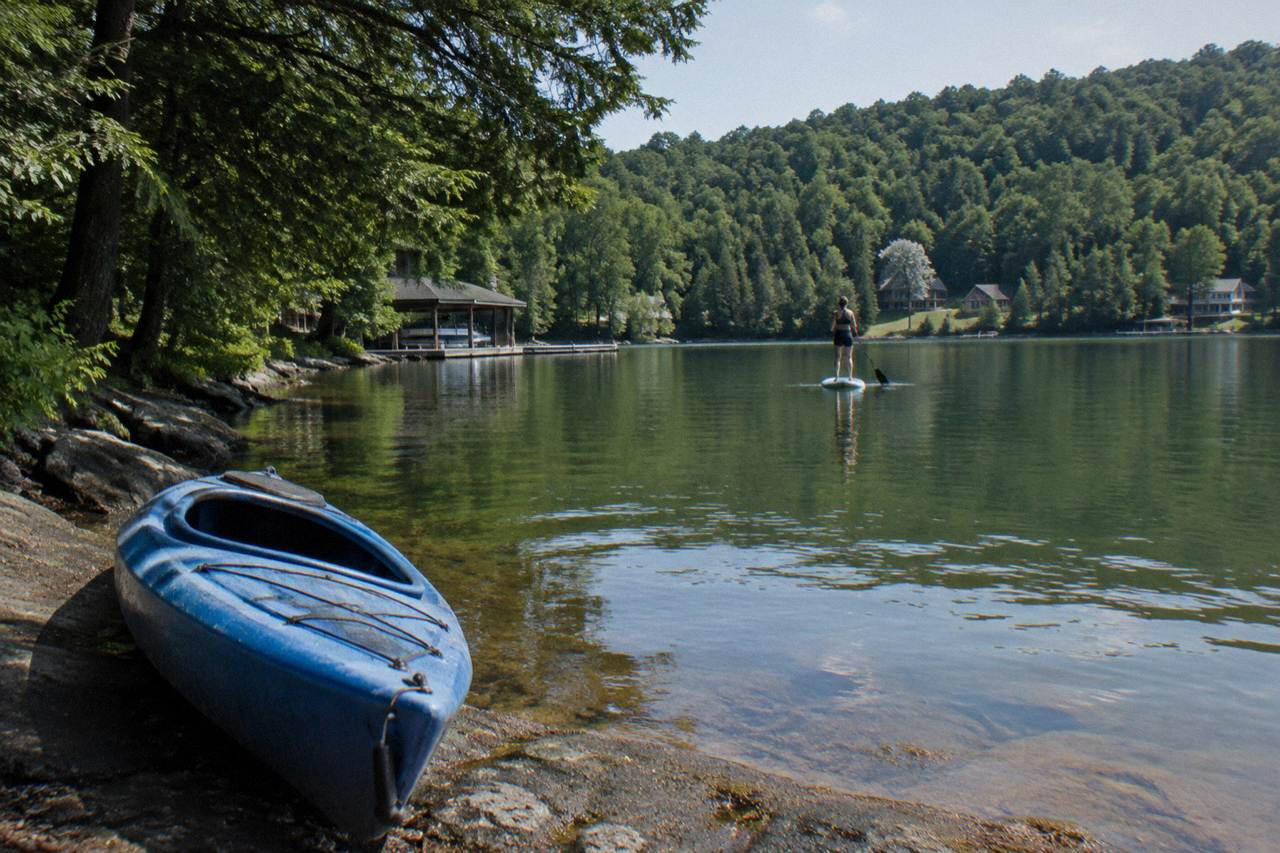
Kayak rentals on Deep Creek Lake start at $19 per hour from the Wisp Lake Adventures beach concession and $35 delivered from Deep Creek Paddle Co. The State Park has a dedicated canoe and kayak launch at the main beach lot. No license is needed for human-powered craft. The calmest water sits in the coves below the Glendale Bridge.
Deep Creek Lake covers 3,900 acres at a full pool elevation of 2,462 feet, runs 13 miles end to end and wraps 69 miles of shoreline around its coves, according to the Maryland DNR fisheries page for the lake. That scale matters for paddlers more than for anyone else on the water. A powerboat crossing the main basin feels the wind and the wakes; a kayak tucked into a cove near the southern end may go an hour without seeing one.
This guide walks through the practical side of paddling the lake: who rents kayaks and paddleboards and at what rates, where the launch points are, which coves hold the flattest water, and which Maryland rules actually apply to a person moving under their own power. The short version is that Deep Creek Lake is unusually friendly to paddle craft, with a dedicated launch at the State Park beach, delivered rentals, and whole sections of the lake where motorboat traffic thins out.
Two sources anchor the specifics below. The Maryland Department of Natural Resources publishes the lake's rules and physical facts, and the rental operators on the lake publish their own rates on their own pages. Where a price appears here, it is because the operator lists it there; confirm before booking, since rental rates and schedules shift between seasons.
The main public launch for paddle craft is the canoe and kayak launch in the main beach lot at Deep Creek Lake State Park, on the lake's eastern shore near Swanton. It is separate from the four-vehicle boat ramp used by powerboats, so paddlers do not share the water with trailers at the put-in. Outside the park, the quiet coves and cove tips around the lake's southern end are the places kayakers favor most.
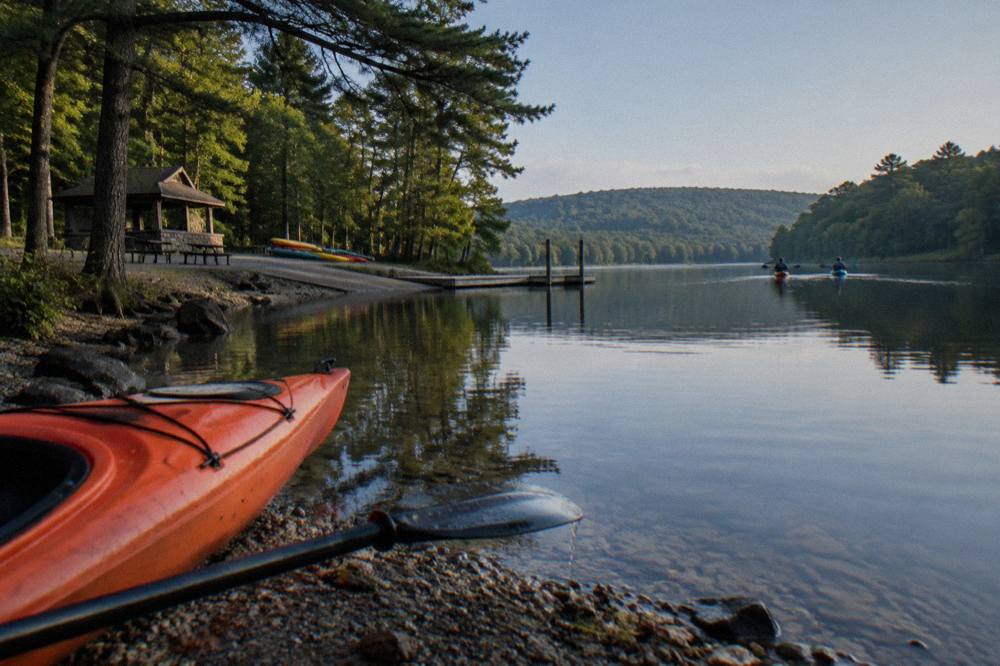
The State Park deserves the first mention because it is the built-for-purpose option. The park's day-use area holds two sandy beaches, and the canoe and kayak launch sits in the main beach lot, per the DNR park page. Day-use hours run 8 a.m. to sunset. A day-use fee applies per person in summer and per vehicle the rest of the year, and a launch fee applies at the boat ramp; the DNR fees page lists current amounts, so check it rather than relying on secondhand numbers. Pets are not allowed on the sandy swim beach between Memorial Day weekend and after Labor Day, which matters if you plan to paddle with a dog from that stretch.
Beyond the park, the lake's shape does the work. The Garrett County Chamber's fast-facts page divides the lake into zones: McHenry Cove at the northern tip, the main basin south of the Deep Creek Lake Bridge where the State Park sits, and the quieter coves below the Glendale Bridge where sailboats and kayaks dominate. There is no beaching of boats except in emergencies, and except for a small buoyed area at the outlet, a paddle craft can reach the entire lake. For readers weighing trailer access as well, the separate guide to boat ramps and launching on the lake covers the powerboat side in detail.
| Launch area | Where it sits | Best for | Notes |
|---|---|---|---|
| State Park canoe and kayak launch | Main beach lot, eastern shore | Beginners, families | Separate from the powerboat ramp; day-use fee applies |
| McHenry Cove | Northern tip near Wisp and rentals | Picking up a rental and paddling immediately | Boat rentals and restaurants cluster here |
| Main basin shoreline | South of the Deep Creek Lake Bridge | Longer crossings, fitness paddling | Open water, more motorboat wakes |
| Coves below the Glendale Bridge | Southern lake | Wildlife, flat water, sailboat views | Kayakers favor the cove tips |
Hourly beach rentals from the Wisp Lake Adventures concession list at $19 for one hour or $34 for two hours for a single kayak, and $24 or $39 for a standup paddleboard. Deep Creek Paddle Co delivers to the shoreline, listing from $35 for a single kayak, $40 for a paddleboard, $55 for a tandem and $40 for a fishing kayak. Rates are on each operator's own page and change between seasons.
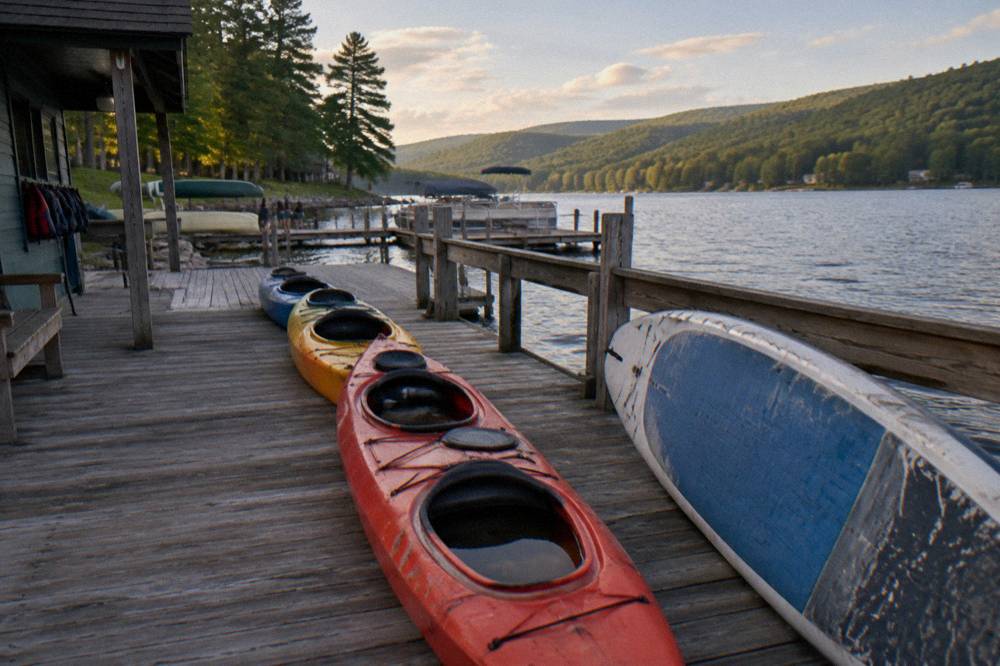
The two rental models suit two kinds of trips. The beach concession, run under the Wisp Lake Adventures program that operates the State Park boating concession, rents kayaks, paddleboards and tubes right at the park beach. You carry the boat fifty feet to the water, paddle, and return it. There is no transport, no roof rack and no route planning; the tradeoff is that you paddle where you picked the boat up. Reservations are required for the concession's guided tours and are wise for equipment in peak summer weeks.
Deep Creek Paddle Co works the other way around: the company delivers kayaks, paddleboards and fishing kayaks to where you are staying or to an agreed shoreline spot, and collects them afterward. That model favors paddlers who want a specific cove at a specific hour, or a family renting several boats for a morning. Booking is online. Neither operator runs the other's model, so the choice is really between convenience at the beach and flexibility on the water.
Two more names round out the picture for readers comparing options. High Mountain Sports, on Garrett Highway in Oakland, lists kayak and paddleboard rentals alongside its pontoon tours, and Funtime Watersports in Thayerville rents paddle craft alongside its boats and jet skis. Confirm gear availability with each operator before planning a day around it. For the powered side of the fleet, the lake's boat rental guide covers pontoons and ski boats.
| Operator | Model | What the operator lists on its own page | Booking |
|---|---|---|---|
| Wisp Lake Adventures | Beach concession at the State Park | Kayak $19 per hour or $34 for two; SUP $24 per hour or $39 for two; tube $9 per day | Reservations required |
| Deep Creek Paddle Co | Delivered rental | From $35 single kayak, $40 SUP, $55 tandem, $40 fishing kayak | Online |
| High Mountain Sports | Shop rental in Oakland | Kayak and SUP rental, rates on request | Reservations required online |
| Funtime Watersports | Shop rental in Thayerville | Rental gear alongside boats and jet skis, by the hour or day | Recommended |

No. Maryland's boating safety certificate requirement applies only to operators of numbered or documented motorized vessels, and a kayak or paddleboard moved by paddle power is neither. Anyone born on or after July 1, 1972 who operates a motorized vessel, including a rental, needs the certificate, but a pure paddle craft carries no licensing, no permit and no age requirement beyond plain good sense and a properly fitted life jacket.
The distinction matters because Deep Creek Lake draws renters into both worlds in one weekend. The DNR boating safety page states the certificate rule plainly: it attaches to motorized vessels on Maryland waters. Renters of motorized vessels born on or after that July 1, 1972 date get a lighter path, a safety sheet and a 10-day temporary certificate issued by the rental company, per the DNR's rental requirements page. Paddlers skip all of it.
What paddlers cannot skip is the life jacket. Maryland follows the federal standard requiring a wearable Coast Guard approved life jacket for each person aboard, and on a kayak or SUP that means wearing it, since there is no place to stow one out of reach. Water temperatures on this lake stay cold well into spring because it sits at elevation; a swim in April is a different event than a swim in July, and the jacket is the difference between an inconvenience and an emergency.
One adjacent question comes up often enough to settle here: personal watercraft. A jet ski is a motorized vessel in every sense, with operator age minimums, certificate requirements and time-of-day restrictions on this lake specifically. That is a separate topic with its own rules, covered in full in the guide to jet ski and PWC rental on the lake.
The coves below the Glendale Bridge, at the lake's southern end, hold the calmest water, and paddlers favor the cove tips where motorboat traffic rarely reaches. The main basin south of the Deep Creek Lake Bridge is wider and busier, and McHenry Cove at the northern tip mixes rental traffic with restaurant and resort boating. Wind builds chop fastest on the open basin by midday.
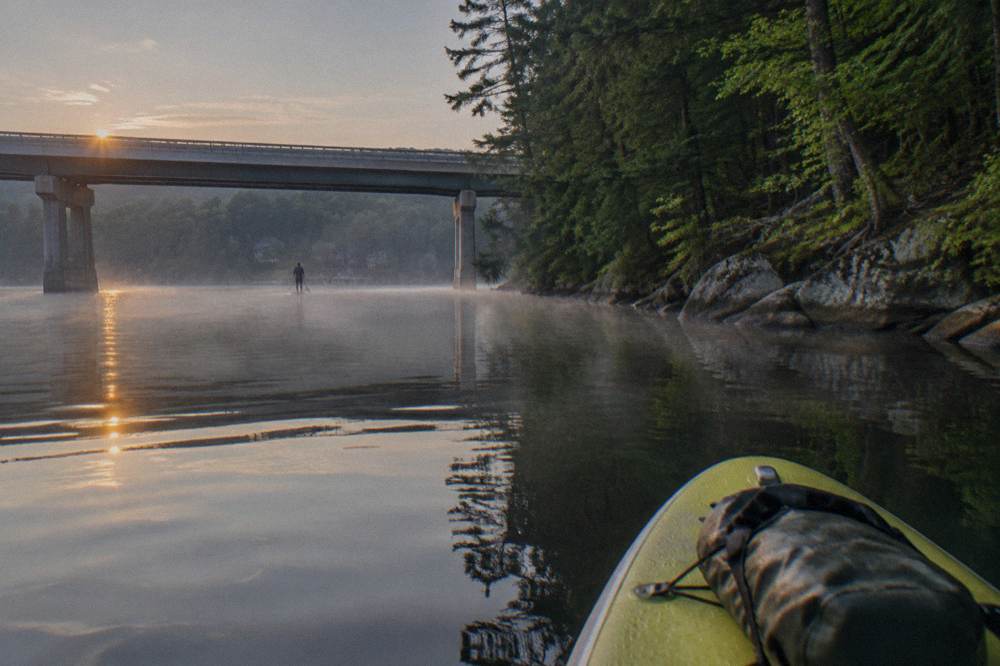
Geography explains the gradient. The Chamber's fast-facts page describes a lake that narrows and folds below the Glendale Bridge, where coves deepen into the hills and sailboats anchor for the quiet. A paddleboard tracks best on water without wakes, and a cove tip two bends removed from the main channel stays flat even on a busy Saturday. The same page notes that kayakers favor these cove tips, which is as close to local consensus as a published source gets.
Timing does the rest. Mornings on any mountain lake are the flat-water window: light wind, few powerboats, and the water at its glassiest before the day's boat traffic builds. By early afternoon in July and August, the main basin carries a steady chop of wakes and breeze, and a standup paddler crossing open water will feel every one of them. The standard advice follows from the shape of the day: launch early, paddle the coves, and be off the water or back in a sheltered arm before the afternoon rush.
Wildlife concentrates in the same quiet water. The lake's fish community, per the DNR fisheries page, includes bass, walleye, northern pike, chain pickerel, yellow perch and panfish, and the weed lines and cove shallows where those species hold are exactly where a slow kayak drifts. Paddlers who want to fish from the boat can read the longer treatment in the guide to fishing on Deep Creek Lake, including the walleye season that closes harvest from March 1 through April 15.
McHenry, at the lake's northern end, puts you closest to the rental shops and the State Park, while Oakland sits a short drive from the southern coves where the flat water is. A delivered rental cancels most of the distance either way, since the boats come to your shoreline instead of the reverse. Choose by which end of the lake you plan to paddle, not by proximity to any single shop.
The lodging split follows the lake's geography. On the McHenry side, LakeFront Lodge is a lodging option in McHenry, the north-end corner of the lake where rentals and restaurants cluster. Closer to the State Park, Lake Pointe Inn sits near the park with a free full breakfast and a golf course next door, a combination that suits families who paddle in the morning and split up in the afternoon.
McHenry
Lodging in McHenry, at the north end of the lake near the rental docks and the Wisp concession.
Check ratesSouth of the water, Oakland is the practical base for the cove country. The Garrett Inn sits about 2.4 miles from the lake by car, close enough that a delivered kayak arrives at a nearby access point without adding a second leg to the morning. Budget travelers find the same trade at the area's simpler motels, trading walkability for a lower rate and a short drive to the Thayerville end of the lake.
The delivered-rental model rewards any of these bases equally, which is worth stating plainly. A paddler staying near the State Park and one staying in Oakland both get boats on the water at the hour they choose if they book delivery; the difference is only which cove appears first. Book lodging early for summer weekends regardless, because the lake area fills, and a cancellation-friendly reservation costs nothing to hold. The full index of guides sits on Deep Creek Boat Tours.
Three rules touch paddlers directly: the 100-foot no-wake zone that every vessel must respect near shore, docks and other boats; the ban on launching craft carrying attached aquatic plants or invasive species; and the life jacket requirement for each person aboard. There is no license, no registration and no special permit for a human-powered craft on this lake.
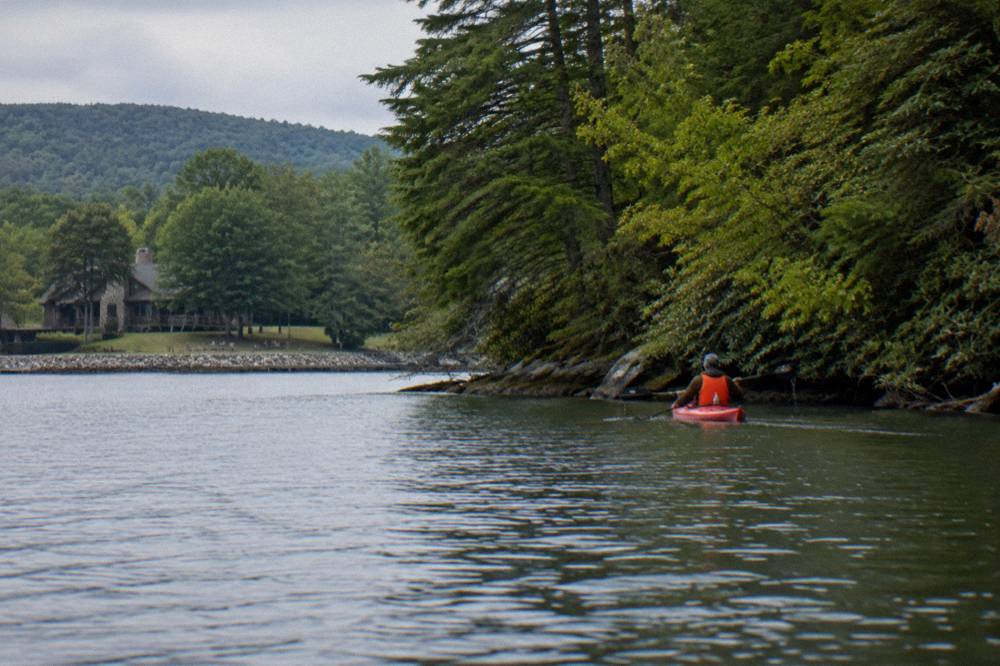
The no-wake rule runs in paddlers' favor. Under the lake's regulations, vessels must operate at no-wake speed within 100 feet of shoreline, bridges, piers, docks or other vessels, which means the water within 100 feet of most of those 69 miles of shoreline is legally required to be slow water. A kayak hugging the shore is therefore paddling in the zone where powerboats must slow down, not competing with them at speed. The DNR lake rules page states the rule and the rest of the operating restrictions in full.
The invasive species rule is the one with real teeth. Maryland prohibits placing a vessel or equipment carrying attached aquatic plants, zebra mussels or other prohibited nonnative organisms into state waters, with penalties that reach $2,500 per offense, and the lake has been treating hydrilla since it was first found there. The DNR's Clean, Drain, Dry guidance for Deep Creek Lake asks boaters to clean, drain and dry equipment with at least 48 hours of drying time between waters. For a renter this is mostly the operator's problem, but a paddler bringing their own boat from another lake should take it seriously.
| Rule | Applies to paddlers? | What it says |
|---|---|---|
| 100-foot no-wake zone | Yes, protects them | All vessels slow to no-wake within 100 ft of shore, docks, bridges or boats |
| Boating safety certificate | No | Required only for operators of motorized vessels born on or after July 1, 1972 |
| Life jacket per person | Yes | Wearable Coast Guard approved jacket for each person aboard |
| Invasive species cleaning | Yes, own boats | No craft with attached plants or mussels may enter state waters; clean, drain, dry |
| Boat length limits | Rarely | 26 ft general limit, 30 ft for pontoons; irrelevant to paddle craft |
| No beaching except emergencies | Yes | Land at docks and designed access, not arbitrary shoreline |
Beyond the rules, plain courtesy covers most paddling situations on this lake. Cross open water promptly rather than drifting through a tow lane, keep clear of the buoyed areas the fisheries page notes near the outlet, and remember that the ranger docks and the State Park swim area are closed to fishing if you drag a rod along. Posted signs and buoy markings carry the authority of the regulation itself, and rangers on the water are the final word on any ambiguity.
Yes, and shoulder-season paddling is arguably the best the lake offers. Fall brings peak foliage to Garrett County in the second or third week of October, the water is quiet once the summer rental fleet slows, and spring delivers cold, glassy coves before the powerboat season builds. The catch is water temperature and dock timing: dress for a swim, and know that docks come out of the water in stages in late fall.
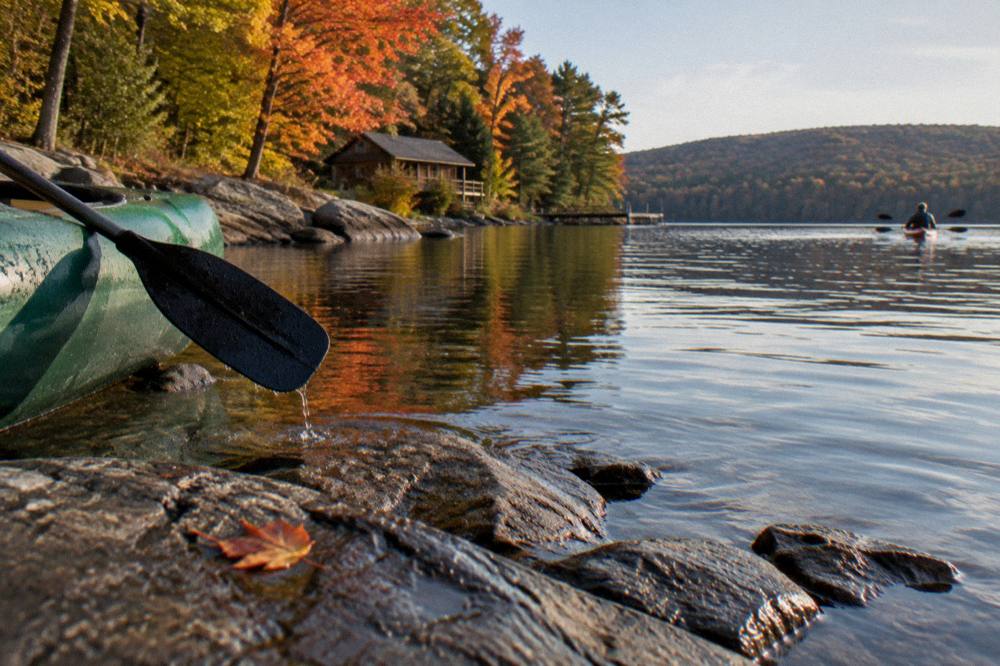
The foliage window is the headline. Northern Garrett County typically reaches peak color in the second or third week of October, with the Meadow Mountain and Savage River areas showing strongly, and wind and rain begin stripping leaves soon after. A paddler on flat water in that window gets the color twice, once on the hills and once in the reflection. Rental availability narrows as operators wind down their seasons, so confirm that a shop is still renting before you plan an October trip around one.
Water temperature is the serious consideration. The lake sits at elevation, and even in a mild autumn the water runs cold enough that a capsize far from shore is a genuine hazard. The DNR's ice-safety guidance for winter carries the same principle that applies to cold-water paddling: no conditions are completely safe, never go alone, tell someone your plan, and wear a life jacket rather than merely carry one. A wetsuit or drysuit under the life jacket is standard practice for spring and fall paddling on mountain lakes.
Dock timing shapes late-fall access. Public docks at the State Park come out of the water in stages across late fall, and private and commercial docks must be out for the winter period, so the lakeside look changes as the season ends. The lake itself does not close; the Chamber notes that the area stays active through winter, and the guide to Deep Creek Lake in fall covers the full shoulder-season picture beyond paddling.
| Season | Water conditions | Paddling outlook |
|---|---|---|
| Spring | Cold, calm, low traffic | Excellent for experienced paddlers dressed for cold water |
| Summer | Warm, busy midday | Best in early morning; rentals fully available |
| Fall | Cooling, quieting, peak color mid-October | A standout window; confirm rental seasons are still open |
| Winter | Freeze-over when cold enough | Paddling ends; ice fishing begins on safe ice only |
The essentials are a properly fitted life jacket worn rather than stowed, water and more of it than feels necessary, sun protection including a hat and sunscreen, and a dry bag for keys and phone. Add a leash for a paddleboard, layers for the shoulder seasons, and a change of clothes left in the car. The lake has no services on the water itself, so everything needed for the day comes aboard at the launch.
Rental operators cover the boat, the paddle and usually a jacket, but the rest of the kit is the paddler's own. A dry bag earns its place on every trip: phones sink, and a car key at the bottom of a lake is a long afternoon. Footwear matters more than beginners expect, since the State Park beach launch and most cove landings mix sand with stone. Water shoes beat flip-flops in every scenario that involves carrying a boat.
Timing the day around the sun and the wind is the difference between a good paddle and a grinding one. Morning light is flat and the coves are still; midday brings the breeze and the wakes; late afternoon settles again before evening. In summer, the full treatment of the day's last hours on the water is its own subject in the guide to sunset and evening on the lake, and the same wind-down pattern that suits powerboats suits a quiet paddle back to the beach.
For readers packing for a broader lake day, the packing question gets a fuller answer elsewhere on this site. The short paddling-specific list stands on its own, though: jacket on the body, water within reach, phone in a dry bag, and a plan that someone on shore knows.
For most first-time visitors, a one-hour guided pontoon tour is the low-commitment introduction and a solo kayak rental is the second step, not a rival to it. The guided tours on this lake run by powerboat with an operator narrating, while kayak and paddleboard rentals put you on the water under your own power. They answer different questions: one shows you the lake, the other lets you feel it.
The Wisp Lake Adventures concession runs one-hour guided pontoon tours at set times daily in the summer season, listing adult and child rates on its own page alongside its kayak and paddleboard rentals. High Mountain Sports runs a comparable pontoon tour from Oakland. Neither is a paddle tour; both are boat tours that happen to share a concession with paddle rentals, which is why a family can split the day cleanly, with one half on the tour boat and the other half in kayaks off the same beach.
Where a guided option genuinely beats renting alone is in local knowledge. A tour operator points out the coves, the history of the hydroelectric lake and the spots the crowd misses, information that takes a visitor several trips to assemble. A renter trading notes with the shop staff gets a lighter version of the same thing free with the boat. Ask where the morning wind comes from and which cove tip holds herons; the answers are worth more than any brochure.
The honest tradeoff is freedom against reassurance. A rented kayak goes exactly where the paddler points it, at whatever pace, for whatever the rental window allows, and on this lake the rule structure makes that easy: no license, no permit, a launch built for paddle craft, and 69 miles of mostly slow-water shoreline. The tour goes where the captain points it. Many visitors do both across a weekend and lose nothing by it.
McHenry, near Deep Creek Lake State Park
Close to the lake and the State Park, with free full breakfast and an adjacent golf course per the listing.
Check ratesNo. Maryland's boating safety certificate requirement applies to operators of motorized vessels, and a kayak or paddleboard under paddle power needs no license, registration or permit. A properly fitted life jacket for each person aboard is required and should be worn.
The beach concession at the State Park lists a single kayak at $19 for one hour or $34 for two on its own page, with standup paddleboards at $24 and $39 for the same windows. Deep Creek Paddle Co lists delivered rentals from $35 for a single kayak and $40 for a paddleboard. Confirm current rates with each operator before booking.
The dedicated canoe and kayak launch sits in the main beach lot at Deep Creek Lake State Park, separate from the powerboat ramp. A day-use fee applies at the park. Elsewhere, paddlers favor the cove tips in the lake's southern arms below the Glendale Bridge.
Yes, with conditions. The 100-foot no-wake zone along the shoreline keeps the water nearest land legally slow, and the southern coves hold flat water on busy days. Beginners should launch in the morning before the midday breeze builds, stay near shore, and wear a leash plus a life jacket.
Yes. There is no registration or fee specific to a human-powered craft, and the State Park launch is built for it. A boat brought from another lake must be clean, drained and dry, since Maryland prohibits launching equipment carrying attached aquatic plants or invasive species.
Summer mornings for warm water and full rental availability, or the second and third weeks of October for peak foliage and quiet water. Spring offers cold, glassy coves for paddlers dressed for the water temperature. Rental seasons narrow in fall, so confirm a shop is open before planning around one.
Before you go, the pick for this guide:
Wisp Resort
Full-service resort 0.6 miles from the lake (11-minute walk per the listing); the Wisp concession runs the State Park pontoon tours.
Check rates →