How Big And How Deep Is Deep Creek Lake?
Deep Creek Lake covers 3,900 acres, runs 13 miles end to end and reaches about 75 feet deep near the dam. Here is what the official numbers mean for boating, fishing and planning a visit.
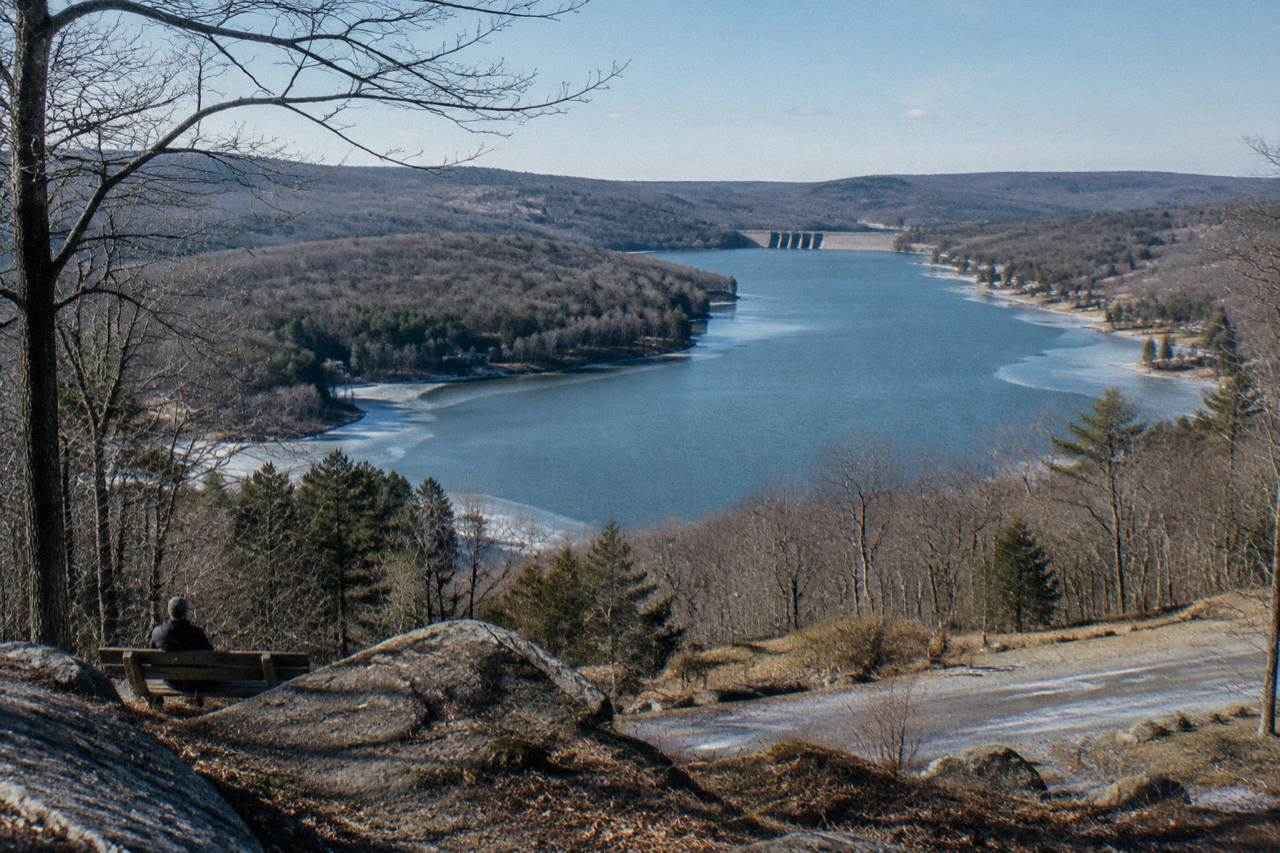
Deep Creek Lake covers 3,900 acres at its full pool elevation of 2,462 feet, making it Maryland's largest impoundment. The Maryland Department of Natural Resources lists the lake at 13 miles long with 69 miles of shoreline, a maximum depth of about 75 feet near the dam breast and an average depth of about 25 feet. Those four numbers, acres, length, shoreline and depth, explain most of what a boater, angler or lakeside visitor experiences on the water.
The lake sits entirely within Garrett County in far western Maryland, held back by a dam on Deep Creek and wrapped in a state-owned buffer strip of forested hills. Its watershed drains 140,000 acres of mountain terrain, which is one reason the water cools quickly in fall and the coves quiet down as you move south. Deep Creek Boat Tours covers the whole lake from the McHenry end to the dam, and this page walks through the official figures, where they come from, where the deep and shallow water actually sits, and what the lake's size means in practice for a day of boating or a week of exploring.
Deep Creek Lake is 3,900 acres at full pool, 13 miles long and holds 69 miles of shoreline, with a maximum depth of about 75 feet near the dam and an average depth of about 25 feet, according to the Maryland DNR. The Garrett County Chamber publishes slightly different shoreline and depth figures, so both sources appear below. Full pool elevation sits at 2,462 feet above sea level.
The DNR's fisheries division maintains a lake "hotspot" page for Deep Creek that carries the core numbers, and that page is the source we treat as the benchmark throughout this article. It gives 3,900 surface acres, 13 miles of length, 69 miles of shoreline, roughly 75 feet at the deepest point and roughly 25 feet on average. The Garrett County Chamber's fast facts page independently lists 65 miles of shoreline and the same 75-foot maximum depth, a small disagreement between two credible local sources that mostly reflects how you count the many narrow cove mouths.
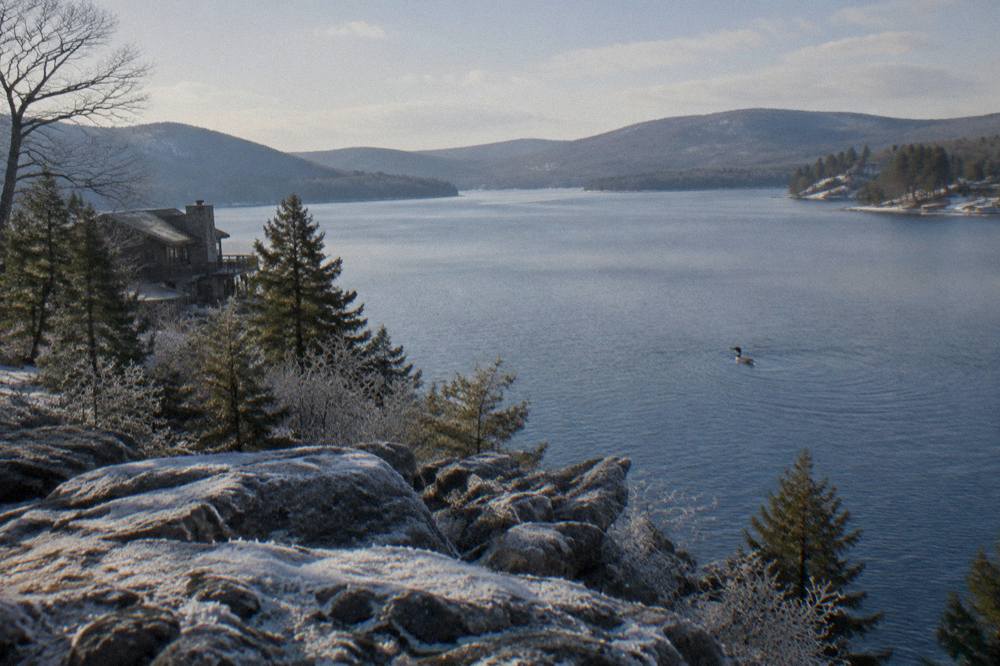
For anyone planning time on the water, the practical takeaway is scale. This is not a pond or a reservoir you can cross in a paddle stroke. A pontoon cruising from McHenry Cove at the north end to the quiet coves below the Glendale Bridge covers a substantial distance one way, and a kayaker working a single shoreline will run out of afternoon long before running out of cove tips to explore. The size is exactly why the lake supports everything from sailboats in the southern basin to water-skiing runs in the wide middle stretches.
How Many Acres Is Deep Creek Lake?
Deep Creek Lake spans 3,900 surface acres at full pool, the largest impoundment in Maryland. Its footprint is fed by a 140,000-acre mountain watershed, meaning every acre of lake receives drainage from a far larger acreage of surrounding forest and hillside. The surface area holds steady near that figure while the lake stays inside its operating band.
Acres are the number most often quoted in tourism material, and 3,900 is the figure on the DNR fisheries page. It is worth understanding what the number does and does not tell you. Surface acres measure the footprint at full pool, but the lake's arms, coves and islands mean the usable boating water is spread across a long, irregular shape rather than a single open bowl. The main basin south of the Deep Creek Lake Bridge is where the widest water sits, while the arms feeding off it narrow into no-wake territory.
The 140,000-acre watershed figure matters for water quality and temperature. Rain falling across those forested slopes drains into the lake, and the mountain setting keeps summer water temperatures cooler than lowland reservoirs in other parts of the state. Cooler water is a large part of why the walleye and smallmouth bass fisheries thrive here, a point the DNR fisheries page makes in its species notes for the lake.
How Many Miles Of Shoreline Does Deep Creek Lake Have?
The Maryland DNR counts 69 miles of shoreline on Deep Creek Lake; the Garrett County Chamber lists 65 miles. The difference comes from how each source measures the cove mouths and irregular points. Maryland owns the lake bed plus a strip of land around nearly all of that shoreline, which keeps development set back from the water.
Two official-leaning sources, two numbers. The DNR's 69-mile figure is the one used in state fisheries and park material, while the Chamber's 65-mile count appears in local visitor information. Neither is wrong; shoreline length depends on the measurement scale, and a convoluted shoreline like Deep Creek's, full of narrow coves and sharp points, shifts by miles depending on how finely you measure.
The more consequential fact is ownership. Maryland owns the lake, the lake bed and the buffer strip surrounding it, which makes Deep Creek one of 16 state-owned lakes and places it inside the state park system. That buffer is why the shoreline reads as forest rather than wall-to-wall docks when you look across the water, and why shoreline access for anglers runs through designated public access points rather than open wandering. The DNR's lake regulations page spells out how the buffer strip is managed.
Where Is The Deepest Point In Deep Creek Lake?
The deepest water in Deep Creek Lake, about 75 feet, sits near the dam breast at the lake's downstream end. The average depth across the whole lake is roughly 25 feet, and the water shoals steadily as you move north, with cove tips and the upper arm running much shallower. Boaters should treat depth as a changing variable, not a constant.
The dam breast pools the deepest water because that is where the valley floor sat lowest before impoundment. Head north from the dam and the old creek channel winds beneath the lake as a submerged riverbed, shallower on the flats to either side. Anglers use this mental model constantly: walleye and smallmouth relate to the channel edges and rock, while panfish and pickerel work the shallow weed flats in the coves, especially in the southern sections below the Glendale Bridge where the coves are narrow and quiet.
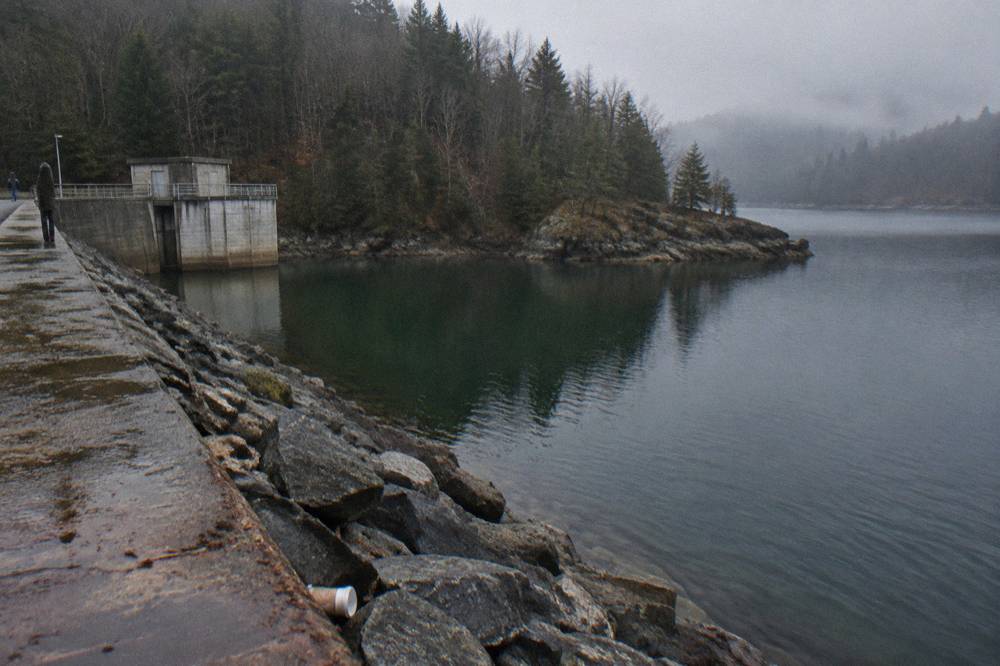
For boaters, the depth pattern has a safety edge. The main basin is forgiving to propellers, but cove mouths and the northern arm hold shallow flats that appear quickly. State rules require no-wake speed within 100 feet of shoreline, piers and docks, which conveniently is also the zone where most shallow water sits. Our boating rules for Deep Creek Lake guide covers the full rule set for the lake, including the vessel length limits and personal watercraft hours.
How Does The Lake Level Change Through The Year?
Deep Creek Lake is managed inside a permitted operating rule band: Brookfield Renewable, the dam operator, works to keep the level between an upper and lower desirable elevation, with allowances for heavy runoff or drought, and Maryland's environment agency controls the water use. Full pool sits at 2,462 feet, and the lake typically eases lower in late fall and winter.
The rule band concept is the honest, verifiable summary, because no month-by-month level table appears in current primary sources. What is documented: the lake was built to feed a small hydroelectric plant, it still generates power, and recreation interests shape how the band is managed. In practice, the surface can sit noticeably below the 2,462-foot mark by late fall, which is why dock owners pull their docks and why boaters checking mid-October conditions should look at live readings rather than assuming full pool.
Anyone watching the water closely for launch depth or dock clearance should read our detailed page on Deep Creek Lake water levels and winter drawdown, which explains the band, the agencies involved and how to check current conditions. For day-to-day boating decisions, the practical habit is simple: confirm the ramp and your intended route are workable at the current level, and remember that shallow cove entrances change character with every foot of elevation.
Where Do The Size Numbers Come From?
The core figures come from the Maryland DNR fisheries page for Deep Creek Lake, which lists 3,900 acres, 13 miles of length, 69 miles of shoreline and depths of about 75 feet maximum and 25 feet average. The Garrett County Chamber independently publishes 65 miles of shoreline and the same maximum depth. We print only numbers traceable to those two sources.
This matters more than it might seem. Lake statistics travel badly online: a tourism site copies a rounding of a rounding, and soon every page disagrees about everything. Table form keeps it straight.
| Measurement | DNR figure | Chamber figure | Notes |
|---|---|---|---|
| Surface area | 3,900 acres | Not published separately | At full pool |
| Length | 13 miles | Matches DNR | McHenry area to the dam |
| Shoreline | 69 miles | 65 miles | Measurement-scale difference |
| Maximum depth | About 75 feet | 75 feet | Near the dam breast |
| Average depth | About 25 feet | 25 feet | Whole-lake average |
| Full pool elevation | 2,462 feet | Matches DNR | Operating band tops out here |
| Watershed | 140,000 acres | Not published separately | Feeds the lake |
The two columns agree on everything except shoreline miles, and both trace to the same physical lake. When a rental operator or marina quotes you a figure that matches neither, treat it as a rough guide rather than a survey.
Why Was Deep Creek Lake Built?
The lake was impounded on Deep Creek in the 1920s to power a small hydroelectric plant, and it filled by 1929. It still generates electricity today, but the state's management now balances power production with a recreation level, which is why the lake is held near a desirable band rather than drained and refilled like a flood-control reservoir.
The hydroelectric origin explains the lake's shape and behavior. Damming a mountain creek valley produces exactly what you see: a long, branching body of water following the old stream channel, deep at the dam and shallow at the inflows. The DNR fisheries page states the impoundment history and the continued power generation plainly, and the Chamber's local history dates the plant's start to May 1925, with the community marking the hundredth anniversary of that start.
Recreation, not power, is now the lake's economic engine, and the management reflects it. Boating, fishing, lakeside lodging and the ski resort at McHenry all depend on a predictable summer level, which is why the operating band exists and why late-fall lowering is gradual rather than dramatic. A lake built for kilowatts ended up as the anchor of a four-season tourism economy.
How Does The Lake's Size Shape Boating On It?
At 13 miles long with distinct zones, Deep Creek Lake rewards boaters who match their craft and route to the right section: the wide main basin for skiing and pontoon cruising, the middle lake for touring, and the quiet southern coves below the Glendale Bridge for kayaks and paddleboards. Boat length is capped at 26 feet, or 30 feet for pontoons, under state lake rules.
The zone map is worth internalizing before you launch. The northern tip at McHenry Cove concentrates boat rentals, restaurants and the Wisp Resort area. South of the Deep Creek Lake Bridge the main basin opens up around the State Park, which holds the primary public launch. Below the Glendale Bridge the character shifts to narrow, quiet water where sailboats and paddlers favor the cove tips. A pontoon tour or rental gives you the range to see two zones in an afternoon; a kayak gives you intimacy in one.
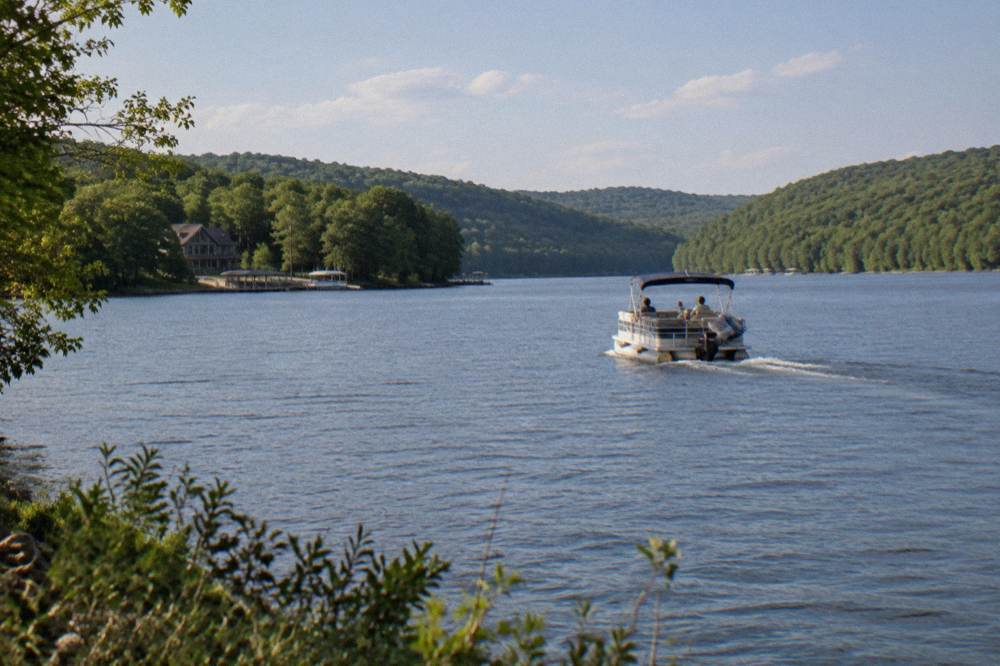
The size also explains the rules. A 13-mile lake shared by skiers, anglers, paddlers and lakefront homes needs traffic management, so the state caps vessel length, requires no-wake operation near shore and structures, and restricts personal watercraft to afternoon hours on peak summer weekends (see Lakefront Hotels). None of that constrains the experience much; the lake is big enough that a no-wake cove feels remote while the main basin a mile away is wide open.
Where Should You Stay To Explore The Lake?
The most practical base is the McHenry end, near the State Park launch and the rental docks at the north tip of the lake. Condo-style suites in the Oakland and Deep Creek Lake area, such as Suites At Silver Tree, offer a quieter base near the lake, while Oakland options like The Garrett Inn sit a short drive from the water and suit travelers combining boating with the county's other parks.
Location matters on a 13-mile lake. Launching from the State Park puts the main basin in front of you and the whole lake within reach, and lodging near McHenry keeps the trailer or the rental check-in close. Farther south, Oakland sits near the Thayerville end of the lake and works well if your itinerary mixes mornings on the water with afternoons at Swallow Falls State Park, nine miles north of town.
Suites At Silver Tree
Oakland, Wisp and lake area
Condo-style suites listed in the Oakland and Deep Creek Lake area.
Check ratesBudget and style spread across the area, from full-service resort lodging at the north end to small inns closer to Oakland. The trade-off is simple: pay for walk-to-the-lake convenience at McHenry, or trade a short drive for quieter surroundings and easier access to the southern coves and the waterfalls.
How Does Deep Creek Lake Compare For A Visit?
Against other Maryland lakes, Deep Creek stands alone on scale and setting: it is the state's largest impoundment, its deepest cold-water fishery and its only major lake ringed by mountain forest inside a state-owned buffer. Its 75-foot maximum depth supports cool-water species that shallower lowland lakes cannot hold, which anchors both the summer boating scene and the winter ice fishery.
| Visitor question | What the lake's numbers mean |
|---|---|
| Can I see it all in a day? | Not at paddle speed; 13 miles of length means a full day for a one-way kayak trip |
| Is it crowded on the water? | The main basin carries most traffic; the southern coves stay quiet |
| Is it good for beginners? | Yes, sheltered coves and no-wake zones suit first-time pontoon and kayak renters |
| Will I find deep-water fishing? | Yes, channel edges near the dam hold walleye and smallmouth in 25-plus feet |
| Does it freeze in winter? | In cold winters, yes, making it Maryland's premier ice-fishing destination |
The comparison is really about what the size buys you. Shallow lakes warm into bathtub temperatures by August; a 75-foot-deep impoundment at 2,462 feet elevation in Garrett County holds cool water all summer, which keeps the fishery active and the swimming brisk. The same depth, cooling from the top in a normal cold winter, lets ice form and thicken enough by midwinter to support the ice-fishing crowd, conditions permitting.
Lakefront lodging fills the demand that size creates. LakeFront Lodge offers lodging in the McHenry area near the north end of the lake, and The Garrett Inn in Oakland sits about 2.4 miles from the lake, close enough for morning launches while keeping you near the southern end's quieter access points.
The Garrett Inn
Oakland
About 2.4 miles (3 minutes by car) from the lake per the listing.
Check ratesCommon Questions About Deep Creek Lake Size And Depth
How Big And How Deep Is Deep Creek Lake?
Deep Creek Lake is 3,900 acres at full pool, 13 miles long and has 69 miles of shoreline per the Maryland DNR. Its maximum depth is about 75 feet near the dam breast, with an average depth of about 25 feet.
How many miles of shoreline does Deep Creek Lake have?
The Maryland DNR counts 69 miles of shoreline; the Garrett County Chamber lists 65 miles. The difference comes from measurement scale across the lake's many coves and points.
Where is the deepest part of Deep Creek Lake?
The deepest water, about 75 feet, sits near the dam breast at the downstream end of the lake. Depth decreases moving north, with cove tips and the upper arm running much shallower.
What is the full pool elevation of Deep Creek Lake?
Full pool sits at 2,462 feet above sea level. The lake is managed within a permitted operating band around that target, and the level typically eases lower in late fall and winter.
Is Deep Creek Lake the biggest lake in Maryland?
Yes, it is Maryland's largest impoundment at 3,900 acres. It is also one of 16 state-owned lakes and part of the state park system.
Does the lake level change during the year?
Yes. The dam operator works to keep the level inside a permitted rule band, with allowances for runoff or drought. Docks around the lake come out of the water for the winter period, and boaters should check current levels in late fall.