LakeFront Lodge
McHenry
Lodging in McHenry, at the north end of the lake near the rental docks and the Wisp concession.
Check ratesDeep Creek Lake is Maryland's largest lake and one of its busiest tow-sports playgrounds, but the towing happens inside a tight rule set: a 100-foot no-wake buffer along the whole shoreline, posted 6-knot zones, a nighttime skiing ban and special limits on personal watercraft.
Short answer
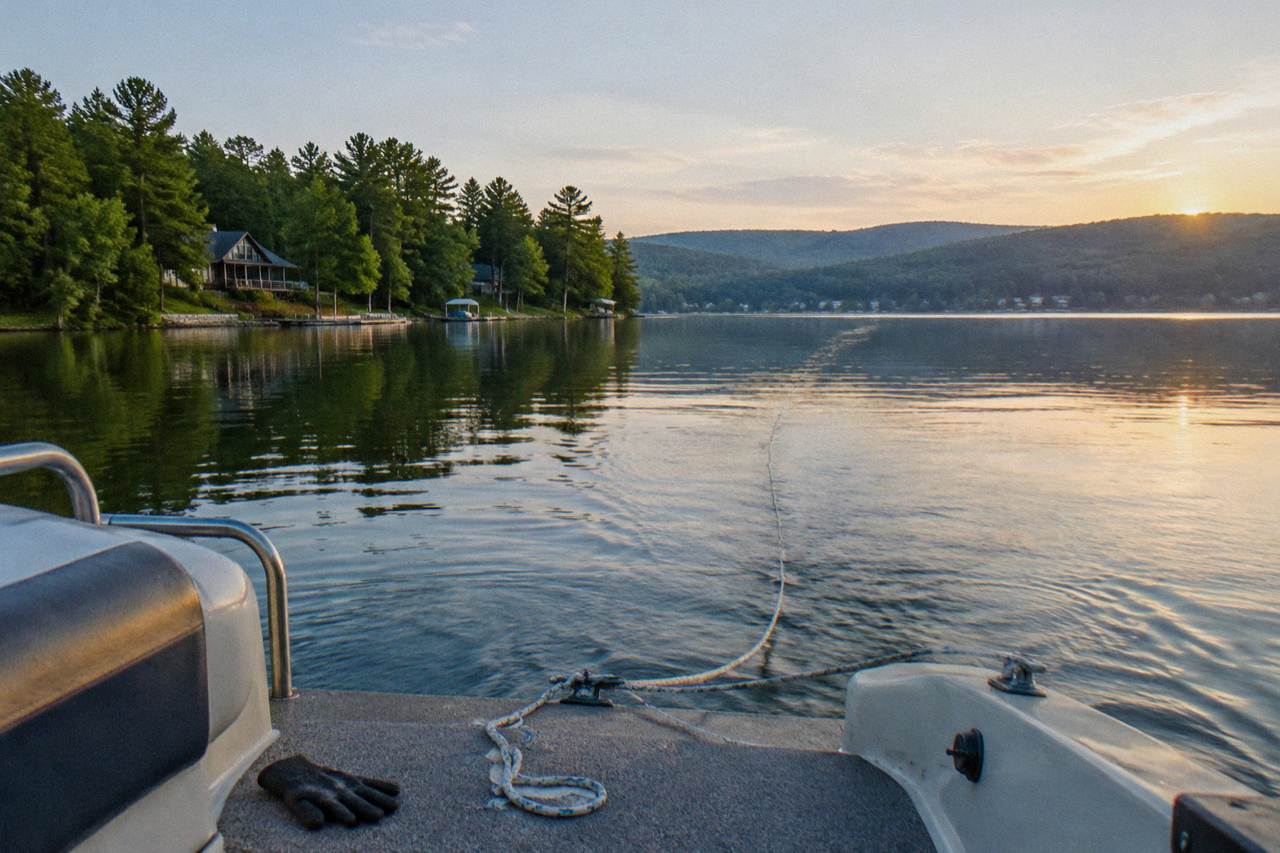
Tubing, wakeboarding and water skiing all happen on Deep Creek Lake. Boats are capped at 26 feet (30 for pontoons), everything within 100 feet of shore runs at no-wake speed, night skiing is illegal, and posted 6-knot zones close some coves to towing. Wisp lists tube rental at $9 per day; Lake Life lists watersports boats from about $1,296 per day.
Deep Creek Lake covers 3,900 acres at full pool, runs 13 miles end to end and wraps 69 miles of shoreline through Garrett County hardwoods, which makes it the natural tow-sports hub of western Maryland. On a summer Saturday the main basin carries ski boats pulling riders between the no-wake buffers, while the coves below the Glendale Bridge stay quiet enough for paddleboards. The Maryland Department of Natural Resources, which owns the lake bed and the buffer strip around it, publishes the rules that shape every one of those runs, and this guide walks through them alongside the rental options that put you on the water. Boating here is genuinely good, but it is boating inside a rule book, and the people who enjoy it most are the ones who read the book first. And if the quiet coves sound more your speed than the tow ropes, the guide to kayaking Deep Creek Lake's calm water covers where to launch, what rentals cost, and the paddling rules that apply.
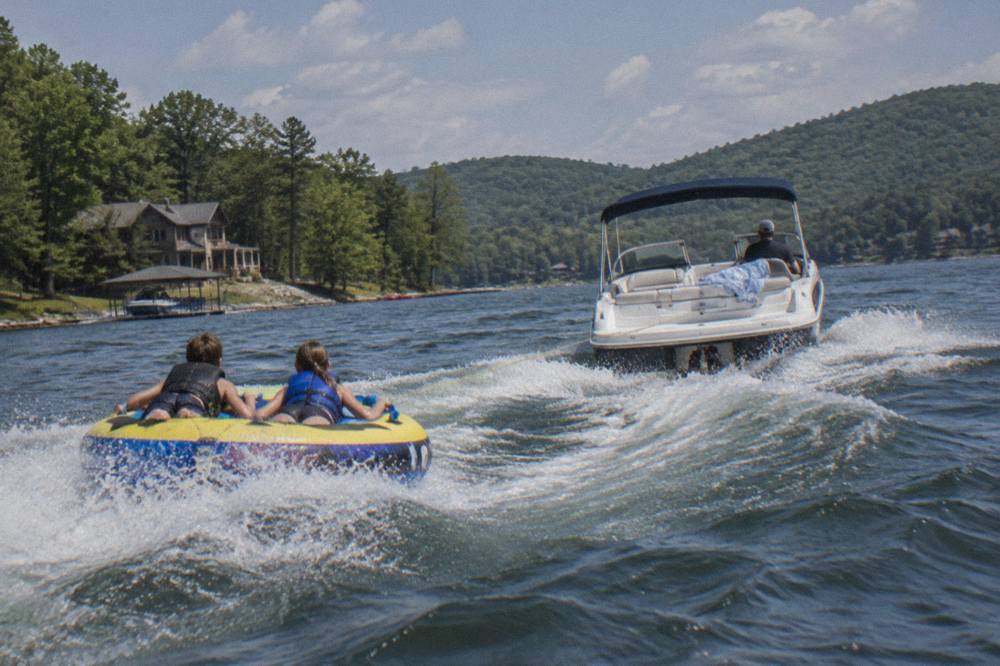
Tubing works on the open main basin south of the Deep Creek Lake Bridge and in the wider northern water around McHenry Cove, wherever you can hold more than 100 feet off the shoreline. Every cove mouth, dock line and bridge approach forces no-wake speed, and some posted areas cap you at 6 knots with skiing prohibited outright. The lake is 13 miles long, so there is real open water, but none of it is rule-free.
The geography does half the planning for you. The Garrett County Chamber describes the northern tip around McHenry Cove as the busy end, with boat rentals, restaurants and Wisp Resort clustered together, and that is where most rental customers start their towing day. South of the Deep Creek Lake Bridge the lake opens into the main basin beside the State Park, which is the widest and most used ski water on the lake. Below the Glendale Bridge the character changes again: quieter coves, sailboats and, in the Chamber's words, cove tips that kayakers favor, which tells you the tow-sports crowd thins out down there.
A tube does not need much more than a responsible driver, a spotter and clear water, and Deep Creek delivers all three once you are away from the docks. What it does not deliver is shoreline access for powerboats; the Department of Natural Resources states that beaching a boat is not permitted except in emergencies, and the primary access for boaters is the State Park ramp. So a tubing day on this lake is a launched-boat day, which pushes most visitors toward either a rental from the McHenry end or a guided setup that includes the driver. If tubing leaves you ready for a slower afternoon in the water, the guide to swimming safety at Deep Creek Lake covers where you can legally get in and what rules apply.
For a fuller map of where motorized and human-powered boating each fits, the boating on Deep Creek Lake guide breaks the lake into its zones, and the Deep Creek Lake State Park guide covers the ramp and beach complex where most watersports days begin.
The core towing rules: no-wake speed within 100 feet of any shoreline, bridge, pier, dock or other vessel; night skiing is illegal; boats are limited to 26 feet overall (30 for pontoons) and cannot exceed the manufacturer's maximum horsepower; and marine sanitation devices that discharge into the lake are prohibited. A state noise limit of 88 dB tested at idle applies to boat exhaust.
That 100-foot buffer is the rule that most shapes a tow day, because Deep Creek Lake's shoreline is a wall of private docks and piers, and the buffer follows all of it. The DNR lake rules page states it plainly, with one narrow exception for starting a tow from a pier or shore. In practice a ski-boat driver spends the first and last few minutes of every run at idle, then opens up only when the boat is genuinely clear of everything.
The size and engine caps matter for renters. A 26-foot overall limit for standard hulls and 30 feet for pontoons keeps the lake's fleet modest, and the engine rule is not about horsepower theater; it ties every boat to its own manufacturer's rating, which is what a rental inspection checks. The full regulatory text sits in COMAR 08.18.33.02, the state regulation that codifies these limits for this lake specifically.
| Rule | What it means on the water |
|---|---|
| 100-foot no-wake buffer | Idle speed within 100 feet of shoreline, bridges, piers, docks or other vessels, except when starting a tow from a pier or shore |
| Boat length | 26 feet overall maximum, 30 feet for pontoon boats |
| Engine limit | May not exceed the manufacturer's recommended maximum horsepower |
| Night skiing | Illegal after dark |
| Noise | 88 dB at idle; no running with cutouts open |
| Discharge | Marine sanitation devices that can discharge overboard are not allowed; no garbage dumping |
One more layer applies to jet-propelled craft: personal watercraft face their own hour restrictions, covered in detail on the jet ski and PWC rental guide, including a ban on the busy midday and weekend hours of peak summer. If your tubing plan involves a PWC as the tow vehicle, read that page first, because the hours windows close most of a July Saturday.
Posted 6-knot zones are marked areas where boats may not exceed 6 knots and skiing is prohibited, identified by white signs or buoys with an orange circle. They sit in the lake's tighter coves and hazard areas, and they effectively remove those waters from tubing, wakeboarding and water skiing. Outside them, the general 100-foot no-wake buffer still governs.
Think of the lake as two categories of water for towing: open water, where you can pull a rider once you are clear of the buffer, and posted water, where the orange-circle signs end the conversation. The Department of Natural Resources maintains the buoying, and hazards are also marked individually, so a driver who reads the water carefully gets constant feedback about which category they are in. Third-party summaries of DNR enforcement, including the Deep Creek Lake property owners association FAQ, describe the 6-knot, no-skiing signage scheme, and the department's own boating pages list speed zones and coves with limited space for towing among their official topics.
Wake surfing deserves a specific note here. The DNR boating page acknowledges coves with limited space for towing and wake surfing, which is the regulatory reality behind the sport: a wake boat throwing a surf wake needs room and deep water away from docks, and the coves that feel sheltered are often exactly where the posted limits and the 100-foot buffer bite hardest. A Policy Review Board discussion addressed wake boats and kept the existing distance rules unchanged, so the practical guidance is simply to surf in the main basin, well off the shoreline, rather than testing a cove.
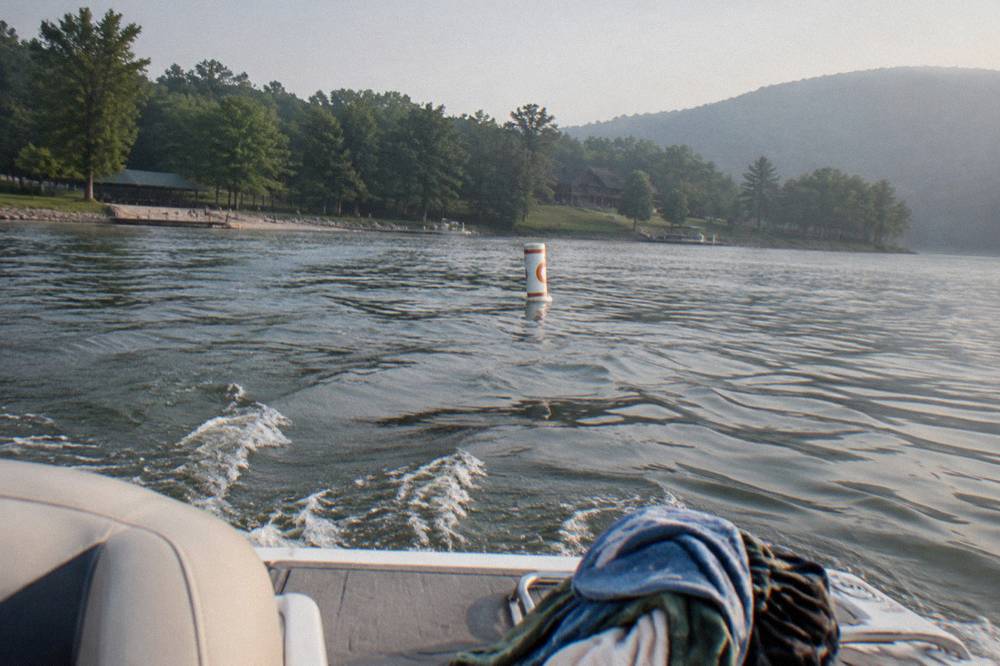
The habit worth building is simple: scan for signs at every cove mouth and treat any orange circle as the end of the tow rope for that stretch. Riders rotate fast anyway, and the open basins are large enough that a detour around a posted zone costs a few minutes of idle-speed cruising, not the session.
Anyone born on or after July 1, 1972 must carry a NASBLA-approved boating safety education certificate to operate a numbered or documented motorized vessel on Maryland waters, including rental boats on this lake. Renters who were born after that date can instead read a safety sheet and receive a 10-day temporary certificate issued by the rental company, so a license is not required to rent and drive a pontoon or ski boat.
The distinction trips people up, so it is worth spelling out. If you own or borrow a boat and you were born after the cutoff date, you need the real certificate, earned through a NASBLA-approved course, and the DNR boating safety page explains how to get one. If you are renting a motorized vessel that is not a PWC, Maryland law cuts you a temporary path: the state's requirements for recreational vessels page describes the safety-sheet reading and the 10-day temporary certificate the rental business issues on the spot.
Personal watercraft get no such shortcut, and the operator of a PWC must be at least 16, wear a U.S. Coast Guard approved life jacket and carry the certificate if born after the cutoff, plus observe the 6-knots-within-100-feet rule around anything alive or floating.
Beyond paperwork, towing adds its own duties that Maryland natural resources officers do enforce: a capable observer or wide-angle mirror, enough seating for everyone aboard, and life jackets on every rider, with the tube or ski rope kept clear of swimmers and the buffer. The lake's enforcement presence is real on summer weekends, and the citations that get written are usually for speed in the buffer, not for exotic violations. Slow down near shore, count your people, and the licensing question is the only administrative one left.
Rental options cluster at the McHenry end of the lake: Lake Life Boat Rentals and Deep Creek Lake Boats on Deep Creek Drive, Bill's Marine Service nearby, and Funtime Watersports on Garrett Highway toward Thayerville, with Wisp's Lake Adventures concession renting tubes, kayaks and paddleboards at the State Park beach. Each is booked directly with the operator, and reservations are required or recommended at most of them.
The rental fleet split matters more than the address. Lake Life Boat Rentals, on Deep Creek Drive in McHenry, is the tow-sports specialist of the group: the operator lists pontoons from about $524 per day, ski boats from about $681 per day and watersports boats from about $1,296 per day, taxes extra, with full-day rentals running 9 AM to 5 PM and a season that runs roughly mid-May to mid-October. Deep Creek Lake Boats, also on Deep Creek Drive, rents pontoons by horsepower class, listing one-day rates of about $450 for a 70 HP, about $575 for a 115 HP and about $650 for a 150 HP, taxes extra, over a late May to early September season.
For visitors who would rather not drive at all, Funtime Watersports in Thayerville rents pontoons and jet skis by the hour, half day or full day and lists a captain add-on at about $59 per hour, alongside a one-hour guided pontoon tour at $34 for adults and $16 for children ages 3 to 15, with under-3s free. At the State Park beach, the Wisp Lake Adventures concession rents the small stuff: the operator lists tubes at $9 per day, plus kayaks at $19 for one hour and stand-up paddleboards at $24 for one hour, alongside its own guided pontoon tours. Bill's Marine Service in McHenry rounds out the fleet with pontoon, speed and fishing boats; its pricing is not published, so check its page directly.
| Operator | Location | Tow-sports offering | Booking |
|---|---|---|---|
| Lake Life Boat Rentals | 1899 Deep Creek Drive, McHenry | Ski boats and watersports boats by the full day; pontoons | Reservations required |
| Deep Creek Lake Boats | 2030 Deep Creek Drive, McHenry | Pontoons by horsepower class, one-day rentals | Reservations recommended |
| Funtime Watersports | 20294 Garrett Highway, Thayerville | Pontoon and jet ski rentals by hour to full day; captain add-on | Reservations recommended |
| Wisp Lake Adventures (State Park concession) | State Park beach | Tube, kayak and paddleboard rentals; guided pontoon tours | Reservations required |
| Bill's Marine Service | McHenry | Pontoon, speed and fishing boat rentals | Check the operator's page |
Prices are as each operator lists them on its own page and can change, so confirm before booking, and always book directly with the operator rather than any reseller. If your towing plan is really a full rental decision, the Deep Creek Lake boat rental guide and the pontoon rental guide compare the fleets in more depth, and the cost of renting a boat at Deep Creek Lake post walks the budget question line by line.
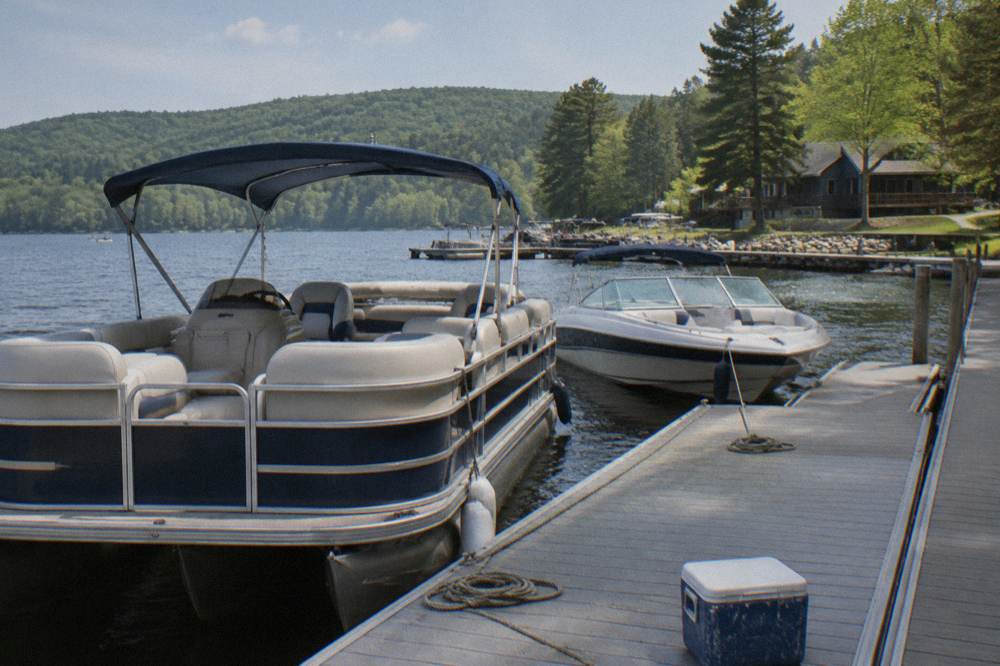
A guided or supported day runs cheaper than a self-drive tow day: Wisp lists tube rental at $9 per day and its one-hour pontoon tours at $34 for adults, while a full day on a Lake Life ski boat is listed from about $681 and a dedicated watersports boat from about $1,296, taxes extra. A launch fee or a valid lake use permit applies each time you put a boat in at the State Park ramp.
The spread is enormous, and it maps to how much of the work you want to do yourself. A family that already has a boat on a trailer pays a launch fee at the State Park ramp and buys nothing else but gas; the fee schedule lives on the DNR fees page, which is the right place to confirm the number before you go, since launch fees are not printed here. A family that wants to try tubing once can rent the tube itself at $9 for the day from the beach concession and pair it with whatever boat they have arranged. The serious tow-sports group is really comparing two numbers: a ski boat versus a purpose-built watersports boat, and the gap between roughly $681 and $1,296 per day is the price of ballast, towers and surf wakes.
| Watersports day style | What you book | Listed cost driver |
|---|---|---|
| Tube-only add-on | Tube rental at the State Park beach | Wisp lists tubes at $9 per day |
| Guided hour on the water | One-hour guided pontoon tour | Funtime lists $34 adult, $16 child; High Mountain Sports lists $37 adult, $19 child |
| Self-drive pontoon towing | One-day pontoon by horsepower | Deep Creek Lake Boats lists about $450 to $650, taxes extra |
| Ski-boat day | Full-day ski boat rental | Lake Life lists from about $681 per day, taxes extra |
| Surf-boat day | Full-day watersports boat rental | Lake Life lists from about $1,296 per day, taxes extra |
Two soft costs are easy to miss. Ask the rental operator how fuel, deposit and cleaning charges are handled, since a tow boat working all day can burn through more than you expect. And time is fixed: Lake Life's full day runs 9 AM to 5 PM, so a late start shortens the session rather than extending the bill. High Mountain Sports, in Oakland on Garrett Highway, offers guided pontoon tours at $37 for adults and $19 for children 12 and under, with private tours up to 13 people listed at $385, which is another way to get on the water with a driver who already knows the buffer rules.
The practical stay is McHenry: it puts you within a short walk or drive of the rental docks on Deep Creek Drive, the State Park ramp and the Wisp concession at the beach. LakeFront Lodge sits in McHenry, The Lodge at Wisp Resort shares the main resort's roughly 0.6-mile walk to the lake, and Suites At Silver Tree offers condo-style suites in the Oakland, Wisp and lake area.
Distance to the ramp matters more than distance to the water, because on a rental day you are moving coolers, tubes and people twice. The McHenry cluster wins that arithmetic: the rental offices are on Deep Creek Drive, the State Park launch is minutes south, and the northern cove puts restaurants within a slow boat ride. Oakland, a few miles further out, trades that proximity for quieter, often cheaper lodging, with the Garrett Inn about 2.4 miles from the lake by car and the Baja Motel a short drive from the Thayerville end, near Funtime Watersports.
LakeFront Lodge is a lodging option in McHenry, handy to the north-end launch and rental area, while The Lodge at Wisp Resort sits about 0.6 miles from the lake and adds slope-side amenities, a solid pick for a family splitting a morning on the water and an afternoon at Wisp. Further around the shoreline, Suites At Silver Tree offers condo-style suites in the Oakland area near the lake, a handy base for anyone hauling their own boards and tubes. The where to stay for boating guide compares every area of the lake for exactly this kind of trip.
McHenry
Lodging in McHenry, at the north end of the lake near the rental docks and the Wisp concession.
Check ratesBooking a room near the launch changes the shape of the day: a family staying in McHenry can put a tube in the water by mid-morning, break for lunch at the dock restaurants in the northern cove, and still return the boat on time, while a stay further out tends to collapse into one long session. Neither is wrong, but know which trip you are buying. More on the full range of options sits in the things to do at Deep Creek Lake guide for the days the water is flat or the weather turns. If rain reroutes your whole plan, the guide to dry-land activities at Deep Creek Lake keeps the trip from feeling like a washout.
Yes, both, in the open basins and within the same limits that govern all towing: no-wake inside 100 feet of shore and structures, no posted-zone riding, no night sessions and boats within the length and horsepower caps. The DNR boating page names coves with limited space for towing and wake surfing as an official topic, which is the strongest signal that cove choice, not permission, is the real constraint.
Wake surfing is the discipline most affected by the buffer, because a surf wake is the point of the sport and the buffer forbids throwing one near anything. The main basin south of the bridge, held well off the shoreline, is the natural home for it; the tight coves below Glendale are not, both because of the 100-foot rule and because posted 6-knot zones with no skiing appear in the lake's tighter waters. Wakeboarding and water skiing, which want a clean flat-to-light-chop lane, sit happily in the same open basins, with mornings delivering the glassiest water before the afternoon recreation fleet builds.
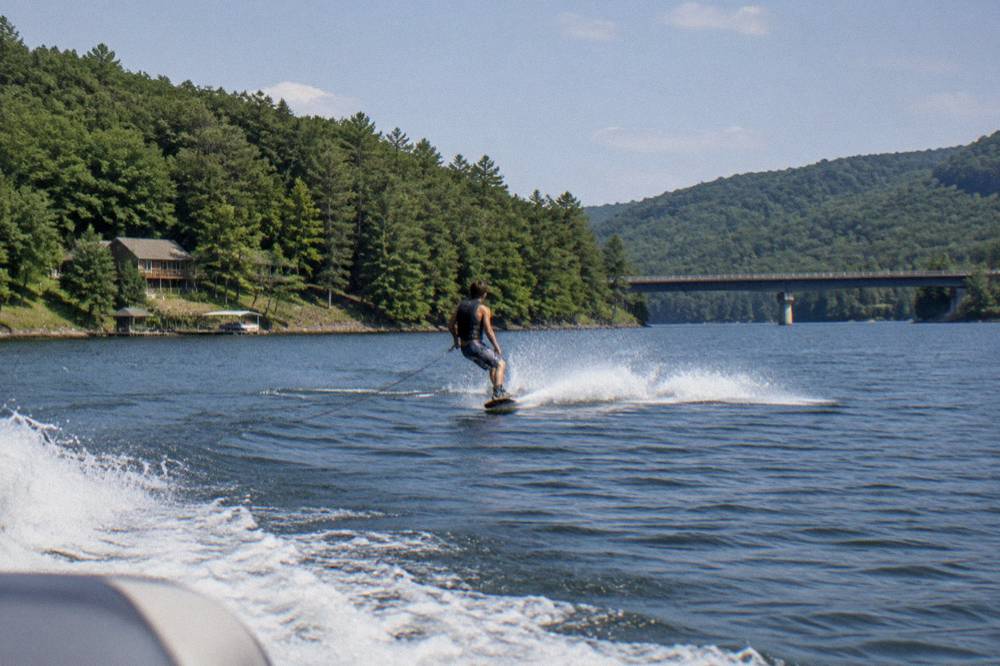
The equipment side is straightforward: Lake Life's watersports boats, listed from about $1,296 per day, are the rental fleet's purpose-built surf and wake platforms, while the ski boats at about $681 per day tow skiers and boarders capably. Anyone bringing their own boat should confirm the 26-foot overall limit before the trip, since some modern surf boats sit right at the edge of it, and remember that the manufacturer's maximum horsepower rule follows the hull plate, not the driver's ambition.

Maryland law prohibits placing any vessel or equipment with attached aquatic plants, zebra mussels or other prohibited nonnative organisms into state waters, with penalties up to $2,500 per offense and $25,000 per enforcement action. DNR advises Clean, Drain, Dry with at least 48 hours of drying, and Launch Stewards at the State Park ramp offer free voluntary inspections.
This matters at Deep Creek Lake more than at most lakes because the lake has a history: hydrilla was first found here in 2013 and remains under a multi-year herbicide treatment program, and the state would like to keep zebra and quagga mussels out entirely, since they are not currently believed to be present. A visiting wake boat with ballast tanks is exactly the vector the rule targets, so arriving with tanks drained and dried is both legal hygiene and good citizenship. The DNR invasive species page for this lake lays out the requirements, and the voluntary steward inspection at the ramp takes minutes.
Mornings give the calmest water and the thinnest boat traffic, which is why serious skiers and wakeboarders are on the lake early; afternoons bring the warmest water for tubing but also the busiest basins and the PWC crowd in peak summer. PWC cannot operate between 11 AM and 4 PM on summer weekends and holidays, which quietly clears part of the midday lake for tow boats.
The interlocking schedules create a rhythm worth knowing. Early morning is flat, cold-ish and sparsely populated, ideal for anyone chasing a clean slalom run. Late morning through mid-afternoon is family tubing time: warm water, warm air, and the PWC restriction on peak-season Saturdays, Sundays and holidays means the jet-driven traffic pauses between 11 and 4, leaving the midday lake disproportionately to tow boats. Late afternoon softens again as rentals start heading back to the dock, and the 5 PM return windows at the McHenry rental offices pull a visible share of the fleet off the water.
Seasonally, the rental season itself sets the boundaries: Lake Life runs roughly mid-May to mid-October, Deep Creek Lake Boats from late May to early September, and the beach concession operates through the summer season, so a tubing trip is really a warm-months plan. Fall holds a special case for visitors who want quiet water and color at once; the Deep Creek Lake in fall guide covers the foliage window, and the best time for boating on Deep Creek Lake guide does the same for the water. Weekday visits dodge the weekend peak entirely, and the lake is large enough that even a busy Saturday has room once you idle past the launch.
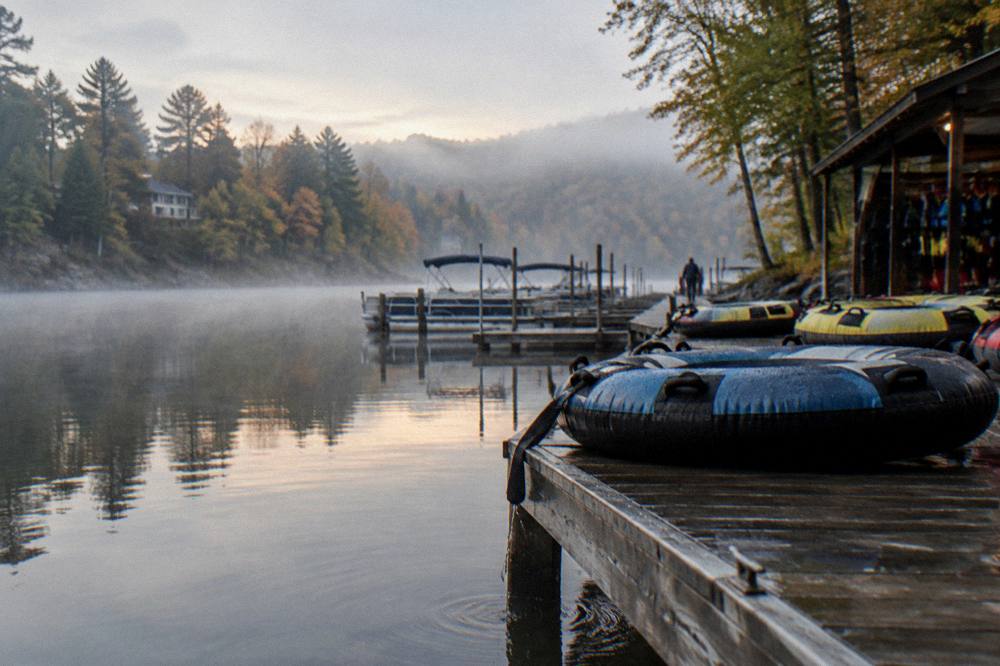
The State Park boat launch is the primary access for boaters, open 24 hours a day weather permitting, with a launch fee payable each use or covered by a valid lake use permit or State Park pass; the park phone line at 301-387-5563 answers condition questions. Renters skip this entirely, since the McHenry fleets go in and out at their own docks.
If you are trailering your own boat, the practical checklist is short: confirm the day's launch arrangements and fees on the DNR fees page, verify your safety certificate status if you were born after the cutoff, drain and dry your boat before arrival, and check that your rope, flag, spotter and life-jacket count all match your rider count. The park's winter arrangements change the picture, with the main gate closed during snowmobile season and parking moving to the Discovery Center, but that is a different season's problem from tow sports. The Deep Creek Lake boat ramps and launching guide covers the launch in full.
For renters, the pre-trip call is to the operator: confirm the reservation window, the fuel policy, whether a captain is available if nobody in the group wants to drive, and the return-time rules. Funtime lists its captain add-on at about $59 per hour, which is often the difference between a relaxed day and a stressed one for groups with a reluctant driver. And if the whole family wants a taste of the water without any of the responsibility, the guided pontoon options, from Wisp's State Park tours to High Mountain Sports' hour-long runs out of Oakland, put a licensed driver between you and the rule book. Deep Creek Boat Tours exists to make this layer of planning simple, and the sunset and evening on Deep Creek Lake guide suggests how to end the same day.
Staying near the northern launch cluster keeps a two-day watersports trip easy, and The Lodge at Wisp Resort sits at that end of the lake with the same short walk to the water as the main resort, which is worth knowing when the morning water is at its best and every minute of flat glass counts.
McHenry, north end of the lake
Full-service resort 0.6 miles from the lake (11-minute walk per the listing); the Wisp concession runs the State Park pontoon tours.
Check ratesYes. Tubing is one of the most common activities on the lake, either behind a rented ski boat or pontoon, or using a tube rented at the State Park beach, where the Wisp concession lists tubes at $9 per day. Towing is subject to the 100-foot no-wake buffer and posted zone rules.
Water skiing is allowed during daylight, since night skiing is illegal in Maryland. Skiing is prohibited inside posted 6-knot zones marked by white signs or buoys with an orange circle, and boats must run at no-wake speed within 100 feet of shoreline, docks, piers, bridges and other vessels.
Both are popular, mainly in the open main basin. Wake surfing needs to stay well clear of shore because of the 100-foot no-wake rule, and the DNR names coves with limited space for towing and wake surfing as a specific management topic, so cove choice matters.
If you were born on or after July 1, 1972 you normally need a NASBLA-approved boating safety certificate, but renters of motorized vessels other than PWC can instead read a safety sheet and receive a 10-day temporary certificate issued by the rental company.
Operators list pontoons from about $450 per day at Deep Creek Lake Boats and about $524 per day at Lake Life, ski boats from about $681 per day, and watersports boats from about $1,296 per day, taxes extra. Prices are as each operator lists them and change, so confirm before booking.
Yes, but personal watercraft face special limits, including no operation from 11 AM to 4 PM on Memorial Day weekend and on Saturdays, Sundays and holidays from July 1 through Labor Day, an operator age of at least 16, and required safety equipment.
Before you go, the pick for this guide:
The Lodge at Wisp Resort
Same 0.6-mile walk to Deep Creek Lake as the main resort per the listing.
Check rates →