Do You Need A Boating License To Rent A Pontoon In Maryland?
Maryland does not issue a boating license, but renters born on or after July 1, 1972 need a certificate, and Deep Creek Lake rental shops can issue a temporary one on the spot. Here is how it works.
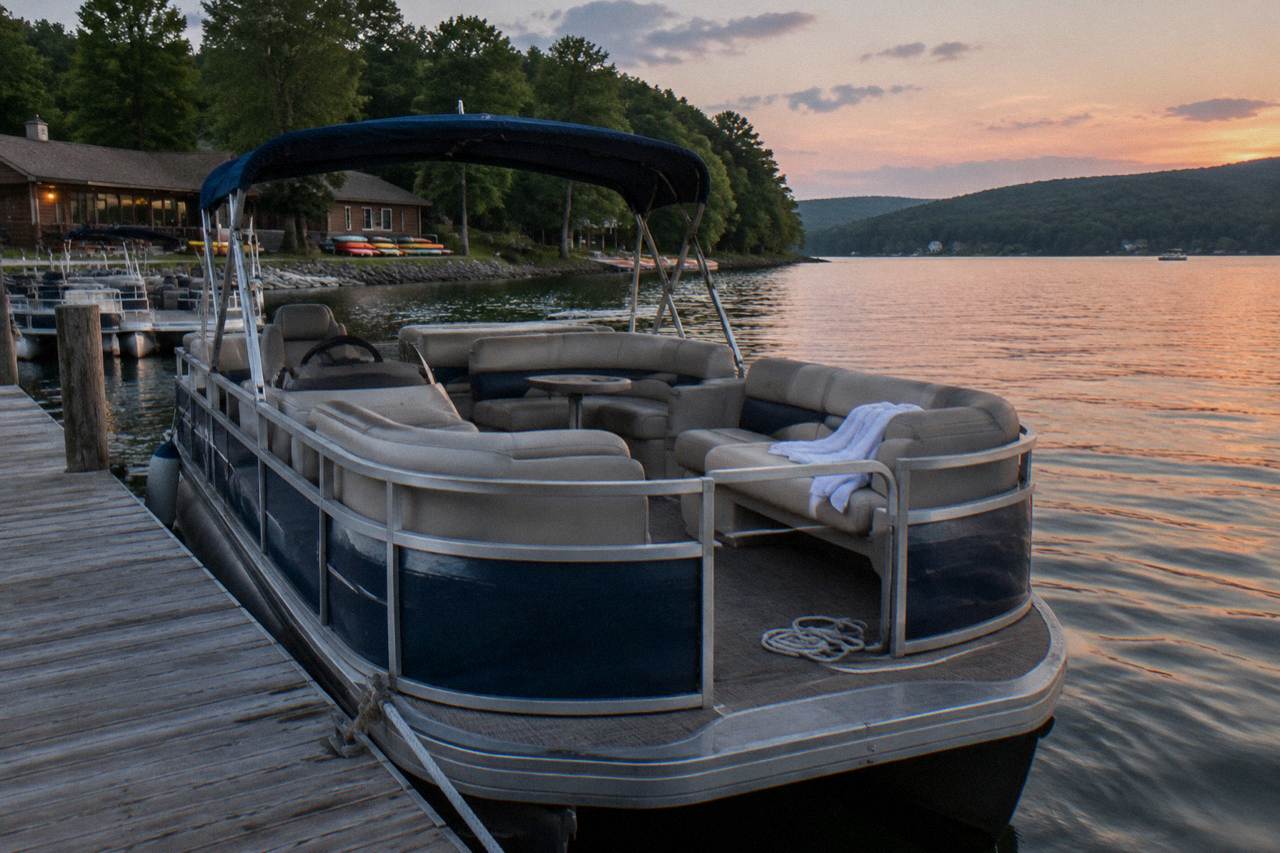
Maryland does not issue a boating license at all. What the state requires instead is a boating safety education certificate, and the cutoff date trips up a lot of visiting families: anyone born on or after July 1, 1972 must carry one to operate a numbered or documented vessel on Maryland waters, according to the Maryland Department of Natural Resources. At Deep Creek Lake, that covers virtually every adult under about fifty-four, which is most pontoon renters.
The good news is built into the rental system. When you rent a motorized vessel other than a personal watercraft, you read a safety sheet and the rental company issues a temporary boating safety certificate valid for ten days. That piece of paper stands in for the permanent card, and it is how thousands of visitors legally drive a rental pontoon every summer without ever taking a course. The details below cover who needs what, how the temporary certificate works, what the Deep Creek Lake operators check, and the lake rules that apply the moment you leave the dock.
No. Maryland does not issue a boating license, so there is nothing to obtain before you can rent a pontoon. What the state requires is a boating safety education certificate for operators born on or after July 1, 1972, and renters satisfy that requirement on the spot by reading a safety sheet and receiving a temporary certificate from the rental company. Older operators need nothing at all.
The word license is the source of the confusion. Maryland's requirement is an education certificate, not a license, and the distinction matters because certificates never expire and are issued after completing a NASBLA-approved course rather than a driving test. The rule applies statewide, Deep Creek Lake included, because the lake is Maryland-owned public water. If you were born before July 1, 1972, you are exempt from the education requirement entirely and can step aboard a rental pontoon with no paperwork beyond the rental agreement.
Everyone else in that age group has two paths. Take an approved boating safety course once and carry the permanent certificate, or rent a boat and use the ten-day temporary certificate the rental business hands you. The second path is the normal one for vacationers, and it is deliberately simple. The state's rental requirements page spells it out: renters of a motorized vessel, not a personal watercraft, born on or after July 1, 1972 read a safety sheet, and the rental company issues the temporary certificate.
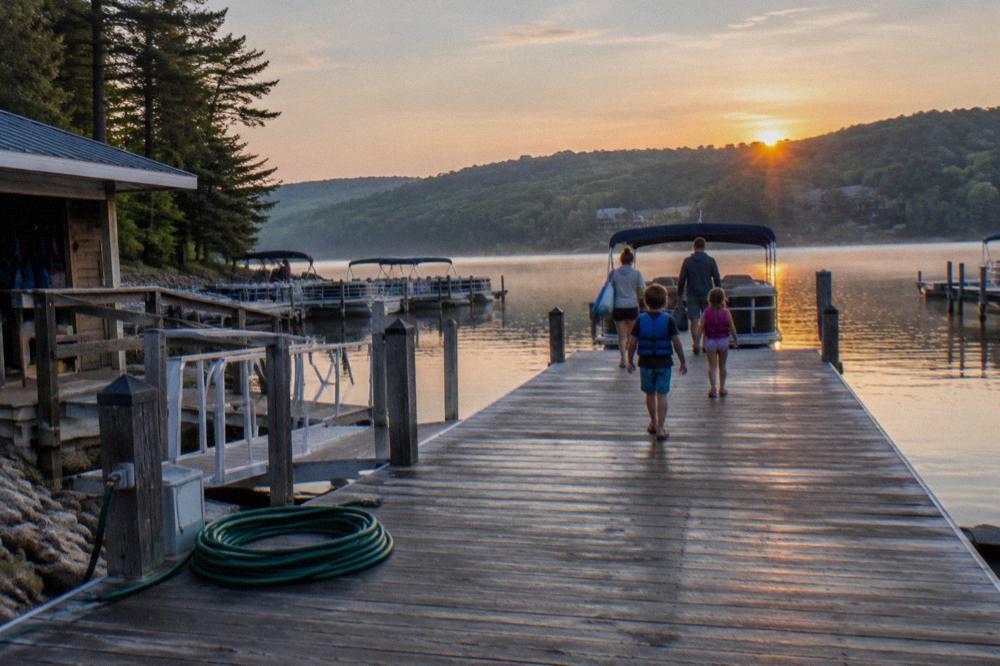
One caution: the temporary certificate is a renting privilege, not a general pass. It covers the vessel you rented for the rental period, up to ten days. If you later borrow a friend's boat or rent a jet ski, different rules apply, and personal watercraft have their own stricter requirements, covered below.
Who Has To Carry A Boating Safety Certificate On Deep Creek Lake?
Any operator of a numbered or documented motorized vessel born on or after July 1, 1972 must carry a boating safety education certificate on Maryland waters, and Deep Creek Lake is Maryland water, owned by the state as part of the park system. The operator, not the passenger, must hold it, and it must be physically aboard whenever the boat is running.
The certificate rule follows the person at the helm. A family can rent a pontoon where only the parents drive, and in that case only the driving parents need documentation. If a teenager takes the wheel, the teenager needs a certificate too, assuming they fall inside the birth-date cutoff, which nearly all teenagers do. Natural Resources Police patrol the lake and can ask to see the card during any stop.
There is no grandfathering and no grace period on the water. The date is written into state law exactly as July 1, 1972, and rental shops along the lake are accustomed to explaining it at the counter. For context on what you are signing up for, the boating rules overview for Deep Creek Lake covers the full set of lake regulations, from boat length limits to noise standards, that apply once the certificate question is settled.
| Situation | Certificate required? | What satisfies it |
|---|---|---|
| Born before July 1, 1972, driving a rental pontoon | No | Nothing, just the rental agreement |
| Born on or after July 1, 1972, renting a motorized vessel | Yes | 10-day temporary certificate issued by the rental company |
| Born on or after July 1, 1972, operating a privately owned boat | Yes | Permanent NASBLA-approved course certificate |
| Passenger of any age on any vessel | No | Not applicable, requirement follows the operator |
| Operating a personal watercraft, any age under the cutoff | Yes | Permanent certificate, the rental shortcut does not apply |
The personal watercraft line deserves emphasis. The temporary certificate pathway exists for conventional motorized rentals, pontoons included. Jet ski operators must meet the full education and age requirements on their own, which the jet ski and PWC rental guide for Deep Creek Lake covers in detail.
How Does The Ten-Day Rental Certificate Actually Work?
The renter reads a safety sheet, the rental company issues a temporary boating safety certificate, and that document is valid for ten days from issue for the rented vessel. It exists purely to let vacationers operate a rental boat legally without a permanent certificate, and the Deep Creek Lake rental counters handle the paperwork in a few minutes.
In practice the flow is unremarkable. You arrive for your reservation, the staff walks you through the boat and the rental agreement, and as part of check-in the person who will drive reads the safety sheet and signs for the temporary certificate. High Mountain Sports, which runs guided pontoon tours and rentals on Garrett Highway in Oakland, requires online reservations, as does Lake Life Boat Rentals in McHenry. Deep Creek Lake Boats, also on Deep Creek Drive in McHenry, recommends reservations. Each handles the certificate step at pickup for renters who need it. Once you have the license question settled, the next thing most renters want to know is pricing, and our guide to Deep Creek Lake boat rental costs covers everything from pontoon day rates to the extras first-timers often overlook.
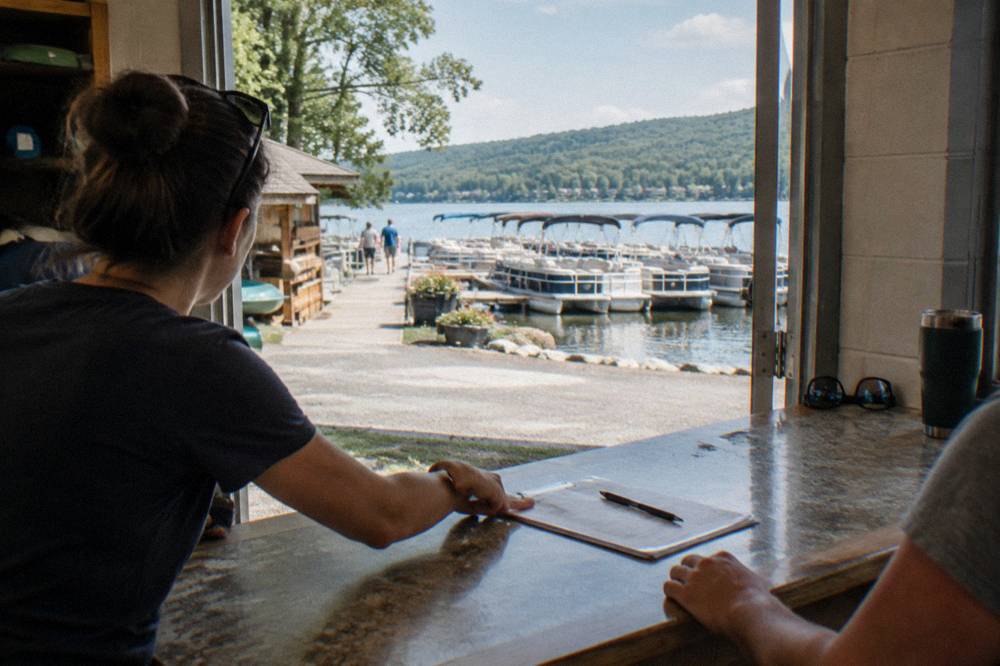
Keep the certificate on the boat. Natural Resources Police officers working the lake can board or stop a vessel for a routine check, and producing the temporary certificate ends the education question immediately. Losing it mid-rental means going back to the rental office for a reissue, an avoidable errand on a lake day.
The ten-day window matters for longer stays. If your vacation runs past ten days, or you rent again after the certificate expires, the rental company issues a fresh one with the new rental. For anyone who finds themselves renting boats more than once a season, the permanent certificate becomes the simpler route, and it never expires.
What Are The Age Rules For Driving A Pontoon?
There is no minimum age to operate a conventional motorized boat in Maryland beyond the certificate requirement, so a certified teenager can legally drive a rental pontoon, though rental companies set their own age and deposit policies and those are usually stricter. For personal watercraft the state floor is firm at sixteen years old, with no exceptions for certificates or parental supervision.
The split between boats and personal watercraft surprises people. A fourteen-year-old with a boating safety certificate may lawfully operate a motorboat in Maryland. The same fourteen-year-old may not operate a jet ski at all, because PWC rules set sixteen as the minimum age and add equipment and sticker requirements on top of the certificate. The PWC rules are laid out by the Natural Resources Police PWC page.
Rental fleets narrow the practical range. A pontoon rental agreement is a contract, and the operator can require the driver to be 21, 25, or older, can require a major credit card, and can refuse anyone the staff judges unprepared. State law sets the floor; the rental desk sets the ceiling. Ask when you book rather than at pickup, because a family plan built around a nineteen-year-old driver can collapse at the counter.
Parents also sometimes ask whether a child needs anything to ride along. Passengers of any age need no certificate. Children simply need a properly fitted life jacket, which rental boats carry aboard and which the rental staff will size for kids during the walk-through.
Do Deep Creek Lake Rental Operators Check For Certificates?
Yes, the rental operators handle certificate verification as a normal part of check-in, because issuing the temporary certificate is their legal role in the rental process. If you already hold a permanent certificate, bring it, and if you were born before July 1, 1972, say so, since no documentation is needed for you at all.
The system puts the rental company in the middle by design. The state trusts approved rental businesses to deliver the safety sheet and issue the temporary certificate, so the counter staff will ask who is driving and when that person was born. Answering honestly is not a formality, since operating without valid documentation is the renter's violation, not just the company's. The wider set of guides lives on Deep Creek Boat Tours.
Guided tours sidestep the question entirely. Wisp Resort Lake Adventures, the State Park boating concession, runs guided pontoon tours on the lake, as does High Mountain Sports from its Oakland base and Funtime Watersports from Thayerville. On a guided tour a licensed captain drives, and no passenger needs any certificate to ride, which makes guided trips the right answer for groups where nobody wants to study a safety sheet. The trade-offs between driving yourself and riding with a guide are laid out in the pontoon tour guide for Deep Creek Lake.
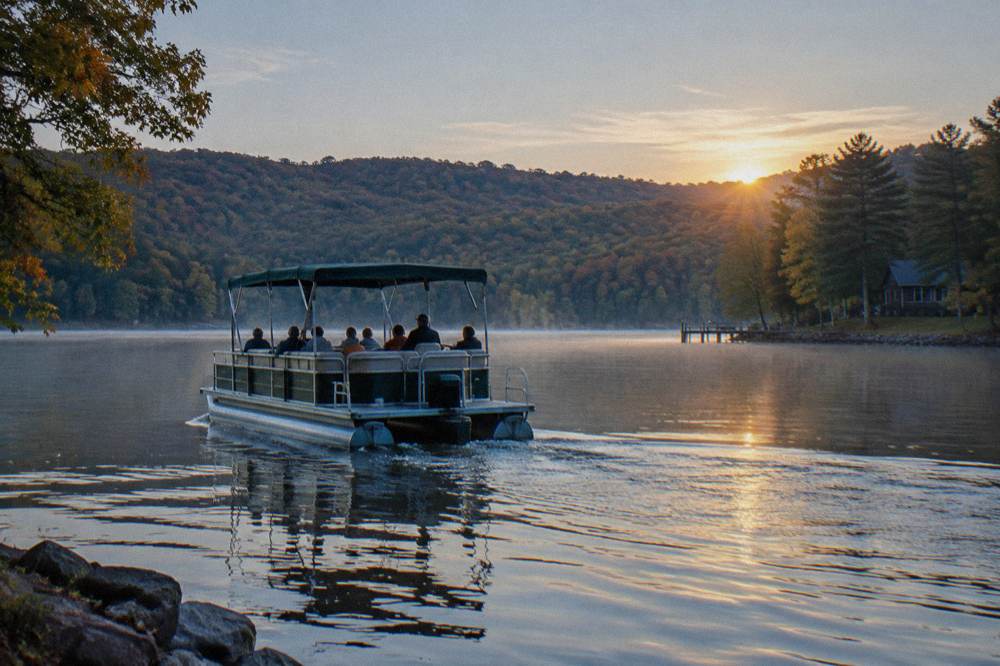
If you plan to rent across more than one operator during your stay, note that each company issues its own paperwork. A temporary certificate from a Monday rental at McHenry covers you for the rented vessel period, but the Friday rental at another dock repeats the process. Nobody fails it, it simply takes a few minutes at each pickup.
How Do You Get A Permanent Maryland Boating Certificate?
You complete a NASBLA-approved boating safety course, pass the exam, and receive a certificate that never expires and is recognized across state lines. Maryland offers the course online through approved providers, and most people finish it in a single day, which makes it a reasonable task for anyone who boats regularly or rents on multiple trips.
The permanent certificate is worth considering for repeat visitors. Course material covers navigation rules, required equipment, cold-water risks, and Maryland-specific law, which on this lake includes the no-wake and vessel-length rules summarized below. Once issued, the card satisfies education requirements in most reciprocal states, useful for anyone whose boating travels extend past Garrett County.
For a one-time family vacation, the temporary certificate remains the easier path, and there is no shame in it, since it is exactly what the legislature designed it for. But anyone renting a pontoon two or three summers running, or splitting time between Deep Creek Lake and other waters, saves counter time and gains flexibility by carrying the permanent card.
Costs vary by course provider and change, so check the provider's own page rather than relying on a printed figure. The Department of Natural Resources boating safety site lists the approved options and the requirements in full, and it is the authoritative source for anything the rental counter cannot answer.
What Lake Rules Apply Once You Are Driving The Pontoon?
Deep Creek Lake caps vessels at 26 feet overall, 30 feet for pontoons, requires no-wake speed within 100 feet of any shoreline, bridge, pier, dock or other vessel, and sets an 88-decibel noise limit, with additional posted speed zones marked by white signs and buoys with an orange circle. Night skiing is illegal, and personal watercraft face weekend and holiday blackout hours.
The 100-foot no-wake rule is the one that catches visiting boaters most often, because the lake's 69 miles of shoreline mean you are rarely far from a dock. Within that buffer you idle; beyond it you can open the throttle where no other limit is posted. The rule appears on the Department of Natural Resources lake pages and is enforced on the water. A fuller breakdown of these regulations, including which coves have limited space for towing and wake surfing, lives in the lake's official regulations and in the site's guide to launching, boat ramps and launching on Deep Creek Lake.
The invasive-species rule deserves a line of its own, because it applies to renters bringing their own kayak or trailer, and because the penalties are real: up to $2,500 per offense. The Department of Natural Resources advises clean, drain, dry with at least 48 hours of drying time, and hydrilla has been under herbicide treatment in the lake since it was first found there, with a new Arrowhead Cove site added to the treatment program. The inspection at the State Park ramp is voluntary and free, and worth the two minutes.
Also worth knowing before you plan a sunset run: docking and beaching rules. Beaching a boat is not permitted except in emergencies, and except for a small buoyed area at the outlet, boats can reach the entire lake from the State Park ramp, which is the primary access point for boaters and is open 24 hours a day, weather permitting.
Where Should You Stay When Renting A Pontoon On Deep Creek Lake?
Most rental fleets launch from McHenry or along Garrett Highway near the State Park, so lodging within a short drive of the north end of the lake puts you minutes from pickup instead of an hour. Oakland, at the lake's Thayerville end, sits closer to several tour operators and works well for guided trips and quieter coves.
The geography drives the choice. Pontoon rentals cluster along Deep Creek Drive in McHenry, while several tour and rental operators sit on Garrett Highway in Oakland. A stay near either end keeps the morning drive short, which matters when your rental window is fixed and the line at the dock moves slowly on summer Saturdays.
In Oakland, The Garrett Inn sits about 2.4 miles from the lake, roughly three minutes by car per its listing, a practical base for the Garrett Highway rental and tour offices. Closer to the north end, Lake Pointe Inn is positioned near Deep Creek Lake State Park and the McHenry launch area, with a free full breakfast per the listing, a genuine advantage on a morning when the boat is waiting. A fuller rundown of lodging options by shoreline area is in the where to stay for boating guide.
Shamrock Inn (In The Heart Of Deep Creek Lake)
Oakland
Oakland inn listed under the Deep Creek Lake name.
Check ratesBook lodging and the boat separately and in that order. Rooms around the lake tighten on summer weekends faster than rental slots do, and the certificate question, as covered above, never blocks a reservation: it is settled at pickup. Anyone who prefers to skip driving altogether can book a guided pontoon tour and simply ride.
What Does A Pontoon Rental Or Tour Cost At Deep Creek Lake?
Guided pontoon tours run from $34 for adults at the operators that publish pricing, with child rates lower and private-boat charters in the mid-$300 range, while self-drive pontoon rentals start near $450 per day for a 70-horsepower boat and climb with horsepower, taxes extra. Each operator publishes its own current rates, and all prices change, so confirm before booking.
The two ways to be on the water split the budget widely. A guided tour is a one-hour outing with a driver who handles everything, while a rental day, typically 9 a.m. to 5 p.m. at Lake Life Boat Rentals, puts the helm in your hands and the certificate question on your plate. The table below gathers the published figures from each operator's own page; treat them as planning numbers and verify at booking, since operators adjust rates between seasons.
| Operator | What they offer | Published rate (on the operator's own page) | Booking |
|---|---|---|---|
| Wisp Resort Lake Adventures (State Park concession) | Guided pontoon tour, kayak, SUP, tube rental | Adult $34, child 12 and under $19, private up to 12 people $349 | Reservations required |
| High Mountain Sports | Guided pontoon tour, kayak and SUP rental | Adult 13+ $37, child 12 and under $19, private up to 13 people $385 | Online reservations required |
| Funtime Watersports | Guided pontoon tour, pontoon and jet ski rental | Tour adult 16+ $34, child 3 to 15 $16, under 3 free | Reservations recommended |
| Lake Life Boat Rentals | Pontoon, ski and watersports boat rental | Pontoons from about $524/day for 90 HP, taxes extra | Reservations required |
| Deep Creek Lake Boats | Pontoon rental | About $450/day for 70 HP, $575 for 115 HP, $650 for 150 HP, taxes extra | Reservations recommended |
Two footnotes to those figures. Rentals from Lake Life run full days, 9 a.m. to 5 p.m., in a season that runs about mid-May to mid-October, so late-fall visitors will find the guided tours and the State Park's own rentals the more reliable options. And the certificate rules above only apply to the self-drive rows; on the guided rows, a captain holds the wheel and no passenger paperwork is needed.
What Should You Bring To The Rental Counter?
Bring photo identification, the credit card the reservation requires, your permanent boating certificate if you hold one, and everyone in your party, since life jackets are sized at the dock. Renters born on or after July 1, 1972 should be ready to read the safety sheet and sign for the temporary certificate, and anyone born earlier should say so up front.
The counter ritual is short but specific. Identification confirms the reservation holder, the card covers the deposit, and the driver's birth date determines the paperwork. Arrive early enough that the safety-sheet reading is not rushed, because the sheet is not decorative: it summarizes the no-wake distances, the posted zones, and the equipment aboard, and the temporary certificate presumes you actually read it.
On the boat, the law and good sense converge on a short list. Life jackets for everyone, sized before departure. A phone in a dry bag, since the lake is 13 miles long and cell coverage varies by cove. Sunscreen, water, and a plan for the day that respects the rental window, because late returns carry fees at most fleets. The site's packing rundown, what to bring for a day on Deep Creek Lake, goes deeper on the gear side.
One last habit worth adopting: photograph the safety sheet and the temporary certificate when you receive them. If the paper copy gets soaked or blown overboard, and on this lake both happen, the photo has settled more than one roadside conversation with a patrol officer.
For visitors tying the boat day to a longer stay, the north-end lodging options keep the whole plan tight. Staying near the State Park means the morning of the rental is a short drive rather than a crossing of the whole lake area, and breakfast at the inn happens before the dock line, not after it. That rhythm suits families with an early rental slot and groups who want the flexibility to add a second boat day without replanning the drive.
Lake Pointe Inn
McHenry, near Deep Creek Lake State Park
Close to the lake and the State Park, with free full breakfast and an adjacent golf course per the listing.
Check ratesCommon Questions About Pontoon Rental Licenses In Maryland
Do You Need A Boating License To Rent A Pontoon In Maryland?
No. Maryland has no boating license. Operators born on or after July 1, 1972 need a boating safety education certificate, and renters satisfy that with a safety sheet and a ten-day temporary certificate issued by the rental company at pickup.
How long is the rental temporary certificate valid?
Ten days from issue, for the rented vessel. If you rent again after it expires, the rental company issues a new one with the new rental agreement.
Do I need a certificate if I was born before July 1, 1972?
No. The education requirement applies only to operators born on or after July 1, 1972. Older operators need no certificate for any motorized vessel.
Can a teenager drive the rental pontoon?
State law allows a certified operator of any age to drive a motorboat, but rental companies set their own minimum ages and deposit rules, which are often stricter. Ask the operator when booking.
Does the temporary certificate work for jet skis too?
No. The rental shortcut applies to motorized vessels other than personal watercraft. PWC operators must be at least 16 and meet the full certificate and equipment requirements on their own.
Do passengers need any certificate?
No. The requirement follows the operator at the helm. Passengers of any age need nothing beyond a properly fitted life jacket, which the rental fleet carries aboard.